The Good Shepherd
John 10:1–21 · Journey to Jerusalem
Scripture
John 10:1–21
erily, verily, I say unto you, He that entereth not by the door into the sheepfold, but climbeth up some other way, the same is a thief and a robber. 2But he that entereth in by the door is the shepherd of the sheep. 3To him the porter openeth; and the sheep hear his voice: and he calleth his own sheep by name, and leadeth them out. 4And when he putteth forth his own sheep, he goeth before them, and the sheep follow him: for they know his voice. 5And a stranger will they not follow, but will flee from him: for they know not the voice of strangers. 6This parable spake Jesus unto them: but they understood not what things they were which he spake unto them. 7Then said Jesus unto them again, Verily, verily, I say unto you, I am the door of the sheep. 8All that ever came before me are thieves and robbers: but the sheep did not hear them. 9I am the door: by me if any man enter in, he shall be saved, and shall go in and out, and find pasture. 10The thief cometh not, but for to steal, and to kill, and to destroy: I am come that they might have life, and that they might have it more abundantly. 11I am the good shepherd: the good shepherd giveth his life for the sheep. 12But he that is an hireling, and not the shepherd, whose own the sheep are not, seeth the wolf coming, and leaveth the sheep, and fleeth: and the wolf catcheth them, and scattereth the sheep. 13The hireling fleeth, because he is an hireling, and careth not for the sheep. 14I am the good shepherd, and know my sheep, and am known of mine. 15As the Father knoweth me, even so know I the Father: and I lay down my life for the sheep. 16And other sheep I have, which are not of this fold: them also I must bring, and they shall hear my voice; and there shall be one fold, and one shepherd. 17Therefore doth my Father love me, because I lay down my life, that I might take it again. 18No man taketh it from me, but I lay it down of myself. I have power to lay it down, and I have power to take it again. This commandment have I received of my Father. 19There was a division therefore again among the Jews for these sayings. 20And many of them said, He hath a devil, and is mad; why hear ye him? 21Others said, These are not the words of him that hath a devil. Can a devil open the eyes of the blind?
King James Version · public domain
Joani 10:1–21
e të-vërtetë, me të-vërtetë po u them juve, Ay që nukë hyn nga dera ndë oborrt të dhënvet, po hipën që gjetkë, ay është vjedhës edhe kursar. 2Po ay që hyn nga dera, është bariu i dhënvet. 3Këti i hap derënë portari; edhe dhëntë dëgjonjënë zërin’ e ati; edhe thërret dhënt’ e ti me emërë, edhe i nxjer. 4Edhe kur nxjer dhënt’ e ti, vete përpara atyreve; edhe dhënt’ i venë prapa, sepse e njohënë zërin’ e ati. 5Po të-huajit nukë dot’i venë prapa, po dot’ ikënjënë prej ati; sepse nuk’ e njohënë zërin’ e të-huajvet. 6Këtë paravoli u tha atyre Jisuj; po ata nukë kupëtuanë ç’ishinë këto që u fliste atyre. 7Jisuj pra u tha atyre përsëri, Me të-vërtetë, me të-vërtetë po u them juve, se unë jam dera e dhënvet. 8Gjithë sa erthnë para meje janë vjedhës edhe kursarë; po dhëntë nuk’ u dëgjuan’ atyre. 9Unë jam dera; me anë t’ime ndë hyftë ndonjë, dotë shpëtonjë, edhe dotë hynjë edhe dotë dalë, edhe dotë gjenjë të-kulloturë. 10Vjedhësi nukë vjen, veç për të vjedhur’ e për të therur’ e për të prishurë; un’ arthçë, që të kenë jetë, edhe t’a kenë me të-tepërë. 11Unë jam bariu i-mirë; bariu i-mirë vë jetën’ e ti për dhëntë. 12Po ay që ësht’ i-pajtuarë, edhe që s’është bari, të-cilit dhëntë s’janë të-tijatë, sheh ujkunë dyke ardhurë, edhe lë dhënt’ e ikën, edhe ujku i rrëmben ato, edhe përndan dhëntë. 13Edhe i-pajtuari ikën, sepse është i-pajtuarë, edhe s’do të dijë për dhëntë. 14Unë jam bariu i-mirë, edhe njoh të-mijatë, edhe njihem prej të-mijavet, 15Sikundrë më njeh Ati, edhe un’ e njoh Atinë; edhe vë jetënë t’ime për dhëntë. 16Kam edhe të-tjera dhën, të-cilatë s’janë prej këti oborri; duhetë t’i mbleth edhe ato; edhe dotë dëgjonjënë zënë t’im; edhe dotë bënetë një tufë e një bari. 17Përandaj Ati më do, sepse unë vë jetënë t’ime, që t’a marr përsëri. 18Asndonjë s’e ngre prej meje, po unë e ve prej vetiu; kam pushtet t’a vë, edhe kam pushtet t’a marr përsëri. Këtë porosi mora prej t’im Eti. 19Përsëri pra ubë një çarje ndër mest të Judhenjet për këto fjalë. 20Edhe shumë veta prej atyreve thoshinë, Djall ka, edhe ësht’ i-shkalluarë; ç’e dëgjoni? 21Të-tjerë thoshinë, Këto fjalë nukë janë fjalë të-djallosuri; mos munt djalli t’u hapnjë sytë të-verbëret?
Kristoforidhi, Dhiata e Re Toskërisht 1879 · zotërim publik
In their own words
A great matter, beloved, a great matter it is to preside over a Church: a matter needing wisdom and courage as great as that of which Christ speaketh, that a man should lay down his life for the sheep, and never leave them deserted or naked; that he should stand against the wolf nobly.
St. John Chrysostom, Homilies on the Gospel of St. John, Homily 60 (on John 10:14–21)
Patristic sources
- St. John Chrysostom
- Homilies on the Gospel of St. John, Homilies 59–60
- St. Cyril of Alexandria
- Commentary on the Gospel of John, Book VI
- Theophylact of Ohrid
- Explanation of the Gospel of John
No standalone public-domain English edition of his Gospel commentary exists; his text survives here only through the Catena Aurea.
- Blessed Augustine of Hippo
- Tractates on the Gospel of John, Tractates 45–46
Venerated in the East as Blessed; his Johannine tractates are cited in later Byzantine catenae.
- St. Gregory the Great
- Forty Gospel Homilies, Homily 14
His Forty Gospel Homilies have no standalone public-domain English translation; quoted here through the Catena Aurea.
Read the sources: Chrysostom on John (CCEL, NPNF1-14) · Augustine, Tractates on John (CCEL, NPNF1-7) · Cyril of Alexandria on John, Book VI (tertullian.org) · Catena Aurea on John (isidore.co)
The Good Shepherd (John 10:1–21)
The texts below are quoted verbatim from public-domain English translations; nothing is paraphrased.
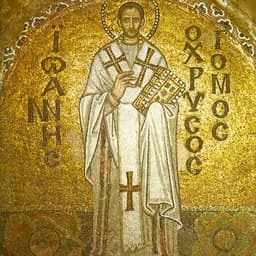
St. John Chrysostom (c. 347–407)
Homilies on the Gospel of St. John, Homilies 59–60 (on John 10:1–21) Source: trans. in the Nicene and Post-Nicene Fathers, First Series, Vol. 14. Public domain. Full text: https://www.ccel.org/ccel/schaff/npnf114.html
On why He calls the Scriptures the door, and the thief who climbs up another way:
On what it is to preside over the flock, and how the shepherd differs from the hireling:
On the other sheep, and the future union of Jew and Gentile in one flock:
On "I lay it down of myself," where the Death proves the Resurrection:
St. Cyril of Alexandria (c. 376–444)
Commentary on the Gospel of John, Book VI (on John 10:11–16) Source: trans. T. Randell, Library of Fathers, 1885. Public domain. Full text: https://www.tertullian.org/fathers/cyril_on_john_06_book6.htm
On "I am the good shepherd," uttered against those who called good evil:
On the shepherd whose care is so intense that he despises even his own life:
On "other sheep I have," and the calling of the Gentiles:
Theophylact of Ohrid (c. 1055–1107)
Explanation of the Gospel of John (on John 10:3–17) As preserved in the Catena Aurea on John. Public domain. Full text: https://isidore.co/aquinas/english/CAJohn.htm
On "to him the porter openeth":
On "one fold, and one shepherd," set forth in both Testaments:
On why the Father loves the Son who lays down His life:
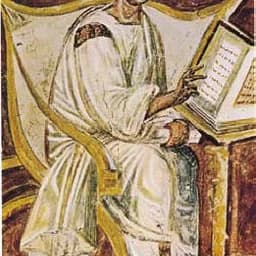
Blessed Augustine of Hippo (354–430)
Tractates on the Gospel of John, Tractates 45–46 (on John 10:1–13) Source: trans. in the Nicene and Post-Nicene Fathers, First Series, Vol. 7. Public domain. Full text: https://www.ccel.org/ccel/schaff/npnf107.html
On entering the sheepfold by the door, which is to preach Christ and seek His glory:
On "I am the door of the sheep":
On the hireling, who is blameworthy and yet in some respects useful:
St. Gregory the Great (c. 540–604)
Forty Gospel Homilies, Homily 14 (on John 10:11–14) As preserved in the Catena Aurea on John. Public domain. Full text: https://isidore.co/aquinas/english/CAJohn.htm
On the good shepherd who lays down his life, an example set for our imitation:
On the hireling, who loves earthly things more than the sheep:
On the time of trial, which alone tells the shepherd from the hireling: