The Great Commission
Matt 28:16–20; Mark 16:15–18 · Post-Resurrection
Scripture
Matthew 28:16–20
hen the eleven disciples went away into Galilee, into a mountain where Jesus had appointed them. 17And when they saw him, they worshipped him: but some doubted. 18And Jesus came and spake unto them, saying, All power is given unto me in heaven and in earth. 19Go ye therefore, and teach all nations, baptizing them in the name of the Father, and of the Son, and of the Holy Ghost: 20Teaching them to observe all things whatsoever I have commanded you: and, lo, I am with you alway, even unto the end of the world. Amen.
King James Version · public domain
Mateu 28:16–20
dhe të një-mbë-dhjetë nxënësitë vanë ndë Galilet, ndë atë mal që i pat porositur’ Jisuj. 17Edhe kur e panë, i ufaln’ ati; po ca nga ata ishinë me dy mëndje. 18Edhe Jisuj erdhi përanë, e u foli atyre, dyke thënë, M’udha çdo pushtet ndë qiellt edhe mbi dhet. 19Shkoni pra e mësoni gjithë kombetë, edhe i pagëzoni mb’emërit të Atit e të Birit e të Frymës’ së Shënjtëruarë; 20Edhe i mësoni ata të ruanjnë gjithë sa u kam porositurë juve; edhe ja unë tek jam bashkë me ju gjithë dittë gjer mbë të-mbaruarët të jetësë. Amin.
Kristoforidhi, Dhiata e Re Toskërisht 1879 · zotërim publik
In their own words
For Holy Church does every day in spirit what then the Apostles did in body; for when her Priests by the grace of exorcism lay their hands on believers, and forbid the evil spirits to dwell in their minds, what do they, but cast out devils?
St. Gregory the Great, Forty Gospel Homilies (on Mark 16:15–18) (Catena Aurea)
Patristic sources
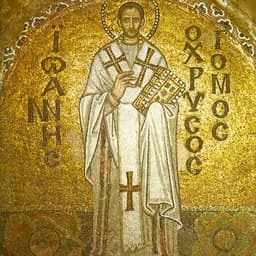
- St. John Chrysostom
- Homilies on Matthew, Hom. 90
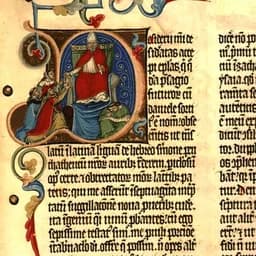
- St. Jerome
- Commentary on Matthew
His Gospel exegesis survives in public-domain English only through the Catena Aurea.
- St. Hilary of Poitiers
- On the Trinity, Book II
The Catena preserves his Trinitarian reading of the baptismal formula; Catena-only in public-domain English.
- St. Peter Chrysologus
- Sermon 80
Catena-only in public-domain English.
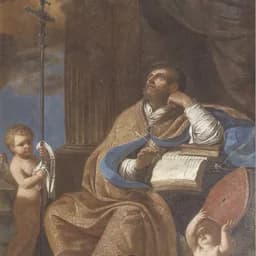
- St. Gregory the Great
- Forty Gospel Homilies
On the Mark 16 parallel; his Gospel homilies are public-domain English only through the Catena Aurea.
- St. Bede the Venerable
- Homilies on the Gospels
His Gospel material is Catena-only in public-domain English.
Read the sources: Chrysostom, Homilies on Matthew, Hom. 90 (CCEL) · Catena Aurea on Matthew 28 (CCEL) · Catena Aurea on Mark 16 (CCEL)
The Great Commission (Matthew 28:16–20; Mark 16:15–18)
The texts below are quoted verbatim from public-domain English translations; nothing is paraphrased.
St. John Chrysostom (c. 347–407)
Homilies on the Gospel of Matthew, Homily 90 (on Matthew 28:18–20) Source: trans. in the Nicene and Post-Nicene Fathers, First Series, Vol. 10. Public domain. Full text: https://www.ccel.org/ccel/schaff/npnf110.iii.LXXXVI.html
On "All power is given unto me in heaven and on earth":
On the twofold charge He lays upon them, the doctrine and the commandments:
On "Lo, I am with you alway, even unto the end of the world":
St. Jerome (c. 347–420)
Commentary on Matthew (on Matthew 28:18–19) As preserved in the Catena Aurea on Matthew. Public domain. Full text: https://www.ccel.org/ccel/aquinas/catena1.ii.xxviii.html
On the power given to Him who a little before was crucified:
On the single "name" of the Three, whose one Godhead is confessed in Baptism:
On the order of the injunctions, teaching, then baptism, then the keeping of the commandments:
St. Hilary of Poitiers (c. 310–367)
On the Trinity, Book II (on Matthew 28:19) As preserved in the Catena Aurea on Matthew. Public domain. Full text: https://www.ccel.org/ccel/aquinas/catena1.ii.xxviii.html
On the whole salvation of men contained in this Sacrament of the Three Names:
On the Holy Spirit, inseparable from the confession of the Father and the Son:
St. Peter Chrysologus (c. 380–450)
Sermon 80 (on Matthew 28:18–19) As preserved in the Catena Aurea on Matthew. Public domain. Full text: https://www.ccel.org/ccel/aquinas/catena1.ii.xxviii.html
On the power the exalted Christ bore in His humanity, ever His together with the Father:
On the nations created a second time to salvation by the Power that made them:
St. Gregory the Great (c. 540–604)
Forty Gospel Homilies (on Mark 16:15–18) As preserved in the Catena Aurea on Mark. Public domain. Full text: https://www.ccel.org/ccel/aquinas/catena2.iii.xvi.html
On "preach the Gospel to every creature," why man is called "every creature" (Mark 16:15):
On why the signs were needful at the beginning of the Church (Mark 16:17–18):
On how the Church still works those same signs, but in spirit:
St. Bede the Venerable (c. 673–735)
Homilies on the Gospels (on Matthew 28:16–20) As preserved in the Catena Aurea on Matthew. Public domain. Full text: https://www.ccel.org/ccel/aquinas/catena1.ii.xxviii.html
On the mountain of the appearing, and the Body raised above all earthly things:
On "All power is given unto me," spoken from the Humanity, not the Deity:
On the turn from "Go not into the way of the Gentiles" to "teach all nations":
On "I am with you," reconciled with "I go unto him that sent me":