The Greatest Commandment
Matt 22:34–40; Mark 12:28–34 · Passion week in Jerusalem
Scripture
Matthew 22:34–40
ut when the Pharisees had heard that he had put the Sadducees to silence, they were gathered together. 35Then one of them, which was a lawyer, asked him a question, tempting him, and saying, 36Master, which is the great commandment in the law? 37Jesus said unto him, Thou shalt love the Lord thy God with all thy heart, and with all thy soul, and with all thy mind. 38This is the first and great commandment. 39And the second is like unto it, Thou shalt love thy neighbour as thyself. 40On these two commandments hang all the law and the prophets.
King James Version · public domain
Mateu 22:34–40
o Farisenjtë kur dëgjuanë, se u mbylli gojënë Sadduqenjvet, umblothnë bashkë. 35Edhe një nomtar nga ata e pyeti dyke ngar’ atë, 36e dyke thënë, Mësonjës, cila porosi ësht’ e-madhe ndë nomt? 37Edhe Jisuj i tha ati, “Të duash Zotinë Perëndinë t’ënt me gjithë zëmërënë t’ënde, edhe me gjithë shpirtinë t’ënt, edhe me gjithë mëndjenë t’ënde.” 38Këjo është porosi e-parë edhe e-madhe. 39Edhe e-dyta që është si-një-një me atë është, “Të duash të-afërminë t’ënt posi vetëhenë t’ënde.” 40Gjithë nomi edhe profitëritë varenë mbë këto të dy porosira.
Kristoforidhi, Dhiata e Re Toskërisht 1879 · zotërim publik
In their own words
for it is the selfsame affection by which we love God, and by which we love our neighbour, save that we love God for Himself, but ourselves and our neighbour for God's sake.
Blessed Augustine of Hippo, On the Trinity (Catena Aurea)
Patristic sources
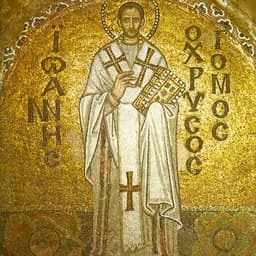
- St. John Chrysostom
- Homilies on Matthew, Hom. 71
The standalone spine: Chrysostom reconciles Matthew (the lawyer tempts) with Mark (the scribe commended), grounding both in charity.
- Theophylact of Ohrid
- Explanation of Mark
Catena-only in public-domain English; his Mark commentary treats the fuller form with the scribe's assent.
- Origen of Alexandria
- Commentary on Matthew
Catena-only here; quoted with care — some of his speculations were condemned in 553, but these ethical remarks are unproblematic.
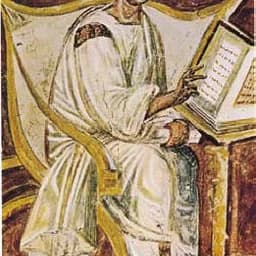
- Blessed Augustine of Hippo
- On Christian Doctrine
- On the Trinity
Venerated in the East as Blessed; the Catena draws these on the twofold love from De Doctrina Christiana and De Trinitate.
- St. Hilary of Poitiers
- Commentary on Matthew
Catena-only in public-domain English.
- St. Bede the Venerable
- Commentary on Mark
Catena-only for the Gospels; supplies the Markan scribe's approval of love over sacrifice.
Read the sources: Chrysostom, Homilies on Matthew, Homily 71 (CCEL) · Catena Aurea on Matthew, ch. 22 (CCEL) · Catena Aurea on Mark, ch. 12 (CCEL)
The Greatest Commandment (Matthew 22:34–40; Mark 12:28–34)
The texts below are quoted verbatim from public-domain English translations; nothing is paraphrased.
St. John Chrysostom (c. 347–407)
Homilies on the Gospel of Matthew, Homily 71 (on Matthew 22:34–40). Trans. in the Nicene and Post-Nicene Fathers, First Series, Vol. 10. Public domain. Full text: https://www.ccel.org/ccel/schaff/npnf110.iii.LXVIII.html
On what moved the lawyer to ask, and on the first and great commandment:
On how the two Gospels agree, and why the Lord called the scribe not far from the kingdom:
Theophylact of Ohrid (c. 1055–1107)
Explanation of the Gospel of Mark (on Mark 12:28–34). As preserved in the Catena Aurea on Mark. Public domain. Full text: https://www.ccel.org/ccel/aquinas/catena2.iii.xii.html
On "with all thy soul" and the powers of the soul given to divine love:
On why the second commandment is called like the first:
Origen of Alexandria (c. 185–254)
Commentary on Matthew (on Matthew 22:37–40). As preserved in the Catena Aurea on Matthew. Public domain. Full text: https://www.ccel.org/ccel/aquinas/catena1.ii.xxii.html
On "the first and great commandment" — first not in order but in supremacy of value:
On why the two commandments carry the Law and the Prophets:
Blessed Augustine of Hippo (354–430)
On Christian Doctrine and On the Trinity (on Matthew 22:37–40). As preserved in the Catena Aurea on Matthew. Public domain. Full text: https://www.ccel.org/ccel/aquinas/catena1.ii.xxii.html
On loving God with all the heart, and soul, and mind:
On the one love by which we love God and neighbour:
St. Hilary of Poitiers (c. 310–367)
Commentary on Matthew (on Matthew 22:39–40). As preserved in the Catena Aurea on Matthew. Public domain. Full text: https://www.ccel.org/ccel/aquinas/catena1.ii.xxii.html
On why the second command is like the first:
St. Bede the Venerable (c. 673–735)
Commentary on Mark (on Mark 12:32–34). As preserved in the Catena Aurea on Mark. Public domain. Full text: https://www.ccel.org/ccel/aquinas/catena2.iii.xii.html
On the scribe's answer, that love is more than sacrifice:
On why he was not far from the kingdom of God: