All entriesparable

The hidden treasure

Matt 13:44 · Later ministry in Galilee

Matthew 13:44

gain, the kingdom of heaven is like unto treasure hid in a field; the which when a man hath found, he hideth, and for joy thereof goeth and selleth all that he hath, and buyeth that field.

King James Version · public domain

Mateu 13:44

ërsëri mbretëri’ e qiejvet gjan më një thesar të-fshehurë nd’arët, të-cilinë kur e gjeti një njeri e fshehu; edhe nga gëzim’ i ti vete e shet gjithë ç’ka, edhe ble atë arë.

Kristoforidhi, Dhiata e Re Toskërisht 1879 · zotërim publik

Summary

The treasure is Christ himself, or the Kingdom he preaches, hidden in the field of this world and not lying open to every casual eye. The one who finds it sells all that he has, gladly renouncing everything else, to possess it. The joy is essential to the parable: renunciation is not loss but exchange for something incomparably greater. The Fathers stress that the treasure is hidden, not absent; the labor is to recognize it and then to act without hesitation.

Chrysostom dwells on the cost and the gladness together. What is given up is small, set beside what is gained, and the Gospel asks not a reluctant surrender but the swift, joyful letting go of one who has seen his fortune secured. The treasure is bought, yet it is also a gift: the price is everything one has, which next to the Kingdom is almost nothing. Theophylact reads the parable in the same key, taking the hidden treasure as the preaching of Christ, hidden from the proud but found by the one who searches.

Origen opens a further sense: the treasure is the hidden meaning buried in the field of the Scriptures, the wisdom of God concealed beneath the letter. He notes that the man buys the whole field, not the treasure alone, for the deeper sense cannot be carried off apart from the text in which God has hidden it. So the seeker gives all his former understanding to gain the riches of Christ disclosed in the Law and the Prophets.

Morally the tradition hears a summons to single-mindedness. To "sell all" is to set the heart wholly on one thing; the monastic life makes this exchange visible, but the same renunciation is asked, inwardly, of every Christian who has glimpsed the treasure.

The Parable of the Hidden Treasure (Matthew 13:44)

Public-Domain Patristic Commentary

The kingdom of heaven, Christ says, is like treasure hidden in a field, which a man finds and hides again, and then for joy goes and sells all that he has and buys that field. The parable is found only in Matthew, where it stands just before its twin, the pearl of great price, both teaching that the kingdom is worth more than everything a person owns. The texts below are quoted verbatim from public-domain English translations, including the Catena Aurea on Matthew (St. Thomas Aquinas, trans. J. H. Newman, 1841). Nothing is paraphrased. A note on sources follows at the end.


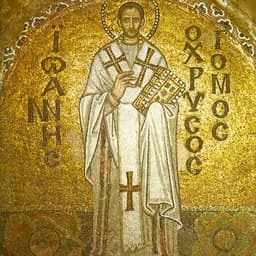
St. John Chrysostom (c. 347–407)

Homilies on the Gospel of Matthew, Homily 47 (on Matthew 13:44–52) Source: trans. in the Nicene and Post-Nicene Fathers, First Series, Vol. 10. Public domain. Full text: https://www.newadvent.org/fathers/200147.htm

On the treasure and the pearl together, and what they add to the mustard seed and the leaven:

Much as in the other place, the mustard seed and the leaven have but some little difference from each other, so here also these two parables, that of the treasure and that of the pearl. This being of course signified by both, that we ought to value the gospel above all things. And the former indeed, of the leaven and of the mustard seed, was spoken with a view to the power of the gospel, and to its surely prevailing over the world; but these declare its value, and great price. For as it extends itself like mustard seed, and prevails like leaven, so it is precious like a pearl, and affords full abundance like a treasure.

On the gospel hidden in the world, and the two things needed to find it:

Seest thou how both the gospel is hid in the world, and the good things in the gospel? Except thou sell all, thou buyest not; except thou have such a soul, anxious and inquiring, thou findest not. Two things therefore are requisite, abstinence from worldly matters, and watchfulness.

On how those who hold the gospel know their wealth, while others do not see it:

Just so also with the gospel, they that have hold of it know that they are rich, but the unbelievers, not knowing of this treasure, are in ignorance also of our wealth.


St. Gregory the Great (c. 540–604)

Forty Gospel Homilies, Homily 11 (on the hidden treasure) Source: as preserved in the Catena Aurea of St. Thomas Aquinas, trans. J. H. Newman, 1841. Public domain.

On the treasure as the desire of heaven, and on hiding it to guard it from the love of praise:

The treasure hidden in the field is the desire of heaven; the field in which the treasure is hidden is the discipline of heavenly learning; this, when a man finds, he hides, in order that he may preserve it; for zeal and affections heavenward it is not enough that we protect from evil spirits, if we do not protect from human praises. For in this present life we are in the way which leads to our country, and evil spirits as robbers beset us in our journey. Those therefore who carry their treasure openly, they seek to plunder in the way. When I say this, I do not mean that our neighbours should not see our works, but that in what we do, we should not seek praise from without.

On who it is that truly sells all to buy the field:

He it is that selleth all he hath and buyeth the field, who, renouncing fleshly delights, tramples upon all his worldly desires in his anxiety for the heavenly discipline.


St. Jerome (c. 347–420)

From his Commentary on Matthew, as preserved in the Catena Aurea on Matthew. Public domain.

On why the man hides the treasure he has found:

That he hides it, does not proceed of envy towards others, but as one that treasures up what he would not lose, he hides in his heart that which he prizes above his former possessions.

On the treasure as the Word of God or the Holy Scriptures:

That treasure "in which are hid all the treasures of wisdom and knowledge," is either God the Word, who seems hid in Christ's flesh, or the Holy ... Scriptures, in which are laid up the knowledge of the Saviour.


St. Hilary of Poitiers (c. 310–367)

As preserved in the Catena Aurea on Matthew. Public domain.

On the treasure found without cost yet possessed only at a price:

This treasure is indeed found without cost; for the Gospel preaching is open to all, but to use and possess the treasure with its field we may not without price, for heavenly riches are not obtained without the loss of this world.


Blessed Augustine (i Hiponit) (354–430)

From his Questions on the Gospels, as preserved in the Catena Aurea on Matthew. Public domain.

On the field as the two testaments in the Church, and on selling all to grow rich in the knowledge of God:

He speaks of the two testaments in The Church, which, when any hath attained to a partial understanding of, he perceives how great things lie hid there, and "goeth and selleth all that he hath, and buyeth that;" that is, by despising temporal things he purchases to himself peace, that he may be rich in the knowledge of God.


Note on sources and other Fathers

The readings here meet and part instructively. Chrysostom keeps the emphasis on value and cost: the gospel lies hidden in the world like buried treasure, and no one comes to possess it without selling all, gladly. Gregory turns to the interior life and adds a striking note: the man hides the treasure again not to keep it from others' sight but to guard his heavenward zeal from the thief of human praise, for "in what we do, we should not seek praise from without." Jerome opens the treasure inward, reading it as the Word of God hidden in Christ's flesh or the Holy Scriptures; Hilary marks the paradox that the treasure is "found without cost" yet possessed only "without the loss of this world"; and Blessed Augustine sees in the field the two testaments of the Church, where one who grasps even part perceives "how great things lie hid there." Together they hold the parable's edges: the worth of the kingdom, the watchfulness needed to keep it, and the depth that opens to whoever sells all for it.

Because this parable appears only in Matthew, St. Cyril of Alexandria's Commentary on Luke does not treat it, so the Eastern primary voice here is Chrysostom alone. The Catena Aurea preserves further Western comment not quoted at length above, including a Gloss on the despising of temporal things; Chrysostom's homily remains the dependable primary public-domain source for the Greek tradition, while Gregory, Jerome, Hilary, and Augustine are given here as the Catena transmits them.

Patristic sources