The High Priestly Prayer
John 17 · Passion week in Jerusalem
Scripture
John 17:1–11
hese words spake Jesus, and lifted up his eyes to heaven, and said, Father, the hour is come; glorify thy Son, that thy Son also may glorify thee: 2As thou hast given him power over all flesh, that he should give eternal life to as many as thou hast given him. 3And this is life eternal, that they might know thee the only true God, and Jesus Christ, whom thou hast sent. 4I have glorified thee on the earth: I have finished the work which thou gavest me to do. 5And now, O Father, glorify thou me with thine own self with the glory which I had with thee before the world was. 6I have manifested thy name unto the men which thou gavest me out of the world: thine they were, and thou gavest them me; and they have kept thy word. 7Now they have known that all things whatsoever thou hast given me are of thee. 8For I have given unto them the words which thou gavest me; and they have received them, and have known surely that I came out from thee, and they have believed that thou didst send me. 9I pray for them: I pray not for the world, but for them which thou hast given me; for they are thine. 10And all mine are thine, and thine are mine; and I am glorified in them. 11And now I am no more in the world, but these are in the world, and I come to thee. Holy Father, keep through thine own name those whom thou hast given me, that they may be one, as we are.
King James Version · public domain
Joani 17:1–11
ëto foli Jisuj; pastaj ngriti syt’ e ti ndë qiellt, e tha, Atë, erdhi ora, lavduro t’ët Bir, që të të lavduronjë edhe yt Bir; 2Sikundrë i dhe pushtet mbë çdo mish, që t’u apë jetë të-përjetëshme gjith’ atyreve që j’a ke dhënë. 3Edhe këjo është jet’ e-përjetëshme, të njohënë ty të-vetëminë e të-vërtetëtinë Perëndi; Edhe Jisu Krishtinë që dërgove. 4Unë të lavdurova mbi dhet; atë punë që më dhe të bënj e mbarova. 5Edhe ndashti lavduro-më ti, o Atë, përanë teje, me lavdinë që pata përanë teje para se të bënej bota. 6Emërinë t’ënt u’a dëfteva njerëzet që më dhe prej botësë. Të-tutë ishinë, edhe m’i dhe, edhe fjalënë t’ënde e ruajtnë. 7Ndashti e njohnë se gjithë sa më ke dhënë janë prej teje; 8Sepse fjalëtë që më dhe, u’a dhashë atyre; edhe ata i muarnë, edhe e njohnë me të-vërtetë se prej teje dolla; edhe besuanë se ti më dërgove. 9Unë lutem për ata; nukë lutem për botënë, po për ata që më dhe; sepse janë të-tutë. 10Edhe gjithë të-mijatë janë të-tuatë, edhe të-tuatë janë të-mijatë; edhe ulavdëruashë nd’ato. 11Edhe nukë jam më ndë botët, po këta janë ndë botët, edhe unë po vinj te ti. At’ i-shënjtëruarë, ruaj-i mb’emërit t’ënt ata që më dhe, që të jenë një sikundrë neve.
Kristoforidhi, Dhiata e Re Toskërisht 1879 · zotërim publik
In their own words
For they are in us, as God in His temple; but we are in them, as the creature in its Creator.
Blessed Augustine of Hippo, Tractates on the Gospel of John, Tractate 110 (on John 17:21–23)
Patristic sources
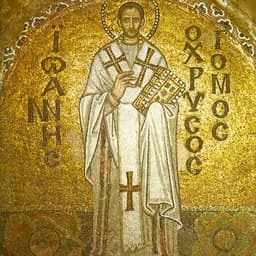
- St. John Chrysostom
- Homilies on the Gospel of John, Hom. 80
- Homilies on the Gospel of John, Hom. 82
- St. Cyril of Alexandria
- Commentary on the Gospel of John, Book XI
- Theophylact of Ohrid
- Explanation of the Gospel of John
No standalone public-domain English edition of his Gospel exegesis exists; he survives here only through the Catena Aurea on John.
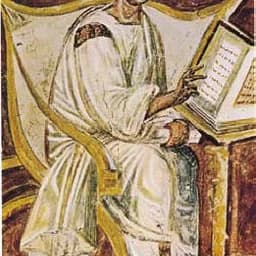
- Blessed Augustine of Hippo
- Tractates on the Gospel of John, Tractate 110
Venerated in the East as Blessed; his Johannine tractates are cited in later Byzantine catenae.
- St. Hilary of Poitiers
- On the Trinity
His On the Trinity is quoted on John 17 only through the Catena Aurea; no standalone public-domain English commentary on John by him exists.
Read the sources: Chrysostom on John, Homilies 80 and 82 (CCEL) · Cyril of Alexandria on John, Book XI (tertullian.org) · Augustine, Tractate 110 on John (CCEL) · Catena Aurea on John (isidore.co)
The High Priestly Prayer (John 17)
The texts below are quoted verbatim from public-domain English translations; nothing is paraphrased.
St. John Chrysostom (c. 347–407)
Homilies on the Gospel of John, Homilies 80 and 82 (on John 17:1–23) Source: trans. in the Nicene and Post-Nicene Fathers, First Series, Vol. 14. Public domain. Full text: https://www.ccel.org/ccel/schaff/npnf114.iv.lxxxii.html
On "the only true God," and that this word "only" does not shut the Son out of true Godhead:
On "that they all may be one," and the measure of that likeness:
On the unity of the faithful, which is a glory greater even than miracles:
St. Cyril of Alexandria (c. 376–444)
Commentary on the Gospel of John, Book XI (on John 17:3–21) Source: trans. T. Randell, Library of Fathers, 1885. Public domain. Full text: https://www.tertullian.org/fathers/cyril_on_john_11_book11.htm
On "the only true God," that the Son is not thereby excluded from being true God:
On "the glory which I had with Thee before the world was," and the eternal reign of the Son:
On "that they may be one," the disciples' unity patterned upon the unity of Father and Son:
Theophylact of Ohrid (c. 1055–1107)
Explanation of the Gospel of John (on John 17:25) As preserved in the Catena Aurea on John. Public domain. Full text: https://isidore.co/aquinas/english/CAJohn.htm
On "O righteous Father, the world hath not known Thee," the last petition of the prayer:
Blessed Augustine of Hippo (354–430)
Tractates on the Gospel of John, Tractate 110 (on John 17:21–23) Source: trans. in the Nicene and Post-Nicene Fathers, First Series, Vol. 7. Public domain. Full text: https://www.ccel.org/ccel/schaff/npnf107.iii.cxi.html
On "that they all may be one; as Thou, Father, in me, and I in Thee," and how our oneness differs from theirs:
On the two ways we are made one, in Their nature and in ours:
On "that the world may believe that Thou hast sent me," and which world is meant:
St. Hilary of Poitiers (c. 310–367)
On the Trinity (on John 17:1–23) As preserved in the Catena Aurea on John. Public domain. Full text: https://isidore.co/aquinas/english/CAJohn.htm
On "glorify Thy Son," that He is Son not in name but by nature:
On "that Thy Son also may glorify Thee," that this exchange of glory shows one Godhead in both:
On "that they all may be one," against those who reduce the oneness of Father and Son to mere agreement of will: