The Last Supper
Matt 26:26–29; Mark 14:22–25; Luke 22:14–20 · Passion week in Jerusalem
Scripture
Matthew 26:26–29
nd as they were eating, Jesus took bread, and blessed it, and brake it, and gave it to the disciples, and said, Take, eat; this is my body. 27And he took the cup, and gave thanks, and gave it to them, saying, Drink ye all of it; 28For this is my blood of the new testament, which is shed for many for the remission of sins. 29But I say unto you, I will not drink henceforth of this fruit of the vine, until that day when I drink it new with you in my Father’s kingdom.
King James Version · public domain
Mateu 26:26–29
dhe ata tek po ishinë dyke ngrënë, Jisuj mori bukënë, edhe si e bekoj, e theu, e u’a dha nxënësvet, edhe tha, 27Merrni e hani, ky është trupi im. Edhe mori potirinë, edhe si ufal ndersë, u’a dha atyre, 28dyke thënë, Pini të-gjithë prej këti; sepse është gjaku im i dhjatës’ së re, që derdhetë për shumë për ndjesën’ e fajevet. 29Edhe po u them juve, se nukë kam për të pirë që ndashti e tutje nga këjo pemë, që pjell hardhia, gjer mb’atë ditë kur t’a pi të-re bashkë me ju ndë mbretërit të t’im Eti.
Kristoforidhi, Dhiata e Re Toskërisht 1879 · zotërim publik
In their own words
For the bread before the consecration is common bread, but when the mystery has consecrated it, it is, and it is called, the Body of Christ.
St. Gregory of Nyssa, on the Eucharistic mystery (on Luke 22:19) (Catena Aurea)
Patristic sources
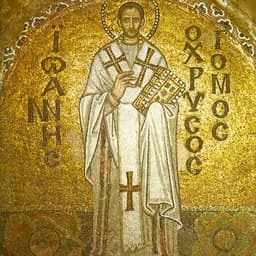
- St. John Chrysostom
- Homilies on Matthew, Hom. 82
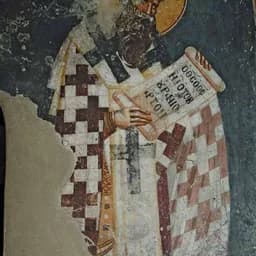
- St. Cyril of Alexandria
- Commentary on Luke, Sermon 142
- St. Gregory of Nyssa
- On the Eucharistic mystery (Catena Aurea on Luke)
The realist Eucharistic confession is preserved through the Catena Aurea; his Great Catechism teaches the same change of the gifts.
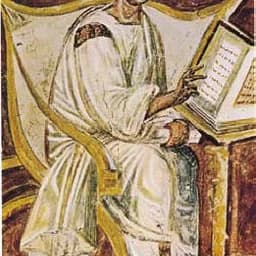
- Blessed Augustine of Hippo
- As preserved in the Catena Aurea on Matthew
Venerated in the East as Blessed; his Johannine tractates are cited in later Byzantine catenae.
- St. Jerome
- As preserved in the Catena Aurea on Matthew
- St. Hilary of Poitiers
- Commentary on Matthew (Catena Aurea)
Read the sources: Chrysostom on Matthew, Homily 82 (CCEL) · Cyril on Luke, Sermon 142 (tertullian.org) · Catena Aurea on Matthew 26 (CCEL) · Catena Aurea on Luke (isidore.co)
The Last Supper (Matthew 26:26–29; Mark 14:22–25; Luke 22:14–20)
The texts below are quoted verbatim from public-domain English translations; nothing is paraphrased.
St. John Chrysostom (c. 347–407)
Homilies on the Gospel of Matthew, Homily 82 (on Matthew 26:26–28) Source: trans. in the Nicene and Post-Nicene Fathers, First Series, Vol. 10. Public domain. Full text: https://www.ccel.org/ccel/schaff/npnf110/npnf110.iii.LXXVIII.html
On Judas, who received the mystery yet to his condemnation:
On why He instituted the sacrament at the Passover, that the type might yield to the truth:
On "This is my blood of the New Testament":
On "I will not drink henceforth of this fruit of the vine":
St. Cyril of Alexandria (c. 376–444)
Commentary on the Gospel of Luke, Sermon 142 (on Luke 22:17–22) Source: trans. R. Payne Smith, Library of Fathers, 1859. Public domain. Full text: https://www.tertullian.org/fathers/cyril_on_luke_13_sermons_135_145.htm
On the bloodless sacrifice by which Christ dwells within us:
On the realist confession, that Christ being the Truth cannot lie:
On how God transforms the gifts set before us into the efficacy of His flesh:
St. Gregory of Nyssa (c. 335–395)
On the consecration of the Holy Gifts (on Luke 22:19) As preserved in the Catena Aurea on Luke. Public domain. Full text: https://isidore.co/aquinas/english/CALuke.htm
On "This is my body which is given for you":
Blessed Augustine of Hippo (354–430)
On the Body and Blood given under bread and wine (on Matthew 26:26–29) As preserved in the Catena Aurea on Matthew. Public domain. Full text: https://www.ccel.org/ccel/aquinas/catena1.ii.xxvi.html
On the mystery of the Church's unity, signified in bread and wine:
On the new wine of the Father's kingdom, understood as the immortality of risen bodies:
St. Jerome (c. 347–420)
On the true paschal sacrament (on Matthew 26:26–29) As preserved in the Catena Aurea on Matthew. Public domain. Full text: https://www.ccel.org/ccel/aquinas/catena1.ii.xxvi.html
On the passing from the typical Passover to the true paschal sacrament after the order of Melchisedech:
On Christ as both host and offering:
St. Hilary of Poitiers (c. 310–367)
Commentary on Matthew (on Matthew 26:29) As preserved in the Catena Aurea on Matthew. Public domain. Full text: https://www.ccel.org/ccel/aquinas/catena1.ii.xxvi.html
On the promise to drink hereafter in the kingdom, from which Judas has no share: