The Lord’s Prayer
Matt 6:9–13; Luke 11:1–4 · Early ministry in Galilee
Scripture
Matthew 6:9–13
fter this manner therefore pray ye: Our Father which art in heaven, Hallowed be thy name. 10Thy kingdom come. Thy will be done in earth, as it is in heaven. 11Give us this day our daily bread. 12And forgive us our debts, as we forgive our debtors. 13And lead us not into temptation, but deliver us from evil: For thine is the kingdom, and the power, and the glory, for ever. Amen.
King James Version · public domain
Mateu 6:9–13
o ju faluni kështu: Ati ynë që je ndë qiejt, ushënjtëroftë emëri yt; 10Arthtë mbretëria jote; ubëftë dashurimi yt, si ndë qiell, edhe mbë dhet; 11Bukënë t’ënë të-përditëshmen’ ep-na neve sot; 12Edhe fal-na fajetë t’anë, sindëkur edhe neve u’a falimë fajtorëvet t’anë; 13Edhe mos na shtjerë ndë ngasje, po shpëto-na nga i-ligu; sepse jotja është mbretëria e fuqia e lavdia ndë jetët të jetëvet; Amin.
Kristoforidhi, Dhiata e Re Toskërisht 1879 · zotërim publik
In their own words
Our prayer is public and common; and when we pray, we pray not for one, but for the whole people, because we the whole people are one.
St. Cyprian of Carthage, On the Lord's Prayer (Treatise IV)
Patristic sources
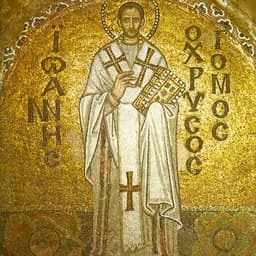
- St. John Chrysostom
- Homilies on Matthew, Hom. 19
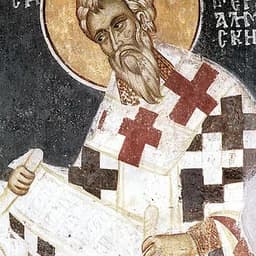
- St. Cyril of Jerusalem
- On the Mysteries V (Mystagogic Catechesis 5)
Greek Father of the Jerusalem church; his mystagogic catecheses expound the Lord's Prayer petition by petition within the Eucharistic liturgy.
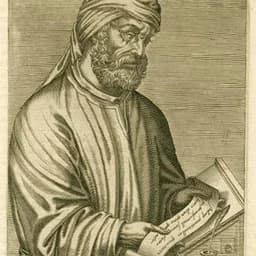
- Tertullian
- On Prayer
Earliest surviving Latin exposition of the Lord's Prayer; quoted for its ante-Nicene witness.
- St. Cyprian of Carthage
- On the Lord's Prayer (Treatise IV)
Canonical heading St. Cyprian of Carthage (c. 200–258).
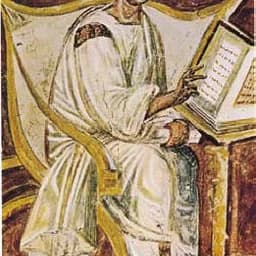
- Blessed Augustine of Hippo
- Our Lord's Sermon on the Mount, Book II
Venerated in the East as Blessed; his Sermon on the Mount gives a full petition-by-petition exposition.
Read the sources: Chrysostom, Homilies on Matthew, Homily 19 (CCEL) · Cyril of Jerusalem, On the Mysteries V (CCEL) · Tertullian, On Prayer (CCEL) · Cyprian, On the Lord's Prayer (CCEL) · Augustine, Our Lord's Sermon on the Mount, Book II (CCEL)
The Lord's Prayer (Matthew 6:9–13; Luke 11:1–4)
The texts below are quoted verbatim from public-domain English translations; nothing is paraphrased.
St. John Chrysostom (c. 347–407)
Homilies on the Gospel of Matthew, Homily 19 (on Matthew 6:9–13). Trans. in the Nicene and Post-Nicene Fathers, First Series, Vol. 10. Public domain. Full text: https://www.ccel.org/ccel/schaff/npnf110/npnf110.iii.XIX.html
On why the Lord teaches us to say "Our Father" and not "My Father":
On "Hallowed be Thy name":
On "Thy kingdom come":
On "Give us this day our daily bread," which he reads as bread for the day:
On "but deliver us from the evil one":
St. Cyril of Jerusalem (c. 313–386)
On the Mysteries V (Mystagogic Catechesis 5), sections 11–18 (on Matthew 6:9–13). Trans. in the Nicene and Post-Nicene Fathers, Second Series, Vol. 7. Public domain. Full text: https://www.ccel.org/ccel/schaff/npnf207/npnf207.ii.xxvii.html
On "Our Father which art in heaven," and the boldness of calling God Father:
On "Hallowed be Thy name":
On "our daily bread," which he reads as the supersubstantial Bread of the Eucharist:
On "but deliver us from evil," the evil being the devil:
Tertullian (c. 155 – c. 220)
On Prayer, chapters 2, 6, 8 (on Matthew 6:9–13). Trans. in the Ante-Nicene Fathers, Vol. 3. Public domain. Full text: https://www.ccel.org/ccel/schaff/anf03/anf03.vi.iv.html
On "Our Father which art in heaven":
On "Give us this day our daily bread," understood spiritually of Christ:
On "Lead us not into temptation," and that God Himself tempts no one:
St. Cyprian of Carthage (c. 200–258)
On the Lord's Prayer (Treatise IV) (on Matthew 6:9–13). Trans. in the Ante-Nicene Fathers, Vol. 5. Public domain. Full text: https://www.ccel.org/ccel/schaff/anf05/anf05.iv.v.iv.html
On the communal "us" and "our":
On the boldness of calling God Father and being called sons of God:
On "Give us this day our daily bread," Christ Himself being that Bread:
On "Forgive us our debts, as we forgive our debtors," and the condition it lays on us:
Blessed Augustine of Hippo (354–430)
Our Lord's Sermon on the Mount, Book II (on Matthew 6:9–13). Trans. in the Nicene and Post-Nicene Fathers, First Series, Vol. 6. Public domain. Full text: https://www.ccel.org/ccel/schaff/npnf106/npnf106.v.iii.iv.html
On "Our Father," the grace of adoption:
On the brotherhood the word "Our" confesses:
On "Lead us not into temptation":