All entriesparable

The lost coin

Luke 15:8–10 · Journey to Jerusalem

Luke 15:8–10

ither what woman having ten pieces of silver, if she lose one piece, doth not light a candle, and sweep the house, and seek diligently till she find it? 9And when she hath found it, she calleth her friends and her neighbours together, saying, Rejoice with me; for I have found the piece which I had lost. 10Likewise, I say unto you, there is joy in the presence of the angels of God over one sinner that repenteth.

King James Version · public domain

Lluka 15:8–10

cila grua që ka dhjetë dhrahmi, ndë i humptë një dhrahmi, nukë ndes kandilenë, edhe fshin shtëpinë, edhe kërkon me kujdes, gjersa t’e gjenjë? 9Edhe si t’a gjenjë, thërret miqeshat’ e fqinjatë, dyke thënë, gëzohi bashkë me mua, se gjeta dhrahminë që humba. 10Kështu, po u them juve, bënetë gëzim përpara ëngjëjvet të Perëndisë për një fajtuar që pendonetë.

Kristoforidhi, Dhiata e Re Toskërisht 1879 · zotërim publik

Summary

The silver coin bears the king's image, and the Fathers read it as the human soul stamped with the likeness of God, fallen into the dust of sin where its royal impress can no longer be seen. The coin does not cease to be the king's because it is lost; its value is hidden, not destroyed. So a dignity remains in fallen man and waits to be uncovered: the divine image that sin obscures but cannot erase.

St. Cyril of Alexandria sets this parable beside the shepherd of the foregoing one as another image of the same divine gentleness, the one saving care that seeks what is its own. The lamp the woman kindles he understands as Christ Himself, for it is the wisdom of God the Father, which is the Son, that found us when the true Light shone upon a world in shadow and the lost image was seen again. The sweeping of the whole house is the diligence of that mercy, which leaves nothing untouched until the soul is found. The tradition also reads the woman as the Church and the lamp as the lamp of the Word, while St. Ambrose joins this parable to the lost sheep and the prodigal as a threefold seeking, by the Son, by the Church or Wisdom, and by the Father: one divine search for man under three figures.

The finding restores the image-bearer to his first dignity and to joy, and the Fathers note that this joy is shared, for "there is joy before the angels of God over one sinner that repents." Heaven keeps festival over a single soul recovered, for the coin's value is measured by the King whose face it bears. The lamp, the search, and the rejoicing together set forth the whole work of salvation, the theosis by which the obscured image is cleansed and the likeness shines again.

In their own words

it is clearly shown, that we are in the royal likeness and image, even that of God over all. For the drachma is, I suppose, the denarius, on which is stamped the royal likeness,

St. Cyril of Alexandria, Commentary on Luke, Sermon CVI (on Luke 15:1-10); Cyril, Commentary on Luke (R. Payne Smith, 1859)

The Parable of the Lost Coin (Luke 15:8–10)

Public-Domain Patristic Commentary

To the parable of the lost sheep the Lord at once joins its twin. "Either what woman having ten pieces of silver, if she lose one piece, doth not light a candle, and sweep the house, and seek diligently till she find it? And when she hath found it, she calleth her friends and her neighbours together, saying, Rejoice with me; for I have found the piece which I had lost." And He draws the same conclusion as before: "Likewise, I say unto you, there is joy in the presence of the angels of God over one sinner that repenteth." Where the sheep was a living creature that strayed, the coin is a piece of money stamped with an image, and the Fathers heard in that stamped image the image of God in man, lost and sought and found. The parable is found only in Luke and pairs with the lost sheep.

Several Fathers, of the East and of the West, give the parable nearly the same reading, each quoted below verbatim from a public-domain translation. The shorter excerpts are drawn from the Catena Aurea on Luke (St. Thomas Aquinas, trans. J. H. Newman, 1841).


St. Cyril of Alexandria (c. 376–444)

From his Commentary on Luke (Homily 106, on Luke 15:1–10), trans. R. Payne Smith, 1859. Public domain.

On the drachma stamped with the royal likeness, the image of God we bear:

And by this second parable, in which that which was lost is compared to a drachma, and that again as one out of ten, that is of a perfect number, and of a sum complete in the reckoning;—for the number ten also is perfect, being the close of the series from the unit upwards;—it is clearly shown, that we are in the royal likeness and image, even that of God over all. For the drachma is, I suppose, the denarius, on which is stamped the royal likeness.

On our being found by Christ and changed back into His image:

That we then who had fallen, and, so to speak, been lost, have been found by Christ, and transformed by holiness and righteousness into His image, how can any one doubt, when the blessed Paul has thus written, "But we all, with open face beholding as in a mirror the glory of the Lord, are changed into the same image, from glory to glory, as of the Lord the Spirit."

On the lighting of the lamp, which is the Wisdom of the Father shining out as the Son:

A search then was made for that which had fallen, for which purpose the woman lighted a lamp. For we were found, as I said, by the wisdom of God the Father, Which is the Son, when the divine and intellectual light shone upon us, and the sun arose, and "the day star ascended, and the day dawned," according to the Scripture.

On the light by which the lost is saved, and the joy of the powers above:

By the light therefore that which was lost is saved, and there was joy thereby to the powers above. For they rejoice even in one sinner that repents, as He has taught us Who knows all things.


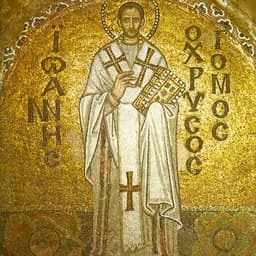
St. John Chrysostom (c. 347–407)

As preserved in the Catena Aurea on Luke. Public domain.

On the second parable, in which man is the silver stamped with the royal image:

But now is added a second parable, in which the race of man is compared to a piece of silver which was lost, by which he shows that we were made according to the royal likeness and image, that is to say, of the most high God.

On the coin that bears the impress of the King:

For the piece of silver is a coin having the impress of the king's image.


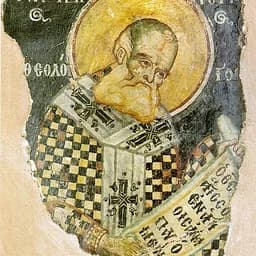
St. Gregory Nazianzen (c. 329–390)

As preserved in the Catena Aurea on Luke. Public domain.

On the heavenly powers, the ministers of God's dispensation, made partakers of His joy:

But the piece of silver being found, He makes the heavenly powers partakers of the joy whom He made the ministers of His dispensation.


St. Gregory of Nyssa (c. 335–395)

As preserved in the Catena Aurea on Luke. Public domain.

On the one coin without which all the other virtues profit nothing:

This I suppose is what our Lord sets before us in the search after the lost piece of silver, that no advantage attaches to us from the external virtues which He calls pieces of silver, although all of them be ours, as long as that one is lacking to the widowed soul, by which in truth it obtains the brightness of the Divine image.

On the candle of the divine word, and the royal image hid under the dirt of the flesh:

Wherefore He first bids us light a candle, that is to say, the divine word which brings hidden things to light, or perhaps the torch of repentance. But in his own house, that is, in himself and his own conscience, must a man seer; for the lost piece of silver, that is, the royal image, which is not entirely defaced, but is hid under the dirt, which signifies its corruption of the flesh, and this being diligently wiped away, that is, washed out by a well-spent life, that which was sought for shines forth.

On calling the companion virtues to share the joy:

Therefore ought she who has found it to rejoice, and to call to partake of her joy the neighbors, (that is, the companion virtues,) reason, desire, and anger, and whatever powers are observed round the soul, which she teaches to rejoice in the Lord.


Theophylact of Ohrid (c. 1050–1107)

As preserved in the Catena Aurea on Luke. Public domain.

On the friends and neighbours of God, the ranks of the heavenly powers:

Either they are friends as performing His will, but neighbors as being spiritual; or perhaps His friends are all the heavenly powers, but His neighbors those that come near to Him, as Thrones, Cherubims, and Seraphims.


St. Gregory the Great (c. 540–604)

From his Homilies on the Gospels (Homily 34), as preserved in the Catena Aurea (Newman trans., 1841). Public domain.

On the woman who is God, and the ten coins as the nine orders of angels and man the tenth:

He who is signified by the shepherd, is also by the woman. For it is God Himself, God and the wisdom of God, but the Lord has formed the nature of angels and men to know Him, and has created them after His likeness. The woman then had ten pieces of silver, because there are nine orders of angels, but that the number of the elect might be filled up, man the tenth was created.

On the image stamped on the coin, lost when man departed from God's likeness:

And because there is an image impressed on the piece of silver, the woman lost the piece of silver when man (who was created after the image of God) by sinning departed from the likeness of his Creator.

On the lighting of the candle, the Wisdom of God shining out in human flesh:

The woman lighted a candle because the wisdom of God appeared in man. For the candle is a light in an earthen vessel, but the light in an earthen vessel is the Godhead in the flesh.

On the disturbed house, and the conscience cleansed by holy fear:

But the candle being lit, it follows, And disturbs the house. Because verily no sooner had his Divinity shone forth through the flesh, than all our consciences were appalled ... because the corrupt mind if it be not first overthrown through fear, is not cleansed from its habitual faults.


Blessed Augustine (354–430)

As preserved in the Catena Aurea on Luke. Public domain.

On the nine coins as those who, trusting in themselves, prefer themselves to repentant sinners:

Or by the nine pieces of silver, as by the ninety and nine sheep, He represents those who trusting in themselves, prefer themselves to sinners returning to salvation. For there is one wanting to nine to make it ten, and to ninety-nine to make it a hundred. To that One He ordains all who are reconciled by repentance.


Note on sources and other Fathers

The Fathers read the lost coin with one voice. All take the woman for God, "God and the wisdom of God," and all fasten on the coin's stamp: a drachma bears a king's likeness, and "we are in the royal likeness and image, even that of God over all," which "man, who was created after the image of God, by sinning" departed from. Chrysostom names the heart of it at once: the second parable shows "that we were made according to the royal likeness and image," for "the piece of silver is a coin having the impress of the king's image." Cyril counts the ten coins as a "perfect number," the whole reckoning of God's rational creation, as he had counted the hundred sheep; and where Gregory the Great hears in the lit candle "the Godhead in the flesh," Cyril hears the same Incarnation, "the wisdom of God the Father, Which is the Son," the light by which the lost coin is found.

Gregory of Nyssa turns the parable inward: the other virtues, "the external virtues which He calls pieces of silver," profit nothing while the one is lost "by which in truth it obtains the brightness of the Divine image"; the candle is "the divine word which brings hidden things to light, or perhaps the torch of repentance," and the royal image is "not entirely defaced, but is hid under the dirt" of the flesh until "washed out by a well-spent life." The found soul then calls "the companion virtues," reason and desire and anger, to "rejoice in the Lord." Augustine reads the nine that remain as those who, "trusting in themselves, prefer themselves to sinners returning to salvation," while to the one returning "He ordains all who are reconciled by repentance."

All close on the joy of heaven. Gregory Nazianzen sees God make "the heavenly powers partakers of the joy whom He made the ministers of His dispensation"; Theophylact names them, "the heavenly powers" who are God's friends, and as His neighbours "Thrones, Cherubims, and Seraphims." Gregory the Great adds the upheaval of conscience, that when Christ's divinity shines through the flesh "all our consciences were appalled," for "the corrupt mind, if it be not first overthrown through fear, is not cleansed." The Catena Aurea also preserves further remarks on this passage which are not quoted here. This parable pairs with the lost sheep, which immediately precedes it in Luke.

Patristic sources