The Lowest Place at the Feast
Luke 14:7–11 · Journey to Jerusalem
Scripture
Luke 14:7–11
nd he put forth a parable to those which were bidden, when he marked how they chose out the chief rooms; saying unto them, 8When thou art bidden of any man to a wedding, sit not down in the highest room; lest a more honourable man than thou be bidden of him; 9And he that bade thee and him come and say to thee, Give this man place; and thou begin with shame to take the lowest room. 10But when thou art bidden, go and sit down in the lowest room; that when he that bade thee cometh, he may say unto thee, Friend, go up higher: then shalt thou have worship in the presence of them that sit at meat with thee. 11For whosoever exalteth himself shall be abased; and he that humbleth himself shall be exalted.
King James Version · public domain
Lluka 14:7–11
dhe atyreve që ishinë ftuarë u thoshte një paravoli, (sepse vinte re, qysh sgjithninë vëndet’ e-parë,) dyke thënë atyreve, 8Kur të ftonesh nga ndonjëj ndë dasmë, mos rri ndë kryet të mësallësë, semos është ftuarë prej ati ndonjë tjetërë m’i-nderçim se ti, 9Edhe vjen ay që ka ftuarë ty edhe atë, e të thotë, Ep-i vëndinë këtij; edhe atëhere dotë zësh me turp të rrish ndë vëntt të fundit. 10Po kur të ftonesh, shko e rri ndë vëntt të fundit, që, kur të vinj’ ay që të ka ftuarë, të të thotë, Mik, hipë më sipërë. Atëhere dotë jetë lavdim për ty përpara atyreve që rrinë ndë mësallë bashkë me ty. 11Sepse kushdo që ngre lart vetëhen’ e ti dotë përunjetë, edhe ay që përunj vetëhen’ e ti dotë ngrihetë lart.
Kristoforidhi, Dhiata e Re Toskërisht 1879 · zotërim publik
In their own words
O! what great ignominy is there in having so to do! It is like a theft, so to speak, and the restitution of the stolen goods. He must restore what he has seized; for he had no right to take it.
St. Cyril of Alexandria, Commentary on Luke, Sermon 102 (on Luke 14:7–11)
Patristic sources
- St. Cyril of Alexandria
- Commentary on Luke, Sermon 102
The primary and only standalone public-domain voice on this pericope; Payne Smith's 1859 translation of his Luke commentary.
- St. John Chrysostom
- On Luke 14:7–11 (Catena Aurea on Luke)
- St. Basil the Great
- On humility at the feast (Catena Aurea on Luke)
- Theophylact of Ohrid
- Explanation of Luke (Catena Aurea)
His Gospel exegesis survives in public-domain English only through the Catena Aurea (Stade's translation is under copyright).
- St. Ambrose of Milan
- Exposition of Luke (Catena Aurea)
- St. Bede the Venerable
- Commentary on Luke (Catena Aurea)
Read the sources: Cyril on Luke, Sermons 99–109 (tertullian.org) · Catena Aurea on Luke (isidore.co)
The Lowest Place at the Feast (Luke 14:7–11)
The texts below are quoted verbatim from public-domain English translations; nothing is paraphrased.
St. Cyril of Alexandria (c. 376–444)
Commentary on the Gospel of Luke, Sermon CII (on Luke 14:7–11) Source: trans. R. Payne Smith, Library of Fathers, 1859. Public domain. Full text: https://www.tertullian.org/fathers/cyril_on_luke_10_sermons_99_109.htm
On the Saviour making even a small occasion at the table into an urgent counsel:
On why the warning was spoken to those who seized the uppermost seats:
On the shame of being made to give place:
On the modest man who yields his own place and is honoured for it:
On humility as the very rule of virtue:
On how the man who knows his own nothingness is exalted before God:
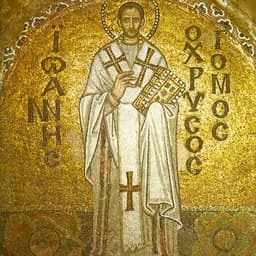
St. John Chrysostom (c. 347–407)
On the guest who sought the highest place (on Luke 14:7–11) As preserved in the Catena Aurea on Luke, trans. J. H. Newman, 1841. Public domain. Full text: https://isidore.co/aquinas/english/CALuke.htm
On the seeker of honour who reaps dishonour instead:
St. Basil the Great (c. 330–379)
On taking the lowest place (on Luke 14:7–11) As preserved in the Catena Aurea on Luke, trans. J. H. Newman, 1841. Public domain. Full text: https://isidore.co/aquinas/english/CALuke.htm
On how even the lowest place must be taken without contention, lest humility itself become a fresh occasion of pride:
Theophylact of Ohrid (c. 1055–1107)
Explanation of the Gospel of Luke (on Luke 14:7–11) As preserved in the Catena Aurea on Luke, trans. J. H. Newman, 1841. Public domain. Full text: https://isidore.co/aquinas/english/CALuke.htm
On why these seemingly small precepts are worthy of the Word of God:
On the Master of humility cutting away every shoot of the bad root:
On how the honour men grasp at is never secure:
St. Ambrose of Milan (c. 339–397)
Exposition of the Gospel of Luke (on Luke 14:7–11) As preserved in the Catena Aurea on Luke, trans. J. H. Newman, 1841. Public domain. Full text: https://isidore.co/aquinas/english/CALuke.htm
On the order of the teaching — first the body healed, then humility taught:
St. Bede the Venerable (c. 673–735)
Commentary on the Gospel of Luke (on Luke 14:7–11) As preserved in the Catena Aurea on Luke, trans. J. H. Newman, 1841. Public domain. Full text: https://isidore.co/aquinas/english/CALuke.htm
On the wedding feast as the Church, where none may exalt himself by his merits:
On why the reversal must be understood of God's judgment, not the esteem of men: