The Magnificat
Luke 1:46–56 · Infancy and childhood
Scripture
Luke 1:46–56
nd Mary said, My soul doth magnify the Lord, 47And my spirit hath rejoiced in God my Saviour. 48For he hath regarded the low estate of his handmaiden: for, behold, from henceforth all generations shall call me blessed. 49For he that is mighty hath done to me great things; and holy is his name. 50And his mercy is on them that fear him from generation to generation. 51He hath shewed strength with his arm; he hath scattered the proud in the imagination of their hearts. 52He hath put down the mighty from their seats, and exalted them of low degree. 53He hath filled the hungry with good things; and the rich he hath sent empty away. 54He hath holpen his servant Israel, in remembrance of his mercy; 55As he spake to our fathers, to Abraham, and to his seed for ever. 56And Mary abode with her about three months, and returned to her own house.
King James Version · public domain
Lluka 1:46–56
dhe Mariama tha, Shpirti im madhëron Zonë, 47Edhe fryma ime ugëzua mbë Perëndinë shpëtimtarinë t’im; 48Sepse shtyri sytë mbë të-përunjurit të shërbëtores’ së ti; sepse na që tashi e paskëtaj gjithë brezatë dotë më lumëronjënë; 49Sepse i-Forti bëri punë të-mëdha tek unë, edhe i-shënjtëruarë është emër’ i ati; 50Edhe përdëllim’ i ati është breza pas brezash mb’ata që i kanë frikë. 51Bëri pushtet me krahun’ e ti; përndau madhështorë me mendimn’ e zëmërës’ s’atyre. 52Rrëzoj fuqitarë prej fronesh, edhe lartësoj njerës të-përunjurë. 53Të-uriturë i mbushi së-mirash, edhe të-pasurë i dërgoj jashtë sbrazëtë. 54I ndihu Israilit shërbëtorit të ti, dyke sjellë ndër mëntt përdëllimn’ e ti, 55Sikundrë foli mb’atëritë t’anë, mb’Avraaminë e mbë farën’ e ati, për jetën’ e jetësë. 56Edhe Mariama ndënji bashkë me atë afëro tre muaj; pastaj ukthye ndë shtëpit të saj.
Kristoforidhi, Dhiata e Re Toskërisht 1879 · zotërim publik
In their own words
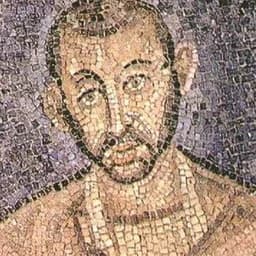
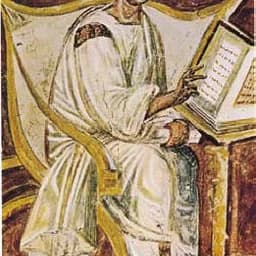
O true lowliness, which has borne God to men, has given life to mortals, made new heavens and a pure earth, opened the gates of Paradise, and set free the souls of men. The lowliness of Mary was made the heavenly ladder, by which God descended upon earth.
Blessed Augustine of Hippo, on the Magnificat (Catena Aurea on Luke)
Patristic sources
- St. Basil the Great
- On the Magnificat (Catena Aurea on Luke)
Catena-only for this passage; no standalone public-domain English of his exposition here.
- St. Cyril of Alexandria
- On the Magnificat (Catena Aurea on Luke)
The bare "Cyril" tag in the Luke Catena denotes Cyril of Alexandria (distinguished from the "Cyril of Jerus." tag at v. 51).
- Theophylact of Ohrid
- Explanation of Luke (Catena Aurea on Luke)
- Origen of Alexandria
- On the Magnificat (Catena Aurea on Luke)
Quoted only for these unexceptionable passages; some of his speculations were condemned in 553.
- St. Ambrose of Milan
- Exposition of Luke (Catena Aurea on Luke)
- Blessed Augustine of Hippo
- On the Magnificat (Catena Aurea on Luke)
Venerated in the East as Blessed.
Read the sources: Catena Aurea on Luke (isidore.co)
The Magnificat (Luke 1:46–56)
The texts below are quoted verbatim from public-domain English translations; nothing is paraphrased.
St. Basil the Great (c. 330–379)
On the Magnificat (on Luke 1:46–49) As preserved in the Catena Aurea on Luke. Public domain. Full text: https://isidore.co/aquinas/english/CALuke.htm
On the Virgin's soul mounting up to magnify God:
On the joy of the Spirit in which she rejoices:
On "holy is his name":
St. Cyril of Alexandria (c. 376–444)
On the Magnificat (on Luke 1:52) As preserved in the Catena Aurea on Luke. Public domain. Full text: https://isidore.co/aquinas/english/CALuke.htm
On the mighty put down from their seats and the lowly exalted:
Theophylact of Ohrid (c. 1055–1107)
On the Magnificat (on Luke 1:49–55) As preserved in the Catena Aurea on Luke. Public domain. Full text: https://isidore.co/aquinas/english/CALuke.htm
On why she is pronounced blessed:
On the mercy remembered toward Abraham and his seed:
Origen of Alexandria (c. 185–254)
On the Magnificat (on Luke 1:46–47) As preserved in the Catena Aurea on Luke. Public domain. Full text: https://isidore.co/aquinas/english/CALuke.htm
On how the soul magnifies the Lord by being made great in His image:
On the order of magnifying first and then rejoicing:
St. Ambrose of Milan (c. 339–397)
On the Magnificat (on Luke 1:46–47) As preserved in the Catena Aurea on Luke. Public domain. Full text: https://isidore.co/aquinas/english/CALuke.htm
On good coming into the world through a woman:
On having the spirit of Mary, that every soul may rejoice in the Lord:
Blessed Augustine of Hippo (354–430)
On the Magnificat (on Luke 1:48–49) As preserved in the Catena Aurea on Luke. Public domain. Full text: https://isidore.co/aquinas/english/CALuke.htm
On "he hath regarded the low estate of his handmaiden":
On the great things the Mighty One has done for her: