The man at the pool of Bethesda
John 5:1–15 · Early ministry in Galilee
Scripture
John 5:1–15
fter this there was a feast of the Jews; and Jesus went up to Jerusalem. 2Now there is at Jerusalem by the sheep market a pool, which is called in the Hebrew tongue Bethesda, having five porches. 3In these lay a great multitude of impotent folk, of blind, halt, withered, waiting for the moving of the water. 4For an angel went down at a certain season into the pool, and troubled the water: whosoever then first after the troubling of the water stepped in was made whole of whatsoever disease he had. 5And a certain man was there, which had an infirmity thirty and eight years. 6When Jesus saw him lie, and knew that he had been now a long time in that case, he saith unto him, Wilt thou be made whole? 7The impotent man answered him, Sir, I have no man, when the water is troubled, to put me into the pool: but while I am coming, another steppeth down before me. 8Jesus saith unto him, Rise, take up thy bed, and walk. 9And immediately the man was made whole, and took up his bed, and walked: and on the same day was the sabbath. 10The Jews therefore said unto him that was cured, It is the sabbath day: it is not lawful for thee to carry thy bed. 11He answered them, He that made me whole, the same said unto me, Take up thy bed, and walk. 12Then asked they him, What man is that which said unto thee, Take up thy bed, and walk? 13And he that was healed wist not who it was: for Jesus had conveyed himself away, a multitude being in that place. 14Afterward Jesus findeth him in the temple, and said unto him, Behold, thou art made whole: sin no more, lest a worse thing come unto thee. 15The man departed, and told the Jews that it was Jesus, which had made him whole.
King James Version · public domain
Joani 5:1–15
as këtyreve ishte një e-kremte e Judhenjet; edhe Jisuj hipi ndë Jerusalim. 2Edhe ndë Jerusalim afërë derës’ së dhënet është një pellk uji që quhetë Ebraisht Vithesda, edhe ka pesë kamare. 3Ndër këto dirgjej shumë shumicë të-sëmurësh, të-verbërësh, të-çalësh, të-thatësh që pritninë të-luajturit’ e ujit. 4Sepse kohë mbë kohë sbriste një ëngjëll ndë pellkt, edhe trazonte ujëtë; cili pra të hynte më përpara, pas të-trazuarit t’ujit, bënej i-shëndoshë prej çdo farë smundjeje që të kishte. 5Edhe atje ishte një njeri, që ishte i-sëmurë tri-dhjet’ e tetë vjet. 6Jisuj kur e pa këtë se po dirgjej, edhe mori vesh se prej shumë kohe ndashti ishte i-sëmurë, i thotë. A do të bënesh i-shëndoshë? 7I sëmuri i upërgjeq, Zot, s’kam njeri të më vërë ndë pellkt, kur trazonet’ ujëtë; sepse tek po vinj unë, tjetërë sbret përpara meje. 8Jisuj i thotë, Çohu, ngri shtratinë t’ënt, edhe ecë. 9Edhe për-një-here njeriu ubë i-shëndoshë, edhe ngriti shtratin’ e ti, edhe ecënte. Edhe atë ditë ishte e-shëtunë. 10Judhenjtë pra i thoshin’ ati që ushërua Esht’ e-shëtunë; nuk’ ësht’ e udhësë të ngresh shtratinë. 11Ay u upërgjeq atyre, Ay që më shëroj më tha, Ngri shtratinë t’ënt, edhe ecë. 12E pyetnë pra, Cili është ay njeri që të tha, Ngri shtratinë t’ënt’ edhe ecë? 13Po ay që ushërua nukë dinte cili është; Sepse Jisuj ushtëmenk, sepse kishte shumë gjindje nd’atë vent. 14Pastaj Jisuj e gjen atë ndë hieroret, edhe i tha, Na tek ubëre i-shëndoshë; mos bëj më faj, që të mos të bënetë ndonjë gjë m’e keqe. 15Njeriu pra shkoj, edhe u dha zë Judhenjet, se ay që e bëri të-shëndoshë është Jisuj.
Kristoforidhi, Dhiata e Re Toskërisht 1879 · zotërim publik
In their own words
He raised not up the man at once, but first maketh him familiar by questioning, making way for the coming faith
St. John Chrysostom, Homilies on the Gospel of St. John, Homily XXXVII (on John v. 6-8) (NPNF1 Vol. 14)
Patristic sources
- St. Cyril of Alexandria
- Commentary on the Gospel of John (on John 5)
On the season of the healing and the thirty-eight years short of the Law's fullness. Pusey (1874). PD.
- St. John Chrysostom
- Homily on the Paralytic Let Down Through the Roof (NPNF, First Series, Vol. 9)
His homily on the paralytic treats the Bethesda man (John 5) as well. PD.
- Blessed Augustine of Hippo
- Tractates on the Gospel of John, Tractate 17 (on John 5:1–18)
The five porches as the Law, the troubled water as the Lord's death, the thirty-eight years, and 'Take up thy bed and walk' as love. NPNF, First Series, Vol. 7. PD.
- St. Bede the Venerable
- As preserved in the Catena Aurea on John
On Christ's word vs a physician's craft, the sheep pool, and the kinds of infirmity read spiritually. PD.
Read the sources: Cyril on John, Book II (Tertullian.org) · Chrysostom, Homily on the Paralytic (New Advent) · Augustine, Tractates on John, Tractate 17 (New Advent)
The Healing at the Pool of Bethesda (John 5:1–15)
The texts below are quoted verbatim from public-domain English translations; nothing is paraphrased.
St. Cyril of Alexandria (c. 376–444)
Commentary on the Gospel of John (on John 5) Source: trans. in the Library of Fathers (P. E. Pusey), 1874. Public domain. Full text: https://www.tertullian.org/fathers/cyril_on_john_02_book2.htm
On the season of the healing, and the thirty-eight years as a number short of the Law's fullness:
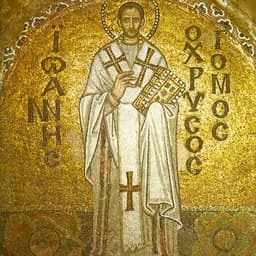
St. John Chrysostom (c. 347–407)
Homily on the Paralytic Let Down Through the Roof Source: trans. in the Nicene and Post-Nicene Fathers, First Series, Vol. 9. Public domain. Full text: https://www.newadvent.org/fathers/1911.htm
On the treasure of patience hidden in the man, infirm thirty-eight years:
On his meek answer when Christ asked, "Wilt thou be made whole?":
On affliction as a refining fire:
On the gentleness of the rebuke, "sin no more," spoken privately:
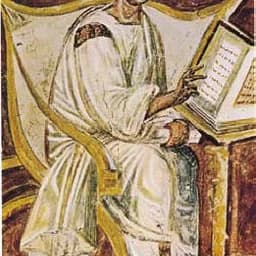
Blessed Augustine of Hippo (354–430)
Tractates on the Gospel of John, Tractate 17 (on John 5:1–18) Source: trans. in the Nicene and Post-Nicene Fathers, First Series, Vol. 7. Public domain. Full text: https://www.newadvent.org/fathers/1701017.htm
On the healing of the soul as the greater work, and the one healed as a sign of unity:
On the five porches as the five books of the Law, which shelter but cannot heal:
On the troubling of the water as the Lord's death:
On the thirty-eight years as a number of weakness, short of forty by the two precepts of love:
On "Take up thy bed, and walk" as the very love the man had lacked:
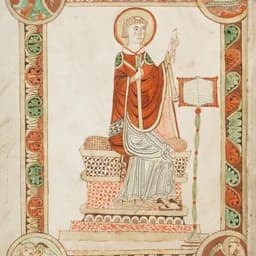
St. Bede the Venerable (c. 673–735)
As preserved in the Catena Aurea on John. Public domain.
On the difference between Christ's word and a physician's craft:
On why it is fitly named the sheep pool:
On the kinds of infirmity gathered at the pool, read spiritually:
On "Arise, and walk," and bearing one's neighbor: