All entriesmiracle

The man with a withered hand

Matt 12:9–14; Mark 3:1–6; Luke 6:6–11 · Early ministry in Galilee

Matthew 12:9–14

nd when he was departed thence, he went into their synagogue: 10And, behold, there was a man which had his hand withered. And they asked him, saying, Is it lawful to heal on the sabbath days? that they might accuse him. 11And he said unto them, What man shall there be among you, that shall have one sheep, and if it fall into a pit on the sabbath day, will he not lay hold on it, and lift it out? 12How much then is a man better than a sheep? Wherefore it is lawful to do well on the sabbath days. 13Then saith he to the man, Stretch forth thine hand. And he stretched it forth; and it was restored whole, like as the other. 14Then the Pharisees went out, and held a council against him, how they might destroy him.

King James Version · public domain

Mateu 12:9–14

dhe si iku andej, erdhi ndë sinagogjit t’atyre. 10Edhe ja tek ishte një njeri që kishte dorënë të-tharë; edhe e pyetnë atë, dyke thënë, Nd’ësht’ e udhësë të shëronjë njeriu të-shëtunë; që t’a përflisnin’ atë. 11Edhe ay u tha atyre, Cili njeri nga ju dotë jet’ ay, që dotë ketë një dele, edhe ndë i rëntë kjo ndë gropë ditën’ e-shëtunë, nukë dot’a zërë e t’a ngrerë atë? 12Sa më tepërë pra ndan njeriu nga delja! përandaj ësht’ e udhësë të bënjë mirë njeriu të-shëtunatë. 13Atëhere i thotë njeriut, Shtri dorënë t’ënde. Edhe ay e shtriti, edhe ubë e-shëndoshë posi tjatëra. 14Po Farisenjtë duallë e bënë këshillë kundrë ati, që t’a prishnjënë.

Kristoforidhi, Dhiata e Re Toskërisht 1879 · zotërim publik

Summary

Christ heals on the Sabbath and turns the question back on His accusers: is it lawful to do good, to save life, on the Sabbath? They would lift a sheep fallen into a pit, yet they begrudge a man his healing; their concern for an animal condemns their hardness toward one made in God's image. So the Lord shows that mercy does not break the Sabbath but fulfills it, for the day of rest was given for man's sake, and the God who rested rests now in restoring His own work.

The Fathers read the withered hand on more than one level. Most plainly it is the human power to act, dried up by sin and idleness, made whole the moment it obeys the command to "stretch it out": grace meets the small movement of the will, and the will is healed in the very act of obeying. St. Cyril of Alexandria sees in it a figure of our whole nature grown barren and unfruitful, which in Christ is recalled to its first vigor and made able again to bear good works. St. Ambrose reads it morally of the strength for righteous deeds shrunken in us; and the tradition recalls another withered hand restored, when Jeroboam's hand dried up at the altar and was healed at the prophet's prayer (1 Kgs 13), withered by impiety and given back by mercy.

St. John Chrysostom dwells on the Lord's gentleness against His enemies' malice: He heals with a word alone, taking nothing in His hands, so that even their pretext is removed, yet they go out to plot His death on the very day they claimed to guard. The healing discloses who Christ is, the Lord of the Sabbath, and what He came to do: to make the paralyzed strength of fallen man stretch out toward God once more.

The Man with a Withered Hand (Matthew 12:9–14; Mark 3:1–6; Luke 6:6–11)

Public-Domain Patristic Commentary

On the Sabbath, in the synagogue, a man with a withered hand is present. The Pharisees watch closely, hoping to accuse Christ; He calls the man to stand forth, asks "Is it lawful to do good on the sabbath days, or to do evil?", and with the word "Stretch forth thine hand," restores it whole. Instead of believing, His enemies go out and take counsel how to destroy Him. The texts below are quoted verbatim from public-domain English translations, each Father from his own work, several as preserved in the Catena Aurea on Mark (St. Thomas Aquinas, trans. J. H. Newman, 1841). Nothing is paraphrased.


St. Cyril of Alexandria (c. 376–444)

Commentary on the Gospel of Luke, Sermon 23 (on Luke 6:6–11) Source: trans. R. Payne Smith, 1859. Public domain. Full text: https://www.tertullian.org/fathers/cyril_on_luke_02_sermons_12_25.htm

On the envy that watched Him, and why He called the man into the midst:

But the Pharisees watched Him, to see if He would heal on the sabbath: for such is the nature of an envious man, that he makes the praises of others food for his own disease, and wickedly is maddened by their reputation. And what once more said He to this, Who knoweth all things, Who searcheth the hearts, and understandeth whatever is therein? ... He spake to him that had the withered hand, Stand forth into the midst. And why did He do this? It might perhaps be to move the cruel and unpitying Pharisee to compassion: the man's malady perhaps might shame them, and persuade them to allay the flames of envy.

On the question "Is it lawful to do good?", and the Sabbath as a law of mercy:

I will ask you something: Is it lawful on the sabbath days to do good, or to do evil? Most wise in very deed is this question, and a statement most suitable to meet their folly. For if it be lawful to do good on the sabbath, and nothing prevents the sick being pitied by God, cease thus picking up opportunities for faultfinding against Christ ... But if it be not lawful to do good on the sabbath, and the law forbids the saving of life, thou hast made thyself an accuser of the law, thou hast slandered the commandment, for which the ministry of Moses is regarded with admiration.

And were it our wish to examine closely the law enacted for the sabbath, we should find it ordained by God for purposes of mercy. For He commanded to do no work on the sabbath, and entirely to abstain from labour, and even to give rest at the same time to the irrational animals. For He said, that its purpose was, that thy manservant may rest, and thy maidservant, thy ox, and thy beast of burden, and all thy cattle. But He Who has mercy on the ox and other animals, how would not He pity on the sabbath day a man who was attacked by a severe and irremediable malady?

On the madness that answered the miracle:

And they were filled with madness. Is not the miracle enough to produce faith? Thou seest Him working with godlike dignity, and with supreme power healing the sick, and travaillest thou with murder, bred of envy and malice?


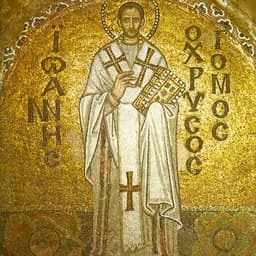
St. John Chrysostom (c. 347–407)

Homilies on the Gospel of Matthew, Homily 40 (on Matthew 12:9–14) Source: trans. in the Nicene and Post-Nicene Fathers, First Series, Vol. 10. Public domain. Full text: https://www.newadvent.org/fathers/200140.htm

On the tenderness that set the man in the midst, and the hardness that preferred to wound Christ's name:

See the tender bowels of the Lord. "He set him in the midst," that by the sight He might subdue them; that overcome by the spectacle they might cast away their wickedness, and out of a kind of shame towards the man, cease from their savage ways. But they, ungentle and inhuman, choose rather to hurt the fame of Christ, than to see this person made whole: in both ways betraying their wickedness; by their warring against Christ, and by their doing so with such contentiousness, as even to treat with despite His mercies to other men.

On the question asked not to learn but to accuse, and the meekness that answered it:

And it is likely that both took place. For being unholy wretches, and well assured that He would doubtless proceed to the healing, they hastened to take Him beforehand with their question, thinking in this way to hinder Him. And this is why they asked, "Is it lawful to heal on the Sabbath days?" not for information, but that "they might accuse Him." Yet surely the work was enough, if it were really their wish to accuse Him; but they desired to find a handle in His words too, preparing for themselves beforehand an abundance of arguments. But He in His love towards man doth this also: He answers them, teaching His own meekness, and turning it all back upon them; and points out their inhumanity.

On the appeal to their own practice, and the tragedy that the man's healing left them worse:

And here again; "Is it lawful to do good on the Sabbath days, or to do evil? Which of you shall have one sheep?" For He knew their love of wealth, that they were all taken up with it, rather than with love of mankind. And indeed the other evangelist saith, that He also looked about upon them when asking these questions, that by His very eye He might win them over; but not even so did they become better ... But nevertheless none of these things made them meek; rather, while the man was healed, they by his health became worse. For His desire indeed was to cure them before him, and He tried innumerable ways of healing, both by what He did in their presence, and by what He said: but since their malady after all was incurable, He proceeded to the work.


Theophylact of Ohrid (c. 1055–1107)

From his Explanation of the Gospel of Mark, as preserved in the Catena Aurea on Mark. Public domain.

On why the Lord worked this miracle on the Sabbath:

After confounding the Jews, who had blamed His disciples, for pulling the ears of corn on the sabbath day, by the example of David, the Lord now further bringing them to the truth, works a miracle on the sabbath; shewing that, if it is a pious deed to work miracles on the sabbath for the health of men, it is not wrong to do on the sabbath thing necessary for the body.

On the withered right hand as a figure of the soul that has ceased from good works:

Or, he had his right hand withered, who does not the works which belong to the right side; for from the time that our hand is employed in forbidden deeds, from that time it is withered to the working of good. But it will be restored whenever it stands firm in virtue; wherefore Christ saith, "Arise," that is, from sin, "and stand in the midst;" that thus it may stretch itself forth neither too little nor too much.


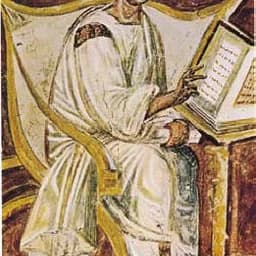
Blessed Augustine (of Hippo) (354–430)

From his On the Harmony of the Evangelists, as preserved in the Catena Aurea on Mark. Public domain.

On the apparent difference between Matthew and Mark in who asked the question:

But some one may wonder how Matthew could have said, that they themselves asked the Lord, if it was lawful to heal on the sabbath-day; when Mark rather relates that they were asked by our Lord, "Is it lawful to do good on the sabbath-day, or to do evil?"

On how the two accounts are reconciled:

Therefore we must understand that they first asked the Lord, if it was lawful to heal on the sabbath-day, then that understanding their thoughts, and that they were seeking an opportunity to accuse Him, He placed in the middle him whom He was about to cure, and put those questions, which Mark and Luke relate. We must then suppose, that when they were silent, He propounded the parable of the sheep, and concluded, that it was lawful to do good on the sabbath-day.


St. Bede the Venerable (c. 673–735)

From his Commentary on Mark, as preserved in the Catena Aurea on Mark. Public domain.

On how the watchers laid a snare on every side:

For, since He had defended the breaking of the sabbath, which they objected to His disciples, by an approved example, now they wish, by watching Him, to calumniate Himself, that they might accuse Him of a transgression, if He cured on the sabbath, of cruelty or of folly, if He refused.

On the mystical meaning of the withered hand, dried up in Adam and restored on the Cross:

But mystically, the man with a withered hand shews the human race, dried up as to its fruitfulness in good works, but now cured by the mercy of the Lord; the hand of man, which in our first parent had been dried up when he plucked the fruit of the forbidden tree, through the grace of the Redeemer, Who stretched His guiltless hands on the tree of the cross, has been restored to health by the juices of good works.

On why the hand was withered in the synagogue itself:

Well too was it in the synagogue that the hand was withered; for where the gift of knowledge is greater, there also the danger of inexcusable guilt is greater.


Note on other Fathers

Cyril and Chrysostom converge closely here: both name envy as the root of the Pharisees' watching, both read Christ's setting the man "in the midst" as an appeal meant to shame them into compassion, both ground the lawfulness of the cure in the Sabbath's own mercy (the rest granted even to animals, the sheep one would lift from a pit), and both mark the tragic irony that a healing which should have produced faith only hardened the watchers into a plot to kill. Theophylact adds the eastern reading of the withered right hand as a figure of the soul dried up in forbidden deeds and restored when it stands firm in virtue; Blessed Augustine reconciles Matthew's and Mark's accounts of who asked the question; and the Venerable Bede gives the great allegory of the human race, withered in Adam's plucking of the forbidden fruit and healed when the Redeemer stretched His guiltless hands upon the tree of the Cross. The Catena Aurea on Mark also preserves comments on this passage under names not quoted here, including spurious pieces wrongly ascribed to Chrysostom and Jerome (the Opus Imperfectum and related works), which are not the authentic Fathers and have been set aside. For verbatim public-domain English, the works above are the principal sources.

Patristic sources