All entriesparable

The mustard seed

Matt 13:31–32; Mark 4:30–32; Luke 13:18–19 · Later ministry in Galilee

Matthew 13:31–32

nother parable put he forth unto them, saying, The kingdom of heaven is like to a grain of mustard seed, which a man took, and sowed in his field: 32Which indeed is the least of all seeds: but when it is grown, it is the greatest among herbs, and becometh a tree, so that the birds of the air come and lodge in the branches thereof.

King James Version · public domain

Mateu 13:31–32

jë tjatërë paravoli u pruri atyre dyke thënë: Mbretëri’ e qiejvet gjan me një koqe sinapi, të-cilën’ e mori një njeri edhe e mbolli nd’arët të ti; 32Ajo është më e-vogëlë se gjithë faratë; po kur rritetë, është më e-madhe se lakratë, edhe bënetë dru, kaqë sa vijnë shpest’ e qiellit e rrinë ndë degat t’ati.

Kristoforidhi, Dhiata e Re Toskërisht 1879 · zotërim publik

Summary

The smallest of seeds becoming the greatest of shrubs is read of the Kingdom, of the word, and of Christ Himself: the crucified One, seemingly least and despised, grows into something that overspreads the world, and the birds that nest in its branches are the nations finding shelter in the Church. The contrast between the tiny beginning and the vast end is the whole point.

The Fathers dwell on how small that beginning was. A handful of unlettered fishermen, with the seed of the word, drew the whole earth to faith; nothing looked weaker, nothing has proved stronger. They note too that the mustard seed is not only the least but the sharpest: ground and tasted it burns and warms, and so figures the heat and pungency of the gospel word, which seems negligible until it is broken open in the soul and shows its fire. Read of Christ, the seed is His body sown at the burial and rising to fill heaven; read of each believer, the soul is the field, and faith planted there grows into a sheltering tree.

The tradition also hears behind the image the great tree of Ezekiel and Daniel, in whose boughs the birds of every wing find lodging, and the trees of the Psalms where the fowls of heaven make their nests. So the birds are read of the Gentiles drawn from every nation, and at a higher level of the loftier thoughts and even the holy powers that dwell in a soul grown great in the word.

The lesson is one of patience: God does not despise the day of little things, and what is sown in weakness He raises in strength. The believer is not to measure the Kingdom by its first appearance, in the world or in his heart, but to wait for the growth that God alone gives.

The Parable of the Mustard Seed (Matthew 13:31–32; Mark 4:30–32; Luke 13:18–19)

Public-Domain Patristic Commentary

The kingdom of heaven, Christ says, is like a grain of mustard seed, the smallest of all seeds, which a man takes and sows in his field. When it is grown it becomes the greatest of herbs, indeed a tree, so that the birds of the air come and lodge in its branches. In Matthew and Luke the parable is paired with the leaven, both teaching the same lesson of a kingdom that begins almost invisibly and grows beyond all expectation. The texts below are quoted verbatim from public-domain English translations, including the Catena Aurea of St. Thomas Aquinas (trans. J. H. Newman, 1841). Nothing is paraphrased. A note on sources, including why one expected voice is missing here, follows at the end.


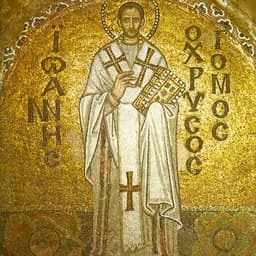
St. John Chrysostom (c. 347–407)

Homilies on the Gospel of Matthew, Homily 46 (on Matthew 13:31–32) Source: trans. in the Nicene and Post-Nicene Fathers, First Series, Vol. 10. Public domain. Full text: https://www.newadvent.org/fathers/200146.htm

On why this parable follows those of the sower and the tares, reassuring the disciples who had heard how much of the seed is lost:

The Kingdom of Heaven is like to a grain of mustard seed. That is, since He had said, that of the crop three parts are lost, and but one saved, and in the very part again which is saved so great damage ensues; lest they should say, And who, and how many will be the faithful? this fear again He removes, by the parable of the mustard seed leading them on to belief, and signifying that in any case the gospel shall be spread abroad.

On the smallest seed becoming the greatest herb, an image of the weak disciples whose preaching filled the world:

Therefore He brought forward the similitude of this herb, which has a very strong resemblance to the subject in hand; Which indeed is the least, He says, of all seeds, but when it is grown, it is the greatest among herbs, and becomes a tree, so that the birds of the air come and lodge in the branches thereof. Thus He meant to set forth the most decisive sign of its greatness. Even so then shall it be with respect to the gospel too, says He. Yea, for His disciples were weakest of all, and least of all; but nevertheless, because of the great power that was in them, it has been unfolded in every part of the world.


St. Cyril of Alexandria (c. 376–444)

Commentary on the Gospel of St. Luke, on Luke 13:18–19 Source: trans. R. Payne Smith, 1859. Public domain. Full text: https://www.tertullian.org/fathers/cyril_on_luke_09_sermons_89_98.htm

On why the parable names the Gospel's preaching "the kingdom of heaven":

The comparison is an excellent one, and most fit to set before them what took place and happened at the divine and sacred preaching of the Gospel, to which He here gives the name of the kingdom of heaven; because it is through it that we gain the right of sharing Christ's kingdom.

On the small beginnings in Judaea and the spread to all nations:

At first then it was addressed to few persons, and within a narrow range, but afterwards it widened its influence, and spread abroad unto all nations. For at first it was spoken in Judaea only, where also the blessed disciples were very few in number: but when Israel disobeyed, the commandment was given to the holy apostles, "having gone to make disciples of all the nations, &c."

On the mustard seed itself, and the humble sparrows who shelter in it:

As therefore a grain of mustard seed is far inferior in size to the seeds of other plants, but shoots up to a great height, far beyond what is usual among herbs, so as for it even to become the lodging of many sparrows, so also the kingdom of heaven, even the new and sacred preaching of salvation, by which we are guided into every good work, and learn Him Who both by nature and verily is God, being at first addressed to but few persons, and as it were small and limited, shot up afterwards into rapid growth, and became the refuge of those who fled to it for shelter, and who may be compared to sparrows, because human things are but of small measure in comparison with God.


St. Jerome (c. 347–420)

Commentary on Matthew (on Matthew 13:31–32) Source: as preserved in the Catena Aurea of St. Thomas Aquinas, trans. J. H. Newman, 1841. Public domain.

On the contrast between the dogmas of the philosophers, which wither, and the gospel, which grows into a sheltering tree:

For the dogmas of Philosophers when they have grown up, show nothing of life or strength, but watery and insipid they grow into grasses and other greens, which quickly dry up and wither away. But the Gospel preaching; though it seem small in its beginning, when sown in the mind of the hearer, or upon the world, comes up not a garden herb, but a tree, so that the birds of the air (which we must suppose to be either the souls of believers or the Powers of God set free from slavery) come and abide in its branches.


St. Hilary of Poitiers (c. 310–367)

As preserved in the Catena Aurea on Matthew. Public domain.

On Christ Himself as the mustard seed, sharp to the taste and least of all, whose strength is drawn out by bruising:

The Lord compares Himself to a grain of mustard seed, ... sharp to the taste, and the least of all seeds, whose strength is extracted by bruising.

On the seed sown in the field as Christ seized, slain, and buried, who rose to surpass all the glory of the Prophets:

This grain then when sown in the field, that is, when seized by the people and delivered to death, and as it were buried in the ground by a sowing of the body, grew up beyond the size of all herbs, and exceeded all the glory of the Prophets.

On the birds of the air as the Apostles, in whose branches the Gentiles find rest from the spirits of the Devil:

By which we understand the Apostles, who put forth of Christ's might, and overshadowing the world with their boughs, are a tree to which the Gentiles flee in hope of life, and having been long tossed by the winds, that is by the spirits of the Devil, may have rest in its branches.


Blessed Augustine (of Hippo) (354–430)

Questions on the Gospels (Quaestiones in Evangelium) As preserved in the Catena Aurea on Matthew. Public domain.

On the mustard seed as a figure of the warmth of faith and its power against poison:

A grain of mustard seed may allude to the warmth of faith, ... or to its property as antidote to poison.

On the meaning of "dogmas" as the fixed decisions of the sects:

Dogmas are the decisions of sects ... the points, that is, that they have determined.


St. Gregory the Great (c. 540–604)

Morals on the Book of Job (Moralia in Job) As preserved in the Catena Aurea on Matthew. Public domain.

On Christ as the mustard seed planted in the garden of the sepulchre, a grain in death and a tree in His rising:

Christ Himself is the grain of mustard seed, who, planted in the garden of the sepulchre, grew up a great tree; He was a grain of seed when He died, and a tree when He rose again; a grain of seed in the humiliation of the flesh, a tree in the power of His majesty.

On the birds lodging in its branches as holy souls who rise on the wings of the virtues:

"The birds lodge in its branches," when holy souls that raise themselves aloft from thoughts of earth on the wings of the virtues, breathe again from the troubles of this life in their words and comfortings.


Note on sources and other Fathers

The Fathers above agree in the heart of the matter: the parable is about disproportion, a beginning so small it can be overlooked and an end so large it shelters the world. Chrysostom and Jerome read the seed as the gospel itself, spread by a handful of unremarkable disciples whose weakness was filled with power, and set against the philosophies that sprout quickly and wither. Hilary and Gregory the Great press toward a Christological reading: the grain is the Lord Himself, sown into the ground in His Passion and burial and grown into a great tree in His Resurrection, in whose branches—the Apostles—the Gentiles and the holy souls find rest. Augustine adds the inner sense of the seed as the warmth of faith and antidote to poison, and explains the "dogmas" against which the gospel is measured as the fixed decisions of the sects.

A word on what is not here. Throughout this series St. Cyril of Alexandria has been the natural Eastern voice from his Commentary on Luke, but his exposition of Luke's mustard seed (Luke 13:18–19) does not survive in the public-domain English of R. Payne Smith: the extant sermons pass directly from Luke 13:9 to Luke 13:22, leaving the mustard seed and the leaven in a gap. The Catena Aurea also gathers brief notes from the Gloss and from Remigius on this passage; these have been passed over as later Western compilation rather than patristic exposition. The Hilary, Augustine, and Gregory passages above, like the Jerome passage, are given as the Catena Aurea preserves them, in Newman's public-domain translation; Chrysostom's homily is the dependable verbatim public-domain source for the Eastern reading.

Patristic sources