The Myrrh-bearing Women at the Empty Tomb
Matt 28:1–8; Mark 16:1–8; Luke 24:1–12; John 20:1–2 · Post-Resurrection
Scripture
Matthew 28:1–8
n the end of the sabbath, as it began to dawn toward the first day of the week, came Mary Magdalene and the other Mary to see the sepulchre. 2And, behold, there was a great earthquake: for the angel of the Lord descended from heaven, and came and rolled back the stone from the door, and sat upon it. 3His countenance was like lightning, and his raiment white as snow: 4And for fear of him the keepers did shake, and became as dead men. 5And the angel answered and said unto the women, Fear not ye: for I know that ye seek Jesus, which was crucified. 6He is not here: for he is risen, as he said. Come, see the place where the Lord lay. 7And go quickly, and tell his disciples that he is risen from the dead; and, behold, he goeth before you into Galilee; there shall ye see him: lo, I have told you. 8And they departed quickly from the sepulchre with fear and great joy; and did run to bring his disciples word.
King James Version · public domain
Mateu 28:1–8
dhe si shkoj e-shëtuna, dyke gdhir’ e Djelë, që ësht’ e para dit’ e javësë, erdhi Maria Magdhalini, edhe Maria tjatërë, që të shihninë varrë. 2Edhe ja tek ubë një tëmet i-math; sepse ëngjëll’ i Zotit sbriti nga qielli, edhe erdhi e rrukullisi gurinë nga dera e varrit, edhe rrinte sipër’ ati. 3Edhe faqeja e ati ishte posi vetëtimë, edhe rroba e ati e-bardhë posi dëborë. 4Edhe ata që ruanin’ utrëmpnë nga frik’ e ati, edhe ubënë posi të-vdekurë. 5Edhe ëngjëlli upërgjeq e u tha gravet, Mos kini frikë; sepse e di se kërkoni Jisunë që ukryqëzua. 6Nukë është këtu; sepse ungjall, sindëkur pat thënë. Ejani, shihni vëndinë ku dergjej Zoti. 7Edhe shkoni shpejt e u thoni nxënësvet t’ati, se ungjall nga të-vdekuritë; edhe ja tek po vete ay më përpara se ju ndë Galilet; atje dot’a shihni atë; ja tek u thashë juve. 8Edhe ato duallnë shpejt nga varri me frikë edhe me gëzim të-math, edhe usulnë t’u apënë zë nxënësvet t’ati.
Kristoforidhi, Dhiata e Re Toskërisht 1879 · zotërim publik
In their own words
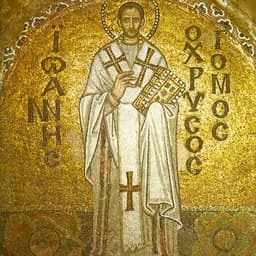
Mark how He Himself sends good tidings to His disciples by these women, bringing to honor, as I have often said, that sex, which was most dishonored, and to good hopes; and healing that which was diseased.
St. John Chrysostom, Homilies on the Gospel of Matthew, Homily 89 (on Matthew 28:1–10)
Patristic sources
- St. John Chrysostom
- Homilies on Matthew, Hom. 89
- St. Cyril of Alexandria
- Commentary on Luke, Sermon 153
- Theophylact of Ohrid
- Explanation of the Gospel of Mark
Catena-only in public-domain English; the Stade translation is under copyright.
- St. Jerome
- Commentary on Matthew
Catena-only in public-domain English on the Gospels.
- St. Gregory the Great
- Forty Gospel Homilies, Hom. 21
His Easter homily on the myrrh-bearers; Catena-only in public-domain English.
- St. Bede the Venerable
- Homilies on the Gospels
Catena-only in public-domain English for the Gospels.
Read the sources: Chrysostom on Matthew, Homily 89 (CCEL) · Cyril on Luke, Sermons 146–156 (tertullian.org) · Catena Aurea on Matthew, ch. 28 (CCEL) · Catena Aurea on Mark, ch. 16 (CCEL)
The Myrrh-bearing Women at the Empty Tomb (Matthew 28:1–8; Mark 16:1–8; Luke 24:1–12; John 20:1–2)
The texts below are quoted verbatim from public-domain English translations; nothing is paraphrased.
St. John Chrysostom (c. 347–407)
Homilies on the Gospel of Matthew, Homily 89 (on Matthew 28:1–10) Source: trans. in the Nicene and Post-Nicene Fathers, First Series, Vol. 10. Public domain. Full text: https://www.ccel.org/ccel/schaff/npnf110/npnf110.iii.LXXXV.html
On why the angel removed the stone, and why the earthquake came, though the Lord was already risen:
On "Fear not ye", and the honor shown the women over against the guards:
On "He is risen, as He said. Come, see the place where the Lord lay":
On the women made the first bearers of the good tidings to the disciples:
St. Cyril of Alexandria (c. 376–444)
Commentary on the Gospel of Luke, Sermon 153 (on Luke 24:1–9) Source: trans. R. Payne Smith, Library of Fathers, 1859. Public domain. Full text: https://www.tertullian.org/fathers/cyril_on_luke_14_sermons_146_156.htm
On the women counted worthy, for their love and zeal, to see the angels and hear the joyful tidings:
On the woman who of old ministered death now made the first to learn and tell the mystery of life:
Theophylact of Ohrid (c. 1055–1107)
Explanation of the Gospel of Mark (on Mark 16:1–5) As preserved in the Catena Aurea on Mark. Public domain. Full text: https://www.ccel.org/ccel/aquinas/catena2.iii.xvi.html
On the spices, and the women's care to keep the body from corruption:
On Mary Magdalene, present at every stage through the ardour of her love:
St. Jerome (c. 347–420)
Commentary on Matthew (on Matthew 28:1–8) As preserved in the Catena Aurea on Matthew. Public domain. Full text: https://www.ccel.org/ccel/aquinas/catena1.ii.xxviii.html
On the women's constant going and coming, unable to be long absent from the tomb:
On "Fear not ye", spoken to the women and not to the guards:
On the mingling of fear and joy that quickened their steps:
St. Gregory the Great (c. 540–604)
Forty Gospel Homilies, Homily 21 (on Mark 16:1–5) As preserved in the Catena Aurea on Mark. Public domain. Full text: https://www.ccel.org/ccel/aquinas/catena2.iii.xvi.html
On coming to the sepulchre with spices, that is, with the sweet savour of good works:
On why the women who came with spices were they who saw the angels:
St. Bede the Venerable (c. 673–735)
Homilies on the Gospels (on Matthew 28:2–7) As preserved in the Catena Aurea on Matthew. Public domain. Full text: https://www.ccel.org/ccel/aquinas/catena1.ii.xxviii.html
On why the angel rolled back the stone:
On the angel found seated, as one enthroned over vanquished death:
On the women counted worthy to be the first heralds: