The Narrow Gate
Matt 7:13–14; Luke 13:23–24 · Early ministry in Galilee
Scripture
Matthew 7:13–14
nter ye in at the strait gate: for wide is the gate, and broad is the way, that leadeth to destruction, and many there be which go in thereat: 14Because strait is the gate, and narrow is the way, which leadeth unto life, and few there be that find it.
King James Version · public domain
Mateu 7:13–14
yni ndëpër derët të-ngushtë; sepse e-gjerë është dera, edhe e-hapët’ udha që shpie ndë humbjet, edhe shumë veta jan’ ata që hyjnë ndëpër atë. 14Sepse e-ngushtë është dera, edhe e-shtrënguar’ ësht’ udha që shpie ndë jetët, edhe të-pakë jan’ ata që e gjejn’ atë.
Kristoforidhi, Dhiata e Re Toskërisht 1879 · zotërim publik
In their own words
But the right way is narrow, the slightest turning aside being full of danger, whether to the right or to the left, as on a bridge, where he who slips on either side is thrown into the river.
St. Basil the Great, The Shorter Rules (Catena Aurea on Luke)
Patristic sources
- St. John Chrysostom
- Homilies on Matthew, Hom. 23
- St. Cyril of Alexandria
- Commentary on Luke, Sermon 99
The Luke 13:23–24 parallel; Payne Smith renders the Greek as "strait door."
- St. Basil the Great
- The Shorter Rules
No standalone PD-English of the passage; quoted only through the Catena Aurea on Luke.
- Blessed Augustine of Hippo
- On the Sermon on the Mount, Book II
Venerated in the East as Blessed.
- St. Jerome
- Commentary on Matthew
Catena-only in PD English.
- St. Gregory the Great
- Moralia in Job, Book 11
On Luke's "strive"; Catena-only in PD English.
Read the sources: Chrysostom on Matthew, Homily 23 (CCEL) · Cyril on Luke, Sermon 99 (tertullian.org) · Augustine, On the Sermon on the Mount, Book II (CCEL) · Catena Aurea on Matthew (CCEL) · Catena Aurea on Luke (isidore.co)
The Narrow Gate (Matthew 7:13–14; Luke 13:23–24)
The texts below are quoted verbatim from public-domain English translations; nothing is paraphrased.
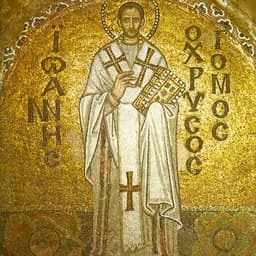
St. John Chrysostom (c. 347–407)
Homilies on the Gospel of Matthew, Homily 23 (on Matthew 7:13–14) Source: trans. in the Nicene and Post-Nicene Fathers, First Series, Vol. 10. Public domain. Full text: https://www.ccel.org/ccel/schaff/npnf110/npnf110.iii.XXIII.html
On how the strait gate, being still a gate and a way, is itself light and passing:
On why the Lord calls the way narrow — to rouse His hearers to be watchful, and to fix their eyes on the end:
St. Cyril of Alexandria (c. 376–444)
Commentary on the Gospel of Luke, Sermon 99 (on Luke 13:23–24) Source: trans. R. Payne Smith, Library of Fathers, 1859. Public domain. Full text: https://www.tertullian.org/fathers/cyril_on_luke_10_sermons_99_109.htm
(Payne Smith renders the Greek of Luke as "strait door.") On why the Lord does not answer whether few are saved, but teaches instead the way of salvation:
On why the door is narrow — an upright faith first, then a spotless morality:
On the labour and the rugged path, and who passes through with ease:
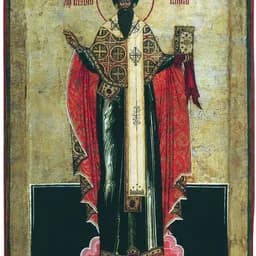
St. Basil the Great (c. 330–379)
The Shorter Rules (on Luke 13:23–24) As preserved in the Catena Aurea on Luke. Public domain. Full text: https://isidore.co/aquinas/english/CALuke.htm
On the two ways — the broad extent of error and the narrow path where the least turning is peril:
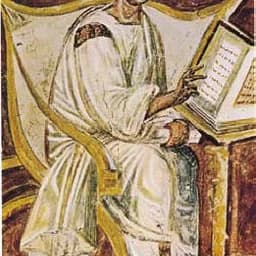
Blessed Augustine of Hippo (354–430)
On the Sermon on the Mount, Book II, Chapter 23 (on Matthew 7:13–14) Source: trans. in the Nicene and Post-Nicene Fathers, First Series, Vol. 6. Public domain. Full text: https://www.ccel.org/ccel/schaff/npnf106/npnf106.v.iii.xxiii.html
On the eye purified through all that precedes, by which the narrow way and strait gate are at last discerned:
On why few find it — not that the yoke is heavy, but that few will bring their labours to an end:
St. Jerome (c. 347–420)
Commentary on Matthew (on Matthew 7:13–14) As preserved in the Catena Aurea on Matthew. Public domain. Full text: https://www.ccel.org/ccel/aquinas/catena1.ii.vii.html
On the difference between the many who walk the broad way and the few who both find and keep the narrow:
St. Gregory the Great (c. 540–604)
Moralia in Job, Book 11 (on Luke 13:23–24) As preserved in the Catena Aurea on Luke. Public domain. Full text: https://isidore.co/aquinas/english/CALuke.htm
On why the Lord said "strive" before He spoke of the narrow gate: