The Nativity and the Manger
Luke 2:1–7 · Infancy and childhood
Scripture
Luke 2:1–7
nd it came to pass in those days, that there went out a decree from Caesar Augustus, that all the world should be taxed. 2(And this taxing was first made when Cyrenius was governor of Syria.) 3And all went to be taxed, every one into his own city. 4And Joseph also went up from Galilee, out of the city of Nazareth, into Judaea, unto the city of David, which is called Bethlehem; (because he was of the house and lineage of David:) 5To be taxed with Mary his espoused wife, being great with child. 6And so it was, that, while they were there, the days were accomplished that she should be delivered. 7And she brought forth her firstborn son, and wrapped him in swaddling clothes, and laid him in a manger; because there was no room for them in the inn.
King James Version · public domain
Lluka 2:1–7
dhe nd’ato dit dolli urdhër prej Qesarit August të shkruhenë gjithë bota. 2Këta të-shkruarë ubë për të-parënë herë, kur ishte Qyrini qivernitar i Syrisë. 3Edhe vininë të-gjithë të shkruheshinë, sicili ndë qytett të ti. 4Hipi edhe Josifi prej Galilesë, prej qytetit Nazaret, ndë Judhet, ndë qytett të Davidhit, që quhetë Vithleem, (Sepse ay ishte prej shtëpis’ e prej atëris’ së Davidhit), 5Që të shkruhetë bashkë me Mariamënë, që ishte vluarë me atë për grua, e-cila ishte me barrë. 6Edhe ata tek ishin’ atje, asaj i umbushnë dittë që të pjellë; 7Edhe polli birr’ e saj të-parëlindurinë, edhe e pshtolli ndë shpërgënj, edhe e vuri ndë grashtt, sepse nukë kishte vënt për ata atje ku kishinë rënë.
Kristoforidhi, Dhiata e Re Toskërisht 1879 · zotërim publik
In their own words
Bethlehem is by interpretation the house of bread. For it is the Lord Himself who says, I am the bread of life which came down from heaven.
St. Gregory the Great, as preserved in the Catena Aurea on Luke (on Luke 2:4–7)
Patristic sources
- St. John Chrysostom
- Homilies (as preserved in the Catena Aurea on Luke)
- St. Cyril of Alexandria
- Commentary on the Gospel of Luke, Sermon 1 (trans. R. Payne Smith, 1859)
The Payne Smith translation survives partly through the Syriac; Sermon 1 covers the birth at Bethlehem.
- St. Gregory of Nyssa
- As preserved in the Catena Aurea on Luke
- St. Ambrose of Milan
- Exposition of the Gospel according to Luke (as preserved in the Catena Aurea on Luke)
- St. Gregory the Great
- As preserved in the Catena Aurea on Luke
- St. Bede the Venerable
- As preserved in the Catena Aurea on Luke
Read the sources: Cyril of Alexandria, Commentary on Luke, Sermon 1 — trans. Payne Smith (tertullian.org) · Catena Aurea on Luke — Oxford ed., archive.org scan
The Nativity and the Manger (Luke 2:1–7)
The texts below are quoted verbatim from public-domain English translations; nothing is paraphrased.
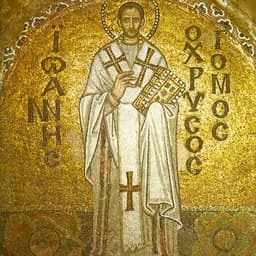
St. John Chrysostom (c. 347–407)
Homilies, as preserved in the Catena Aurea on Luke (on Luke 2:1–7) Trans. J. H. Newman, Oxford 1841–1845. Public domain. Full text: https://archive.org/details/CatenaAureaNewEdV4
On the decree of Caesar Augustus and the providence that carried the Virgin to Bethlehem:
On why the King of all was born not in majesty but in poverty:
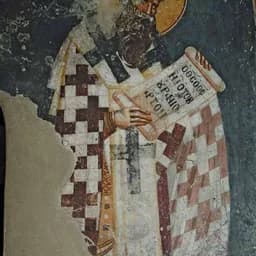
St. Cyril of Alexandria (c. 376–444)
Commentary on the Gospel of Luke, Sermon 1 (on Luke 2:1–7) Source: trans. R. Payne Smith, Library of Fathers, 1859. Public domain. Full text: https://www.tertullian.org/fathers/cyril_on_luke_01_sermons_01_11.htm
On "With Mary, his espoused wife", and the virginal conception:
On "she laid him in the manger", the place of food:
St. Gregory of Nyssa (c. 335–395)
As preserved in the Catena Aurea on Luke (on Luke 2:6–7) Trans. J. H. Newman, Oxford 1841–1845. Public domain. Full text: https://archive.org/details/CatenaAureaNewEdV4
On the true humanity of Christ, and the virgin birth without defilement:
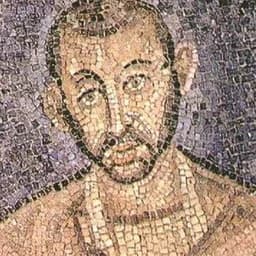
St. Ambrose of Milan (c. 339–397)
Exposition of the Gospel according to Luke, as preserved in the Catena Aurea on Luke (on Luke 2:1–7) Trans. J. H. Newman, Oxford 1841–1845. Public domain. Full text: https://archive.org/details/CatenaAureaNewEdV4
On the census of Caesar as figure of a census of souls:
On what the poverty of the newborn Lord won for us:
St. Gregory the Great (c. 540–604)
As preserved in the Catena Aurea on Luke (on Luke 2:4–7) Trans. J. H. Newman, Oxford 1841–1845. Public domain. Full text: https://archive.org/details/CatenaAureaNewEdV4
On Bethlehem, the house of bread, as the birthplace of the Bread of life:
St. Bede the Venerable (c. 673–735)
As preserved in the Catena Aurea on Luke (on Luke 2:7) Trans. J. H. Newman, Oxford 1841–1845. Public domain. Full text: https://archive.org/details/CatenaAureaNewEdV4
On the swaddling clothes that wrap the Maker of all:
On "there was no room for them in the inn":