The pearl of great price
Matt 13:45–46 · Later ministry in Galilee
Scripture
Matthew 13:45–46
gain, the kingdom of heaven is like unto a merchant man, seeking goodly pearls: 46Who, when he had found one pearl of great price, went and sold all that he had, and bought it.
King James Version · public domain
Mateu 13:45–46
ërsëri, mbretëri’ e qiejvet gjan më një njeri tregëtar, që kërkonte margaritare të-mirë; 46i-cili kur gjeti një margaritar shumë të-vjejturë, vate e shiti gjithë sa kishte, edhe e bleu atë.
Kristoforidhi, Dhiata e Re Toskërisht 1879 · zotërim publik
Summary
The one pearl beyond all others is Christ and His Kingdom; the merchant who sells everything to buy it is the soul that gives up all for Him. This parable stands beside the treasure hidden in the field, and the Fathers read the pair together: where the treasure is found almost by accident, the pearl is found by one already searching, so that the two teach both the unexpected gift of the Kingdom and the diligent seeking that lays hold of it.
The tradition notes that the merchant is looking for "goodly pearls," in the plural, and finds at last the one. Origen draws out this movement: the many beautiful pearls are the truths scattered through the Law and the prophets, the right teachings that a lover of wisdom rightly prizes; yet all of them are surpassed by the single pearl, the knowledge of Christ the Word, in whom the whole of truth is gathered. Chrysostom and, following him, Theophylact press the cost: the pearl is one because the truth of the gospel is one and simple, and it is bought only by selling all, that is, by surrendering the whole of one's former life and possessions and self-will for its sake. Nothing may be held back, for the prize is incomparable with anything given up.
St. Ephrem the Syrian's Hymns on the Pearl meditate at length on the pearl as an image of Christ and of the faith: its purity, its hidden formation within the shell, its small compass yet surpassing worth, and the light shining within it as a figure of the divine and human in the one Lord. So the pearl gathers Christology and the soul's whole vocation into one small, radiant image, Christ the treasure for whom everything is well lost.
Patristic sources
- St. John Chrysostom
- Homilies on Matthew, Hom. 47
- Origen of Alexandria
- Commentary on Matthew, Book X
- Theophylact of Ohrid
- Commentary on Matthew, on Matt 13
- St. Ephrem the Syrian
- Hymns on the Pearl (Hymni de Margarita)
The Parable of the Pearl of Great Price (Matthew 13:45–46)
Public-Domain Patristic Commentary
The kingdom of heaven, Christ says, is like a merchant in search of fine pearls, who, when he finds one pearl of great price, goes and sells all that he has and buys it. Found only in Matthew, it is the twin of the hidden treasure that precedes it, with one difference the Fathers notice: the treasure is stumbled upon, while the pearl is found by a man who was deliberately seeking. The texts below are quoted verbatim from public-domain English translations, several through the Catena Aurea of St. Thomas Aquinas (trans. J. H. Newman, 1841). Nothing is paraphrased. A note on sources follows at the end.
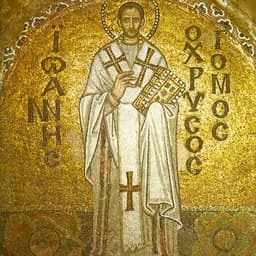
St. John Chrysostom (c. 347–407)
Homilies on the Gospel of Matthew, Homily 47 (on Matthew 13:44–52) Source: trans. in the Nicene and Post-Nicene Fathers, First Series, Vol. 10. Public domain. Full text: https://www.newadvent.org/fathers/200147.htm
Chrysostom expounds the pearl together with the hidden treasure (his fuller framing of the two is given in the treasure document). On the pearl in particular, that the merchant sought, and that the one pearl is the one undivided truth:
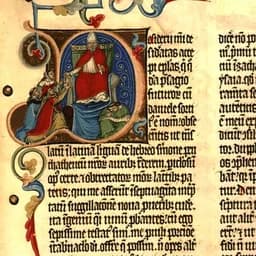
St. Jerome (c. 347–420)
Commentary on Matthew (on Matthew 13:45–46) Source: as preserved in the Catena Aurea of St. Thomas Aquinas, trans. J. H. Newman, 1841. Public domain.
On the goodly pearls as the Law and the Prophets, and the one pearl as the knowledge of Christ, for which Paul counted all else as loss:
St. Gregory the Great (c. 540–604)
Homilies on the Gospels, Homily 11, as preserved in the Catena Aurea on Matthew. Public domain.
On the pearl as the sweetness of the heavenly kingdom, for which a man gladly leaves all earthly things:
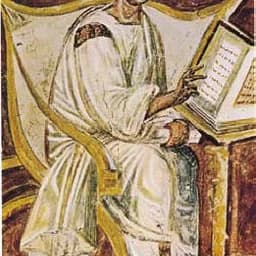
Blessed Augustine of Hippo (354–430)
Questions on the Gospel of Matthew, q. 13, as preserved in the Catena Aurea on Matthew. Public domain.
On the one pearl as Christ Himself, as love of neighbour, and as the Word in whom all things are contained:
On the preciousness of the pearl as the possession of ourselves, which we receive when we give up all else:
Note on sources and other Fathers
The readings complete each other. Chrysostom keeps the parable spare and pointed: the merchant sought, and what he found was one pearl, because "the truth is one, and not in many divisions." Jerome fills in what the many pearls and the one pearl are: the Law and the Prophets are themselves good pearls, against any who would despise the Old Testament, yet the knowledge of Christ crucified and risen is the single pearl beside which, as Paul found, even what is genuinely precious is counted as loss. Gregory the Great reads the pearl as the very sweetness of the heavenly kingdom, which whoever has truly tasted "readily leaves all things that he has loved on earth." Augustine multiplies the figure with restraint: the one pearl is Christ, or love of neighbour, or the eternal Word, and its true price is the possession of ourselves, which we recover only by giving up all else. So the parable is not a rejection of the old but a recognition that one thing surpasses all.
Because the pearl appears only in Matthew, St. Cyril of Alexandria's Commentary on Luke does not treat it. The Gregory and Augustine passages, like Jerome's, come through the Catena Aurea (St. Thomas Aquinas, trans. J. H. Newman, 1841), since those works have no public-domain English editions of their own; Chrysostom's homily is the primary public-domain source. St. Hilary, the Venerable Bede, and others also comment, in part through the same Catena and in part in modern copyrighted translations.