The Penitent Thief
Luke 23:39–43 · Passion week in Jerusalem
Scripture
Luke 23:39–43
nd one of the malefactors which were hanged railed on him, saying, If thou be Christ, save thyself and us. 40But the other answering rebuked him, saying, Dost not thou fear God, seeing thou art in the same condemnation? 41And we indeed justly; for we receive the due reward of our deeds: but this man hath done nothing amiss. 42And he said unto Jesus, Lord, remember me when thou comest into thy kingdom. 43And Jesus said unto him, Verily I say unto thee, To day shalt thou be with me in paradise.
King James Version · public domain
Lluka 23:39–43
dhe një nga ata keq-bërësitë që ishinë varurë e shante atë, dyke thënë, Ndë je ti Krishti, shpëto vetëhenë t’ënde edhe neve. 40Po tjatëri upërgjeq, edh’ e qërtoj atë, dyke thënë, As nga Perëndia s’ke frikë ti, i-cili je ndë një dënim me atë? 41Edhe neve me të-drejtë jemi dënuarë; sepse marrmë çpagim sikundrë na vjen për sa punuamë; po ky asndonjë të-keqe nukë bëri. 42Pastaj i thoshte Krishtit, Kujto-më, o Zot, kur të vish ndë mbretërit t’ënde. 43Edhe Jisuj i tha, Me të-vërtetë po të them, sot dotë jesh bashkë me mua ndë paradhist.
Kristoforidhi, Dhiata e Re Toskërisht 1879 · zotërim publik
In their own words
Mark the rapid change, from the cross to heaven, from condemnation to Paradise, that you may know that the Lord did it all, not with regard to the thief's good intention, but His own mercy.
St. John Chrysostom, on Luke 23:39–43 (Catena Aurea, Oxford ed. 1841–45)
Patristic sources
- St. John Chrysostom
- as preserved in the Catena Aurea on Luke (Luke 23:39–43)
- St. Cyril of Alexandria
- Commentary on the Gospel of Luke, Sermon 153
- Theophylact of Ohrid
- Explanation of the Gospel of Luke, as preserved in the Catena Aurea on Luke
- St. Gregory of Nyssa
- as preserved in the Catena Aurea on Luke (Luke 23:39–43)
- St. Ambrose of Milan
- Exposition of the Gospel of Luke, as preserved in the Catena Aurea on Luke
- St. Gregory the Great
- as preserved in the Catena Aurea on Luke (Luke 23:39–43)
Read the sources: Cyril of Alexandria, Commentary on Luke, Sermons 146–156 (tertullian.org) · Catena Aurea on Luke (isidore.co)
The Penitent Thief (Luke 23:39–43)
The texts below are quoted verbatim from public-domain English translations; nothing is paraphrased.
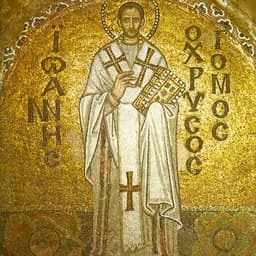
St. John Chrysostom (c. 347–407)
As preserved in the Catena Aurea on Luke (on Luke 23:39–43), Oxford ed. (J. H. Parker, 1841–45). Public domain. Full text: https://archive.org/details/CatenaAureaNewEdV5
On the condemned man who, unbidden, takes up the office of judge and acquits Christ:
On his turning from the deaf bystanders to the Lord who knows the heart:
On the Saviour weighing faith against unbelief, and the swiftness of grace to paradise:
St. Cyril of Alexandria (c. 376–444)
Commentary on the Gospel of Luke, Sermon 153 (on Luke 23:32–43), trans. R. Payne Smith, Library of the Fathers, 1859. Public domain. Full text: https://www.tertullian.org/fathers/cyril_on_luke_14_sermons_146_156.htm
On the second thief, worthy of admiration, who believed and confessed even upon the cross:
On his blameless testimony to Christ's innocence, the most beautiful of confessions:
On the reward of the first to profess faith, made rich unexpectedly:
On seeing a King in the Crucified:
Theophylact of Ohrid (c. 1055–1107)
From his Explanation of the Gospel of Luke, as preserved in the Catena Aurea on Luke (on Luke 23:39–43), Oxford ed. (J. H. Parker, 1841–45). Public domain. Full text: https://archive.org/details/CatenaAureaNewEdV5
On Christ bearing His recovered spoil into paradise like a victorious king:
On the thief and the saints, even now within the kingdom though the promises are not yet complete:
St. Gregory of Nyssa (c. 335–395)
As preserved in the Catena Aurea on Luke (on Luke 23:39–43), Oxford ed. (J. H. Parker, 1841–45). Public domain. Full text: https://archive.org/details/CatenaAureaNewEdV5
On the flaming sword that turns to bar the unworthy yet open to the worthy:
St. Ambrose of Milan (c. 339–397)
From his Exposition of the Gospel of Luke, as preserved in the Catena Aurea on Luke (on Luke 23:39–43), Oxford ed. (J. H. Parker, 1841–45). Public domain. Full text: https://archive.org/details/CatenaAureaNewEdV5
On the swiftness of pardon, grace more abundant than the prayer:
St. Gregory the Great (c. 540–604)
As preserved in the Catena Aurea on Luke (on Luke 23:39–43), Oxford ed. (J. H. Parker, 1841–45). Public domain. Full text: https://archive.org/details/CatenaAureaNewEdV5
On the heart and tongue, the only members left free upon the cross:
On the three virtues the thief received and preserved in his dying: