All entriesparable

The persistent widow

Luke 18:1–8 · Journey to Jerusalem

Luke 18:1–8

nd he spake a parable unto them to this end, that men ought always to pray, and not to faint; 2Saying, There was in a city a judge, which feared not God, neither regarded man: 3And there was a widow in that city; and she came unto him, saying, Avenge me of mine adversary. 4And he would not for a while: but afterward he said within himself, Though I fear not God, nor regard man; 5Yet because this widow troubleth me, I will avenge her, lest by her continual coming she weary me. 6And the Lord said, Hear what the unjust judge saith. 7And shall not God avenge his own elect, which cry day and night unto him, though he bear long with them? 8I tell you that he will avenge them speedily. Nevertheless when the Son of man cometh, shall he find faith on the earth?

King James Version · public domain

Lluka 18:1–8

thoshte atyre edhe një paravoli, që t’u tregonte, se duhetë të falenë gjithënjë, edhe të mos lodhenë, 2Dyke thënë, Ndë një qytet ishte një gjykatës, i-cili s’kishte frikë nga Perëndia, edhe s’kishte turp nga njeri. 3Ishte edhe një e-ve nd’atë qytet; edhe vinte tek ay, dyke thënë, Ep-më të-drejtënë prej kundrëgjyqësit t’im. 4Edhe ay gjer mbë një kohë nukë donte; po pastaj tha me vetëhe, Ndonëse s’kam frikë nga Perëndia; edhe s’kam turp nga njeri, 5Pak-së-paku, sepse këjo e-ve më bënetë barrë, let’ja ap të-drejtënë, që të mos vinjë gjithënjë e të më çajë kryetë. 6Edhe Zoti tha, Dëgjoni ç’thotë gjykatësi i-paudhë. 7Po Perëndia a nukë dot’u apë të-drejtënë të-sgjedhurvet të ti që thërresënë tek ay dit’ e natë, kur edhe zëmërënë e ka të-gjerë për ata? 8Po u them juve, se dot’u’a apë atyre të-drejtënë për-së-çpejti. Po kur të vinj’ i Bir’ i njeriut, vallë a dot’ e gjenjë besënë mbi dhet?

Kristoforidhi, Dhiata e Re Toskërisht 1879 · zotërim publik

Summary

The parable turns on an argument from the lesser to the greater. If even a corrupt judge, who neither fears God nor regards man, will at last vindicate a widow simply because she will not stop coming, how much more surely will the righteous God grant justice to His own elect who cry to Him day and night. The Fathers guard the comparison carefully: God is not slow, grudging, or in need of being worn down. The unjust judge acts only to be rid of the woman, while God acts out of His own goodness. The likeness lies not in the judge's character but in the lesson of perseverance, that we ought always to pray and not lose heart.

The Fathers read the parable first as Christ's plain teaching on unceasing prayer. Cyril stresses that the widow's strength is her constancy: having no advocate, no wealth, and no power, she prevails by her insistence alone. To pray "day and night" is not to recite many words but to keep the heart turned toward God without slackening. The tradition often sees in the widow the Church herself, or the faithful soul widowed of worldly help, who presses her cause before the only Judge who can avenge her against her adversary.

The closing words shift the weight from God's readiness to ours. God "will avenge them speedily," yet Christ asks, "when the Son of Man comes, will He find faith on earth?" The Fathers take this as a warning that the danger at the end is not that God will fail to answer but that men will have given up asking, their love grown cold. The vindication is delayed not from indifference but for our training and for the gathering of the elect, and what God seeks at His coming is the faith that endures and does not despair of His justice.

The Persistent Widow and the Unjust Judge (Luke 18:1–8)

Public-Domain Patristic Commentary

The Lord tells this parable, Luke says, "to the intent that men ought always to pray, and not to faint." A widow in a certain city keeps coming to a judge "which feared not God, neither regarded man," pleading, "Avenge me of mine adversary." For a while he refuses; but at last, worn down by her persistence, he grants her redress, "lest by her continual coming she weary me." And the Lord draws the lesson by contrast: if even an unjust judge yields to persistence, "shall not God avenge his own elect, which cry day and night to him?" He closes with a question that turns from the parable to the last days: "Nevertheless when the Son of man cometh, shall he find faith on the earth?" The parable is found only in Luke.

Five Fathers are gathered below, three from the East and two from the West, each quoted verbatim from a public-domain translation. Cyril's, unusually full, comes from his own homily on the passage and carries a distinctive Eastern reading of who the "adversary" is; Chrysostom's, Augustine's, Theophylact's, and Bede's are drawn from the Catena Aurea of St. Thomas Aquinas in John Henry Newman's 1841 translation.


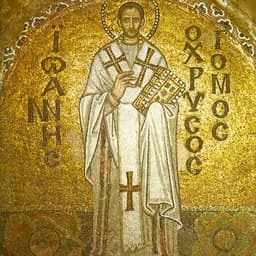
St. John Chrysostom (c. 347–407)

As preserved in the Catena Aurea on Luke. Public domain.

On prayer as the very thing the Redeemer would have us do, and as a blessing He longs to impart:

He who has redeemed you, has shown you what He would have you do. He would have you be instant in prayer, He would have you ponder in your heart the blessings you are praying for, He would have you ask and receive what His goodness is longing to impart. He never refuses His blessings to them that pray, but rather stirs men up by His mercy not to faint in praying.

On the blessed privilege of conversing with God, who answers by His mercy and tires only when we fall silent:

Gladly accept the Lord's encouragement: be willing to do what He commands, not to do what He forbids. Lastly, consider what a blessed privilege is granted you, to talk with God in your prayers, and make known to Him all your wants, while He though not in words, yet by His mercy, answers you, for He despises not petitions, He tires not but when you are silent.


St. Cyril of Alexandria (c. 376–444)

From his Commentary on Luke (Sermon 119 on Luke 18:1–8), trans. R. Payne Smith, 1859. Public domain.

On prayer not as a burden but as the privilege of sons conversing with a Father:

For it is, I affirm, the duty of those who set apart their lives for His service, not to be sluggish in their prayers, nor again to consider it as a hard and laborious duty: but rather to rejoice, because of the freedom of access granted them by God; for He would have us converse with Him as sons with a father.

On Christ as the Mediator through whom our prayer is granted:

Let us draw near with praises, and rejoicing that we have been commanded to converse with the Lord and God of all, having Christ as our Mediator, who with God the Father grants us the accomplishment of our supplications ... it is our duty therefore to "pray without ceasing," according to the words of the blessed Paul, as well knowing, and being thoroughly assured, that He Whom we supplicate is able to accomplish all things.

On the heart of the parable, the argument from the lesser to the greater:

For if the constant coming of the oppressed widow prevailed upon the unjust judge, who feared not God, neither had any shame at men, so that even against his will he granted her redress, how shall not He Who loves mercy, and hates iniquity, and Who ever gives His helping hand to them that love Him, accept those who draw near to Him day and night, and avenge them as being His elect?

On the distinction between personal enemies, whom we must forgive, and those who war against the glory of God:

Whenever therefore offences are committed by any against us personally, let us immediately even count it our glory to be forgiving towards them, and full of mutual love ... But when any sin against the glory of God, heaping up wars and distresses against those who are the ministers of the divine message, then indeed let us at once draw near unto God, beseeching His aid, and crying out against those who resist His glory.

On the deepest adversary, Satan, against whom the cry is answered by the Incarnate Word:

The evil and opposing powers, and Satan the adversary of us all, who fiercely resists those who would live well ... And therefore we say in our prayers to Him Who is able to save, and to drive away from us that wicked being, "Avenge me of my adversary." And this the Only-begotten Word of God has indeed done by having become Man: for He has ejected from his tyranny over us the ruler of this world, and has delivered and saved us, and put us under the yoke of His kingdom.

On the closing question as a warning of the apostasy of the last days:

But that men would make merchandize of the word of uprightness, and prevail on many to abandon a sound faith ... He foretold, saying, "When the Son of man comes, shall He find faith upon the earth?" ... He tells us then ... that "the love of many will grow cold," and that "in the latter times some shall depart from a correct and blameless faith."


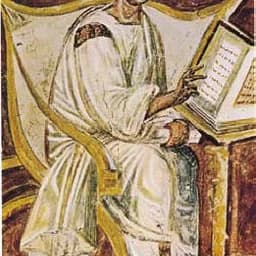
Blessed Augustine of Hippo (354–430)

From the Catena Aurea on Luke 18 (trans. J. H. Newman, 1841), drawing on his exposition of the passage. Public domain.

On the widow as a figure of the Church, and why the elect pray to be avenged:

The widow may be said to resemble the Church, which appears desolate until the Lord shall come, who now secretly watches over her. But in the following words, And she came to him, saying, Avenge me ... we are told the reason why the elect of God pray that they may be avenged; which we find also said of the martyrs in the Revelations of St. John, though at the same time we are very plainly reminded to pray for our enemies and persecutors.

On what the avenging of the righteous truly means:

This avenging of the righteous then we must understand to be, that the wicked may perish. And they perish in two ways, either by conversion to righteousness, or by punishment having lost the opportunity of conversion ... And since the righteous are longing for this end to come, they are not unreasonably said to desire vengeance.

On the perfect faith that the closing question seeks, and seldom finds:

Our Lord speaks this of perfect faith, which is seldom found on earth. See how full the Church of God is; were there no faith, who would enter it? Were there perfect faith, who would not move mountains?

On the bond between faith and prayer, each sustaining the other:

Our Lord adds this to show, that when faith fails, prayer dies. In order to pray then, we must have faith, and that our faith fail not, we must pray. Faith pours forth prayer, and the pouring forth of the heart in prayer gives steadfastness to faith.


Theophylact of Ohrid (c. 1055–1107)

From his Explanation of the Gospel of Luke, as compiled in the Catena Aurea on Luke 18 (trans. J. H. Newman, 1841). Public domain.

On constant prayer as the remedy set against the trials just foretold:

Our Lord having spoken of the trials and dangers which were coming, adds immediately afterward their remedy, namely, constant and earnest prayer.

On the judge's contempt for man as the mark of his deeper wickedness:

We may observe, that irreverence towards man is a token of a greater degree of wickedness. For as many as fear not God, yet are restrained by their shame before men, are so far the less sinful; but when a man becomes reckless also of other men, the burden of his sins is greatly increased.


St. Bede the Venerable (c. 673–735)

From the Catena Aurea on Luke 18 (trans. J. H. Newman, 1841). Public domain.

On how few the elect will be when the Lord returns:

When the Almighty Creator shall appear in the form of the Son of man, so scarce will the elect be, that not so much the cries of the faithful as the torpor of the others will hasten the world's fall.


Note on sources and other Fathers

The Fathers are united on the engine of the parable, the argument from the lesser to the greater: if even an unjust judge yields to persistence, how much more will God, who loves mercy, avenge His elect. Cyril and Augustine state it independently, East and West, and the later commentators repeat it. Chrysostom turns the same lesson inward, presenting prayer not as a duty wrung from us but as a blessing the Redeemer longs to impart, a privilege of conversing with God who "tires not but when you are silent." What is distinctive is Cyril's reading of the "adversary." He carefully divides personal enemies, whom the Lord commands us to forgive and even to love, from those who war against the glory of God and from Satan himself; only against the latter may the cry "Avenge me of my adversary" rightly be raised, and that cry, Cyril says, has already been answered by the Incarnate Word, who "ejected from his tyranny over us the ruler of this world." Augustine instead reads the widow as the Church and the avenging as the perishing of the wicked, "either by conversion to righteousness, or by punishment." Both join on the closing verse: the faith the Lord looks for is perfect faith, "seldom found on earth" (Augustine), and the elect will be scarce at the end (Bede).

The Catena's "more subtle" reading, that the widow is a soul which has put off the old man who is her adversary, is given anonymously and is not quoted here. The verse drew comment from Gregory the Great and from a chain of later Greek expositors as well; this compilation keeps to the Fathers whose attributions on the passage are secure.

Patristic sources