The Pharisee and the tax collector
Luke 18:9–14 · Journey to Jerusalem
Scripture
Luke 18:9–14
nd he spake this parable unto certain which trusted in themselves that they were righteous, and despised others: 10Two men went up into the temple to pray; the one a Pharisee, and the other a publican. 11The Pharisee stood and prayed thus with himself, God, I thank thee, that I am not as other men are, extortioners, unjust, adulterers, or even as this publican. 12I fast twice in the week, I give tithes of all that I possess. 13And the publican, standing afar off, would not lift up so much as his eyes unto heaven, but smote upon his breast, saying, God be merciful to me a sinner. 14I tell you, this man went down to his house justified rather than the other: for every one that exalteth himself shall be abased; and he that humbleth himself shall be exalted.
King James Version · public domain
Lluka 18:9–14
dhe cave nga ata që besoneshinë mbë vetëhen’ e tyre, se janë të-drejtë, edhe nuk’ i zininë për gjë të-tjerëtë, u tha këtë paravoli. 10Dy njerës hipnë ndë hieroret, që të faleshinë; njeri ishte Farise edhe tjatëri kumerqar. 11Fariseu ndënji e falej me vetëhen’ e ti, dyke thënë, O Perëndi, të falem ndersë, se nukë jam posi njerëzit’ e-tjerë, rrëmbenjës, të-paudhë, kurvarë, a edhe posi ky kumerqar. 12Agjëronj dy herë ndë javët, ap të-dhjetënë nga gjithë ç’kam. 13Edhe kumerqari kishte ndënjurë së-largu e nukë donte as sytë të-ngrij përpjetë ndë qiellt, po rrihte krahërorin’ e ti dyke thënë, O Perëndi, përdëlle-më mua fajtorinë. 14Po u them juve, se ky sbriti ndë shtëpit të ti m’i drejtëruarë se ay, sepse kushdo që ngre lart vetëhen’ e ti, dotë përunjetë: edhe ay që përunj vetëhen’ e ti, dotë ngrihetë lart.
Kristoforidhi, Dhiata e Re Toskërisht 1879 · zotërim publik
In their own words
If you look into his words, you will find that he asked nothing of God. He goes up indeed to pray, but instead of asking God, praises himself; and even insults him that asked. The Publican, on the other hand, driven by his stricken conscience afar off, is by his piety brought near.
Blessed Augustine of Hippo, Exposition of the Parable (Catena Aurea)
Patristic sources
- St. Cyril of Alexandria
- Commentary on Luke, Sermon 120
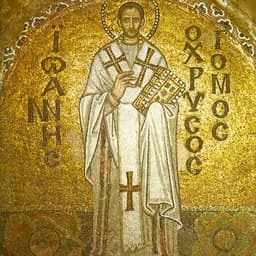
- St. John Chrysostom
- Homily on the Pharisee and the Publican
- Theophylact of Ohrid
- Commentary on Luke, on Luke 18
- St. Ambrose of Milan
- Exposition of Luke, Book VIII
The Pharisee and the Tax Collector (Luke 18:9–14)
The texts below are quoted verbatim from public-domain English translations; nothing is paraphrased.
St. Cyril of Alexandria (c. 376–444)
From his Commentary on Luke (Sermon 120 on Luke 18:9–14), trans. R. Payne Smith, 1859. Public domain.
On the impartiality of God, who weighs both men by the same measure:
On the first and root fault of the Pharisee, that he praises himself:
On how being better than the wicked is no ground for boasting:
On the fast that pride renders worthless, dung mingled with perfume:
On the publican, whose confession won what the Pharisee's merits could not:
On those who claim to be pure, and so take the Pharisee's side:
St. John Chrysostom (c. 347–407)
As preserved in the Catena Aurea on Luke. Public domain.
On how the Pharisee, not content to despise all men, must yet wound the one beside him:
On the manifold harm done by him who reviles others:
On the publican, who when reproached sought not anger but a remedy:
On the two chariots of righteousness with pride and of sin with humility:
On how humility raises from the depths while pride casts down from heaven:
St. Basil the Great (c. 330–379)
As preserved in the Catena Aurea on Luke. Public domain.
On the Pharisee who prayed with himself, not with God:
On the loftiness of mind that is engendered not of pride but of virtue:
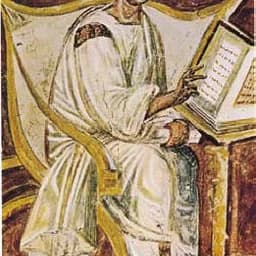
Blessed Augustine of Hippo (354–430)
From the Catena Aurea on Luke 18 (trans. J. H. Newman, 1841), drawing on his exposition of the parable. Public domain.
On the Pharisee's prayer, which asked nothing because it praised himself:
On those who say they made themselves righteous, who are worse than the Pharisee:
On the publican, who stood afar off yet drew near to God:
On the verdict that reverses the proud and the humble:
St. Gregory the Great (c. 540–604)
From his Morals on the Book of Job (Moralia), Book XIX, where he turns to the Pharisee of this parable (Library of the Fathers, Oxford). Public domain.
On how self-exaltation opens to the enemy the heart that fasting and almsgiving had shut:
Theophylact of Ohrid (c. 1055–1107)
From his Explanation of the Gospel of Luke, as compiled in the Catena Aurea on Luke 18 (trans. J. H. Newman, 1841). Public domain.
On why the Lord so often warns against pride:
On pride as a contempt of God, ascribing to oneself what is God's:
St. Bede the Venerable (c. 673–735)
As preserved in the Catena Aurea on Luke. Public domain.
On the Pharisee and the publican as figures of the Jews and the Gentiles: