The Piercing of His Side
John 19:31–37 · Passion week in Jerusalem
Scripture
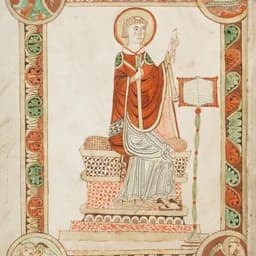
John 19:31–37
he Jews therefore, because it was the preparation, that the bodies should not remain upon the cross on the sabbath day, (for that sabbath day was an high day,) besought Pilate that their legs might be broken, and that they might be taken away. 32Then came the soldiers, and brake the legs of the first, and of the other which was crucified with him. 33But when they came to Jesus, and saw that he was dead already, they brake not his legs: 34But one of the soldiers with a spear pierced his side, and forthwith came there out blood and water. 35And he that saw it bare record, and his record is true: and he knoweth that he saith true, that ye might believe. 36For these things were done, that the scripture should be fulfilled, A bone of him shall not be broken. 37And again another scripture saith, They shall look on him whom they pierced.
King James Version · public domain
Joani 19:31–37
udhenjtë pra, për të mos mbeturë trupatë mbi kryqt për ditën’ e-shëtunë, sepse ishte e-prëmte, (sepse ajo dit’ e-shëtunë ishte e-madhe,) i ulutnë Pilatit t’u thyhenë kërcinjt’ e këmbëvet, edhe të ngrihen’ andej. 32Erthnë pra ushtëto-rëtë, edhe thyenë kërcinjt’ e të-parit, edhe t’ati tjetërit që ukryqëzua bashkë me atë. 33Po kur erthnë te Jisuj, edhe e panë, se më kishte vdekurë, nuk’ i thyenë kërcinjtë; 34Po një nga ushtëtorëtë i çpoj brinjënë me shtijzë, edhe për-një-here i dolli gjak edhe ujë. 35Edhe ay që pa dëshmoj, edhe dëshmim’ i ati ësht’ i-vërtetë, edhe ay e di se thotë të-vërtetënë, që të besoni ju. 36Sepse këto ubënë që të mbushetë shkronja, “Eshtër nukë dot’i thyhetë.” 37Edhe përsëri një tjatërë shkronjë thotë, “Dotë vështronjënë mb’atë që çpuanë.”
Kristoforidhi, Dhiata e Re Toskërisht 1879 · zotërim publik
In their own words
This second Adam bowed His head and fell asleep on the cross, that a spouse might be formed for Him from that which flowed from the sleeper's side.
Blessed Augustine of Hippo, Tractates on the Gospel of John, Tractate 120 (on John 19:31–37)
Patristic sources
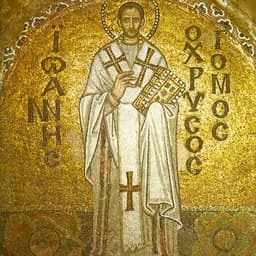
- St. John Chrysostom
- Homilies on the Gospel of John, Hom. 85
- St. Cyril of Alexandria
- Commentary on the Gospel of John, Book 12
- Theophylact of Ohrid
- Explanation of the Gospel of John
Byzantine archbishop; his Johannine exposition survives in PD English only through the Catena Aurea.
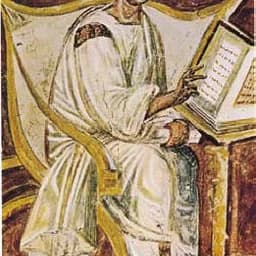
- Blessed Augustine of Hippo
- Tractates on the Gospel of John, Tractate 120
Venerated in the East as Blessed; his Johannine tractates are cited in later Byzantine catenae.
- St. Bede the Venerable
- Catena Aurea on John (Preparation/Parasceue)
His Gospel material is public domain in English only through the Catena Aurea.
Read the sources: Chrysostom, Homilies on John, Homily 85 (CCEL) · Augustine, Tractates on John, Tractate 120 (CCEL) · Cyril of Alexandria, Commentary on John, Book 12 (tertullian.org) · Catena Aurea on John (isidore.co)
The Piercing of His Side (John 19:31–37)
The texts below are quoted verbatim from public-domain English translations; nothing is paraphrased.
St. John Chrysostom (c. 347–407)
Homilies on the Gospel of St. John, Homily 85 (on John 19:31–37) Source: trans. in the Nicene and Post-Nicene Fathers, First Series, Vol. 14. Public domain. Full text: https://www.ccel.org/ccel/schaff/npnf114.iv.lxxxvii.html
On the legs of the others broken, but the side of Christ pierced:
On the blood and water, out of which the Church consisteth:
On the true Paschal Lamb, of whom the type went before:
On the Evangelist who saw it and bare record:
St. Cyril of Alexandria (c. 376–444)
Commentary on the Gospel of John, Book XII (on John 19:31–37) Source: trans. T. Randell, Library of Fathers, 1885. Public domain. Full text: https://www.tertullian.org/fathers/cyril_on_john_12_book12.htm
On the blood mingled with water, a foreshadowing of the Eucharist and of Holy Baptism:
On the Scriptures fulfilled in the unbroken bone and the pierced side:
Theophylact of Ohrid (c. 1055–1107)
Explanation of the Gospel of John (on John 19:31–37) As preserved in the Catena Aurea on John. Public domain.
On the miracle of blood flowing from a dead body:
Blessed Augustine of Hippo (354–430)
Tractates on the Gospel of John, Tractate 120 (on John 19:31–37) Source: trans. in the Nicene and Post-Nicene Fathers, First Series, Vol. 7. Public domain. Full text: https://www.ccel.org/ccel/schaff/npnf107.iii.cxxi.html
On why the Evangelist said "opened," and not "pierced," His side:
On the second Adam asleep on the cross, and the spouse formed from His side, as Eve from Adam:
On the two Scriptures fulfilled, the unbroken bone and the pierced side:
St. Bede the Venerable (c. 673–735)
As preserved in the Catena Aurea on John. Public domain.
On the Preparation (Parasceue), the sixth day: