The Preaching of John the Baptist
Matt 3:1–12; Mark 1:1–8; Luke 3:1–18 · Beginning of the ministry
Scripture
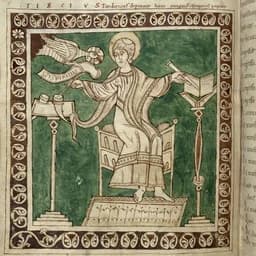
Matthew 3:1–12
n those days came John the Baptist, preaching in the wilderness of Judaea, 2And saying, Repent ye: for the kingdom of heaven is at hand. 3For this is he that was spoken of by the prophet Esaias, saying, The voice of one crying in the wilderness, Prepare ye the way of the Lord, make his paths straight. 4And the same John had his raiment of camel’s hair, and a leathern girdle about his loins; and his meat was locusts and wild honey. 5Then went out to him Jerusalem, and all Judaea, and all the region round about Jordan, 6And were baptized of him in Jordan, confessing their sins. 7But when he saw many of the Pharisees and Sadducees come to his baptism, he said unto them, O generation of vipers, who hath warned you to flee from the wrath to come? 8Bring forth therefore fruits meet for repentance: 9And think not to say within yourselves, We have Abraham to our father: for I say unto you, that God is able of these stones to raise up children unto Abraham. 10And now also the axe is laid unto the root of the trees: therefore every tree which bringeth not forth good fruit is hewn down, and cast into the fire. 11I indeed baptize you with water unto repentance: but he that cometh after me is mightier than I, whose shoes I am not worthy to bear: he shall baptize you with the Holy Ghost, and with fire: 12Whose fan is in his hand, and he will throughly purge his floor, and gather his wheat into the garner; but he will burn up the chaff with unquenchable fire.
King James Version · public domain
Mateu 3:1–12
dhe nd’ ato dit vjen Joan Pagëzori dyke lëçiturë ndë shkretëtirët të Judhesë, 2e dyke thënë, Pendohuni; sepse uafërua mbretëria e qiejvet. 3Sepse ky është ay që ufol nga profiti Isai që thotë, “Zër’ i ati që bërtet ndë shkretëtirët, Bëni gati udhën’ e Zotit: bëni rrugat’ e ati të drejta”. 4Edhe Joani vetë kishte të-veshurit’ e ti prej qimesh kamille, edhe bres të-lëkurtë rreth mezit të ti; edhe ushqimi i ati ishte karkalecë e mjalt’ e-egrë. 5Atëhere dilte jashtë tek ay Jerusalimi edhe gjithë Judhea, edhe gjithë vëndi qark Jordhanit; 6Edhe pagëzoneshinë ndë Jordhan nga ay, dyke rrëfyerë fajet’ e tyre. 7Edhe kur pa se shumë nga Farisenjt’e Saduqenjtë po vinjënë ndë pagëzimt të ti, u tha atyre, Të pjellë nepërkash, cili u dëfteu juve të ikëni nga zëmërimi që vjen? 8Bëni pra pemë të-vjejtura për pendim; 9Edhe mos shkoni ndë mënt të thoni më vetëhenë t’uaj, Atë kemi Avraamnë; sepse po u them juve, se Perëndia munt edhe nga këta gurë t’i ngrerë djem Avraamit. 10E tashi edhe sëpata rri përanë rrënjës’ së drurëvet; çdo dru pra që s’bën pemë të-mirë pritetë, edhe hidhetë ndë zjar. 11Un’ u pagëzonj juve me ujë për pendim; po ay që vjen pas meje është më i-fortë se unë, të-cilit nukë jam i-zoti t’i mbanj këpucëtë; ay dot’ u pagëzonjë juve me frymë të-Shënjtëruar’ e me zjar. 12Ay ka lopatënë ndë dorët të ti, edhe dotë qëronjë lëmën’ e ti, edhe dotë mbledhë grurin’ e ti ndë grunart, po kash-tënë dot’a djegë ndë zjar të-pashuarë.
Kristoforidhi, Dhiata e Re Toskërisht 1879 · zotërim publik
In their own words
For if ye change and become better men, this axe will depart without doing anything; but if ye continue in the same ways, He will tear up the tree by the roots.
St. John Chrysostom, Homilies on Matthew, Homily XI (on Matthew 3:10)
Patristic sources
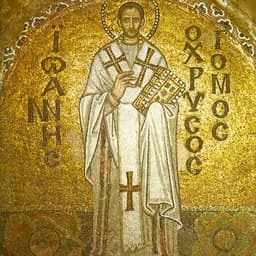
- St. John Chrysostom
- Homilies on the Gospel of Matthew, Hom. 10
- Homilies on the Gospel of Matthew, Hom. 11
- St. Cyril of Alexandria
- Commentary on Luke, Sermons 7 and 10
Payne Smith's 1859 English is drawn largely from the Syriac of the lost Greek sermons; public domain.
- St. Jerome
- Commentary on Matthew
His Gospel exegesis survives in public-domain English only through the Catena Aurea.
- St. Hilary of Poitiers
- Commentary on Matthew
Catena-only in public-domain English.
- St. Gregory the Great
- Forty Gospel Homilies, Hom. 7 and 20
His Gospel homilies are public domain in English only through the Catena Aurea.
Read the sources: Chrysostom, Homilies on Matthew (CCEL) · Cyril of Alexandria on Luke (tertullian.org) · Catena Aurea on Matthew (CCEL)
The Preaching of John the Baptist (Matthew 3:1–12; Mark 1:1–8; Luke 3:1–18)
The texts below are quoted verbatim from public-domain English translations; nothing is paraphrased.
St. John Chrysostom (c. 347–407)
Homilies on the Gospel of Matthew, Homilies X and XI (on Matthew 3:1–12) Source: trans. in the Nicene and Post-Nicene Fathers, First Series, Vol. 10. Public domain. Full text: https://www.ccel.org/ccel/schaff/npnf110.iii.X.html
On the raiment of camel's hair and the angelic strictness of the forerunner (Homily X):
On what it is to bring forth fruits meet for repentance (Homily X):
On "now also the axe is laid unto the root of the trees" (Homily XI):
On "He shall baptize you with the Holy Ghost and with fire" (Homily XI):
St. Cyril of Alexandria (c. 376–444)
Commentary on the Gospel of Luke, Sermons VII and X (on Luke 3:7–17) Source: trans. R. Payne Smith, Library of Fathers, 1859. Public domain. Full text: https://www.tertullian.org/fathers/cyril_on_luke_01_sermons_01_11.htm
On the fruit of repentance, over against mere descent from Abraham (Sermon VII):
On why to baptize in the Holy Ghost belongs to Christ alone (Sermon X):
On the fan, the wheat, and the chaff (Sermon X):
St. Jerome (c. 347–420)
Commentary on Matthew (on Matthew 3:1–11) As preserved in the Catena Aurea on Matthew. Public domain. Full text: https://www.ccel.org/ccel/aquinas/catena1.ii.iii.html
On John as the first herald of the kingdom:
On "his raiment of camel's hair":
On "God is able of these stones to raise up children unto Abraham":
St. Hilary of Poitiers (c. 310–367)
Commentary on Matthew (on Matthew 3:2–12) As preserved in the Catena Aurea on Matthew. Public domain. Full text: https://www.ccel.org/ccel/aquinas/catena1.ii.iii.html
On "Repent ye: for the kingdom of heaven is at hand":
On the mystery hidden in the Baptist's rough clothing:
St. Gregory the Great (c. 540–604)
Forty Gospel Homilies, Homilies 7 and 20 (on Matthew 3:3–11) As preserved in the Catena Aurea on Matthew. Public domain. Full text: https://www.ccel.org/ccel/aquinas/catena1.ii.iii.html
On "the voice of one crying in the wilderness" (Homily 7):
On why he says not merely fruits of repentance, but fruits meet for repentance (Homily 20):
On why John baptized with water only (Homily 7):