The Prediction of Judas's Betrayal
Matt 26:20–25; Mark 14:17–21; Luke 22:21–23; John 13:21–30 · Passion week in Jerusalem
Scripture
Matthew 26:20–25
ow when the even was come, he sat down with the twelve. 21And as they did eat, he said, Verily I say unto you, that one of you shall betray me. 22And they were exceeding sorrowful, and began every one of them to say unto him, Lord, is it I? 23And he answered and said, He that dippeth his hand with me in the dish, the same shall betray me. 24The Son of man goeth as it is written of him: but woe unto that man by whom the Son of man is betrayed! it had been good for that man if he had not been born. 25Then Judas, which betrayed him, answered and said, Master, is it I? He said unto him, Thou hast said.
King James Version · public domain
Mateu 26:20–25
dhe kur ungrys, ishte dyke ndënjurë ndë mësallët bashkë me të dy-mbë-dhjetëtë; 21Edhe ata tek ishinë dyke ngrënë, tha, Me të-vërtetë po u them juve, se një nga ju dotë më trathëtonjë. 22Edhe ata uhelmuanë fort, edhe zunë t’i thonë gjithë-si-cili nga ata, Zot, mos jam unë? 23Edhe ay upërgjeq e tha, Ay që ngjeu dorënë ndë kupët bashkë me mua, ky dotë më apë ndër duar. 24I Bir’ i njeriut vete, sindëkur është shkruarë për atë; po mjerë ay njeri me anë të të-cilit epetë ndër duar i Bir’ i njeriut; ishte mirë për atë njeri të mos kishte lindurë. 25Edhe Judha, ay që e tradhëtoj, upërgjeq e tha, Mos jam unë, Ravvi? I thot’ ati, Ti po thua.
Kristoforidhi, Dhiata e Re Toskërisht 1879 · zotërim publik
In their own words
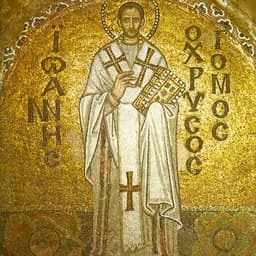
He respected not the table, though he shared the bread; be it so; but the receiving the sop from His own hand, whom would not that have won over? yet him it won not.
St. John Chrysostom, Homilies on the Gospel of John, Homily 72 (on John 13:21–30)
Patristic sources
- St. John Chrysostom
- Homilies on the Gospel of John, Hom. 72
- St. Cyril of Alexandria
- Commentary on the Gospel of John, Book 9
- Origen of Alexandria
- Commentary on Matthew (Catena Aurea)
Quoted with care; some of his speculations were condemned in 553, so only his plain exposition is used here.
- Blessed Augustine of Hippo
- Tractates on the Gospel of John, Tractates 61–62
Venerated in the East as Blessed; his Johannine tractates are cited in later Byzantine catenae.
- St. Jerome
- Commentary on Matthew (Catena Aurea)
- St. Leo the Great
- Sermon 58 (Catena Aurea)
Read the sources: Chrysostom on John, Homily 72 (CCEL) · Cyril of Alexandria on John, Book 9 (tertullian.org) · Augustine, Tractate 61 on John (CCEL) · Catena Aurea on Matthew 26 (CCEL)
The Prediction of Judas's Betrayal (Matthew 26:20–25; John 13:21–30)
The texts below are quoted verbatim from public-domain English translations; nothing is paraphrased.
St. John Chrysostom (c. 347–407)
Homilies on the Gospel of John, Homily 72 (on John 13:21–30) Source: trans. in the Nicene and Post-Nicene Fathers, First Series, Vol. 14. Public domain. Full text: https://www.ccel.org/ccel/schaff/npnf114.iv.lxxiv.html
On why the Lord said "one of you" and so troubled the whole company:
On the sop given to Judas from the Lord's own hand:
On the traitor cast out once he was made manifest, so that the evil one seized him and he went forth by night:
On the words "that thou doest, do quickly," spoken not as a command but as a reproach:
St. Cyril of Alexandria (c. 376–444)
Commentary on the Gospel of John, Book 9 (on John 13:21–30) Source: trans. T. Randell, Library of Fathers, 1885. Public domain. Full text: https://www.tertullian.org/fathers/cyril_on_john_09_book9.htm
On the disciples' twofold alarm as each searched his own conscience:
On the sop that marked out the one who ate the Lord's bread:
On the betrayer who had once been a familiar friend at the same board:
On "and it was night," the darkness of the betrayer's own soul:
Origen of Alexandria (c. 185–254)
Commentary on Matthew (on Matthew 26:23–24) As preserved in the Catena Aurea on Matthew. Public domain. Full text: https://www.ccel.org/ccel/aquinas/catena1.ii.xxvi.html
(Some of Origen's later speculations were condemned in 553; he is quoted here only where he expounds the plain sense of the text.)
On "woe unto that man ... through whom the Son of man is betrayed":
On the goodness of the disciples, who trusted the Lord's word above their own hearts:
Blessed Augustine of Hippo (354–430)
Tractates on the Gospel of John, Tractates 61 and 62 (on John 13:21–31) Source: trans. in the Nicene and Post-Nicene Fathers, First Series, Vol. 7. Public domain. Full text: https://www.ccel.org/ccel/schaff/npnf107.iii.lxii.html
On "one of you," which is true in number but not in merit (Tractate 61):
On the sop that disclosed the traitor, a good thing received to his own hurt (Tractate 61):
On why the good bread turned to harm, the receiver and not the gift (Tractate 62):
St. Jerome (c. 347–420)
Commentary on Matthew (on Matthew 26:21–24) As preserved in the Catena Aurea on Matthew. Public domain. Full text: https://www.ccel.org/ccel/aquinas/catena1.ii.xxvi.html
On the Lord's wonderful endurance as He named the traitor more closely, yet not by name:
On the woe foretold once long-suffering had failed to correct him:
On "it had been good for that man if he had not been born":
St. Leo the Great (c. 400–461)
Sermon 58 (on Matthew 26:21) As preserved in the Catena Aurea on Matthew. Public domain. Full text: https://www.ccel.org/ccel/aquinas/catena1.ii.xxvi.html
On the Lord's refusal to shame the traitor openly, that penitence might yet find a way: