The Preparation of the Passover
Matt 26:17–19; Mark 14:12–16; Luke 22:7–13 · Passion week in Jerusalem
Scripture
Matthew 26:17–19
ow the first day of the feast of unleavened bread the disciples came to Jesus, saying unto him, Where wilt thou that we prepare for thee to eat the passover? 18And he said, Go into the city to such a man, and say unto him, The Master saith, My time is at hand; I will keep the passover at thy house with my disciples. 19And the disciples did as Jesus had appointed them; and they made ready the passover.
King James Version · public domain
Mateu 26:17–19
dhe të-parënë ditë të të-pabrumjevet, nxënësit’ erthnë përanë Jisujt e i thanë, Ku do të bëjmë gati për ty të hash pashkënë? 18Edhe ay tha, Shkoni ndë qytett tek-akëcili, edhe i thoni, Mësonjësi thotë, Koha ime ësht’ afërë; dotë bënj pashkënë te ti bashkë me nxënësit’ e mi. 19Edhe nxënësitë bënë sindëkur i porositi Jisuj, edhe bënë gati pashkënë.
Kristoforidhi, Dhiata e Re Toskërisht 1879 · zotërim publik
In their own words
Our Lord, in order to leave us a heavenly Passover, ate a typical one, removing the figure, that the truth might take its place.
Titus of Bostra, Commentary on Luke (Catena Aurea)
Patristic sources
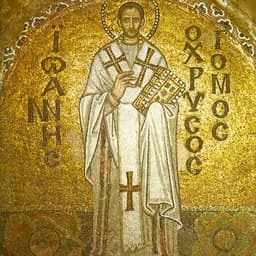
- St. John Chrysostom
- Homilies on Matthew, Hom. 81
- Theophylact of Ohrid
- Explanation of the Gospel of Luke
His Gospel exegesis survives in public-domain English only through the Catena Aurea.
- Titus of Bostra
- Commentary on Luke
Fourth-century Greek exegete; extant in public-domain English only as preserved in the Catena Aurea.
- St. Jerome
- Commentary on Matthew
- St. Ambrose of Milan
- Exposition of the Gospel of Luke
- St. Bede the Venerable
- Commentary on Luke
Read the sources: Chrysostom, Homilies on Matthew, Homily 81 (CCEL) · Catena Aurea on Matthew, ch. 26 (CCEL) · Catena Aurea on Luke (isidore.co)
The Preparation of the Passover (Matthew 26:17–19)
The texts below are quoted verbatim from public-domain English translations; nothing is paraphrased.
St. John Chrysostom (c. 347–407)
Homilies on the Gospel of Matthew, Homily 81 (on Matthew 26:17–19) Source: trans. in the Nicene and Post-Nicene Fathers, First Series, Vol. 10. Public domain. Full text: https://www.ccel.org/ccel/schaff/npnf110.iii.LXXVII.html
On why the Lord kept the Passover at all:
On "My time is at hand":
On why He sent the disciples to a man unknown to them:
On the sign of the man bearing a pitcher:
Theophylact of Ohrid (c. 1055–1107)
Explanation of the Gospel of Luke (on Luke 22:7–13) As preserved in the Catena Aurea on Luke. Public domain. Full text: https://isidore.co/aquinas/english/CALuke.htm
On Peter and John sent to prepare, and the Lord who kept no house of His own:
On why He sent them to an unknown man:
Titus of Bostra (d. c. 378)
Commentary on Luke (on Luke 22:7–13) As preserved in the Catena Aurea on Luke. Public domain. Full text: https://isidore.co/aquinas/english/CALuke.htm
On the typical Passover giving place to the true:
St. Jerome (c. 347–420)
Commentary on Matthew (on Matthew 26:17–19) As preserved in the Catena Aurea on Matthew. Public domain. Full text: https://www.ccel.org/ccel/aquinas/catena1.ii.xxvi.html
On which day is called the first day of unleavened bread:
On the unnamed man, after the manner of the Old Scripture:
St. Ambrose of Milan (c. 339–397)
Exposition of the Gospel of Luke (on Luke 22:7–13) As preserved in the Catena Aurea on Luke. Public domain. Full text: https://isidore.co/aquinas/english/CALuke.htm
On the foreknowledge and the condescension shown in the choice of host:
St. Bede the Venerable (c. 673–735)
Commentary on Luke (on Luke 22:7–13) As preserved in the Catena Aurea on Luke. Public domain. Full text: https://isidore.co/aquinas/english/CALuke.htm
On the night in which He consecrated the beginning of His Passion: