The Purpose of John's Gospel
John 20:30–31; 21:24–25 · Post-Resurrection
Scripture
John 20:30–31
nd many other signs truly did Jesus in the presence of his disciples, which are not written in this book: 31But these are written, that ye might believe that Jesus is the Christ, the Son of God; and that believing ye might have life through his name.
King James Version · public domain
Joani 20:30–31
dhe shumë çudira të-tjera bëri Jisuj përpara nxënëset të ti, të-cilatë nukë janë shkruarë ndë këtë vivli. 31Po këto ushkruanë që të besoni se Jisuj është Krishti, i Bir’ i Perëndisë, edhe dyke besuarë të keni jetë mb’emërit t’ati.
Kristoforidhi, Dhiata e Re Toskërisht 1879 · zotërim publik
In their own words
We are not to suppose that in regard to local space the world would be unable to contain them; for how could they be written in it if it could not bear them when written? but perhaps it is that they could not be comprehended by the capacity of the readers
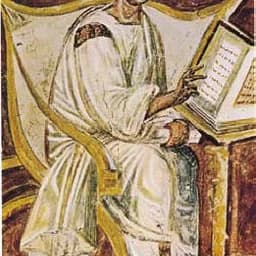
Blessed Augustine of Hippo, Tractates on the Gospel of John, Tractate 124 (on John 21:24–25)
Patristic sources
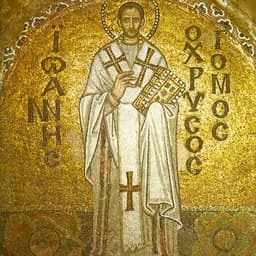
- St. John Chrysostom
- Homilies on the Gospel of St. John, Hom. 87
- Homilies on the Gospel of St. John, Hom. 88
- St. Cyril of Alexandria
- Commentary on the Gospel of John, Book XII
- Blessed Augustine of Hippo
- Tractates on the Gospel of John, Tractate 124
Venerated in the East as Blessed; his Johannine tractates are cited in later Byzantine catenae.
Read the sources: Chrysostom on John, Homily 87 (CCEL) · Chrysostom on John, Homily 88 (CCEL) · Cyril of Alexandria on John, Book 12 (tertullian.org) · Augustine, Tractate 124 on John (CCEL)
The Purpose of John's Gospel (John 20:30–31; 21:24–25)
The texts below are quoted verbatim from public-domain English translations; nothing is paraphrased.
St. John Chrysostom (c. 347–407)
Homilies on the Gospel of St. John, Homilies 87 and 88 (on John 20:30–31 and 21:24–25) Source: trans. in the Nicene and Post-Nicene Fathers, First Series, Vol. 14. Public domain. Full text: https://www.ccel.org/ccel/schaff/npnf114.iv.lxxxix.html
On why this Evangelist recorded fewer signs than the others:
On why the Evangelists set down what they did:
On "that believing ye might have life in His Name," and the favor thereby bestowed on us:
On why the beloved disciple does not refuse to bear witness to himself:
On the very selectiveness of his record as proof that he wrote not to court favor:
St. Cyril of Alexandria (c. 376–444)
Commentary on the Gospel of John, Book XII (on John 20:30–31 and 21:24–25) Source: trans. T. Randell, Library of Fathers, 1885. Public domain. Full text: https://www.tertullian.org/fathers/cyril_on_john_12_book12.htm
On how the Evangelist sums up his book and makes plain its object:
On the many signs left unwritten:
On the truthfulness of the beloved disciple's witness:
On the boundless number of Christ's deeds, and the sufficiency of what is written:
Blessed Augustine of Hippo (354–430)
Tractates on the Gospel of John, Tractate 124 (on John 21:24–25) Source: trans. in the Nicene and Post-Nicene Fathers, First Series, Vol. 7. Public domain. Full text: https://www.ccel.org/ccel/schaff/npnf107.iii.cxxv.html
On the sense in which the world could not contain the books:
On the figure of speech the Greeks call hyperbole: