The Rejection at Nazareth
Luke 4:16–30 · Beginning of the ministry
Scripture
Luke 4:16–30
nd he came to Nazareth, where he had been brought up: and, as his custom was, he went into the synagogue on the sabbath day, and stood up for to read. 17And there was delivered unto him the book of the prophet Esaias. And when he had opened the book, he found the place where it was written, 18The Spirit of the Lord is upon me, because he hath anointed me to preach the gospel to the poor; he hath sent me to heal the brokenhearted, to preach deliverance to the captives, and recovering of sight to the blind, to set at liberty them that are bruised, 19To preach the acceptable year of the Lord. 20And he closed the book, and he gave it again to the minister, and sat down. And the eyes of all them that were in the synagogue were fastened on him. 21And he began to say unto them, This day is this scripture fulfilled in your ears. 22And all bare him witness, and wondered at the gracious words which proceeded out of his mouth. And they said, Is not this Joseph’s son? 23And he said unto them, Ye will surely say unto me this proverb, Physician, heal thyself: whatsoever we have heard done in Capernaum, do also here in thy country. 24And he said, Verily I say unto you, No prophet is accepted in his own country. 25But I tell you of a truth, many widows were in Israel in the days of Elias, when the heaven was shut up three years and six months, when great famine was throughout all the land; 26But unto none of them was Elias sent, save unto Sarepta, a city of Sidon, unto a woman that was a widow. 27And many lepers were in Israel in the time of Eliseus the prophet; and none of them was cleansed, saving Naaman the Syrian. 28And all they in the synagogue, when they heard these things, were filled with wrath, 29And rose up, and thrust him out of the city, and led him unto the brow of the hill whereon their city was built, that they might cast him down headlong. 30But he passing through the midst of them went his way,
King James Version · public domain
Lluka 4:16–30
dhe erdhi ndë Nazaret, atje ku ishte rriturë; edhe pas zakonit të ti hyri ndë sinagogjit ditën’ e-shëtunë, edhe ungrit të këndonjë. 17Edhe ata i dhanë, vivllin’ e profitit Isai; edhe si hapi vivlinë gjeti vëndinë, ku ishte shkruarë, 18“Frym’ e Zotit është mbë mua; përandaj më leu me vaj; më dërgoj t’u ap zën’ e-mirë të-vobeqvet, të shëronj ata që kanë zëmërënë të-thyerë, 19t’u lëçis skllevet liri, edhe të-verbërvet të-hapurë të syvet, edhe të dërgonj ata që janë ndënë mundim ndë liri; Të lëçis mot të-pëlqyerë te Zoti.” 20Edhe si mbylli vivllënë, j’a dha shërbëtorit, edhe ndënji; edhe syt’ e gjith’ atyreve që ishinë ndë sinagogjit ishinë dyke shikuarë mbi atë. 21Edhe zuri t’u thoshte atyre, Se sot umbush kjo shkronjë ndë veshët t’uaj. 22Edhe të-gjithë dëshmoninë mb’atë, edhe çuditeshinë për fjalët’ e hirit që dilninë prej gojës s’ati, edhe thoshinë, Nuk’ është ky i bir’ i Josifit? 23Edhe ay u tha atyre, pa fjalë dotë më thoni këtë paravoli, Mjekës, shëro vetëhenë t’ënde; sa dëgjuamë që janë bërë ndë Kapernaum, bëj-i edhe këtu ndë atdhet t’ënt. 24Po ay tha, Me të vërtetë po u them juve, se asndonjë profit nuk’ është i-pëlqyerë ndë atdhet të ti. 25Edhe me të-vërtetë po u them juve, Shumë gra të-va ishinë ndë Israilt ndë ditt të Iliut kur umbyll qielli tre vjet e gjashtë muaj, ndë të-cilët kohë ubë një zi e-madhe mbë gjithë dhenë; 26Po as mbë ndonjë nga ato nuk’ udërgua Iliu, përveç ndë Sareptë të Sidhonësë ndë një grua të-ve. 27Edhe shumë të-krromosurë ishinë ndë Israilt ndë ditt të profitit Elisse; po asndonjë nga ata nuk’ uqërua, përveç Neeman Syrjani. 28Edhe gjith’ ata që ishinë ndë Sinagogjit, kur dëgjuanë këto, umbushnë me zëmërim. 29Edhe ungritnë edhe e nxuarrë jashtë qytetit; edhe e prunë gjer ndë buzët të malit, përmbi të-cilinë ishte ndërtuarë qytet’ i atyre, që t’a rrëzoninë përposh. 30Po ay shkoj ndëpër mest t’atyreve, edhe iku.
Kristoforidhi, Dhiata e Re Toskërisht 1879 · zotërim publik
In their own words
As the words "He anointed Me" befit the manhood: for it is not the divine nature which is anointed, but that which is akin to us: so also the words "He sent Me" are to be referred to that which is human.
St. Cyril of Alexandria, Commentary on Luke, Sermon 12 (on Luke 4:16–30)
Patristic sources
- St. Cyril of Alexandria
- Commentary on Luke, Sermon 12
The Luke spine for this passage; his standalone Commentary on Luke survives in Payne Smith's 1859 translation.
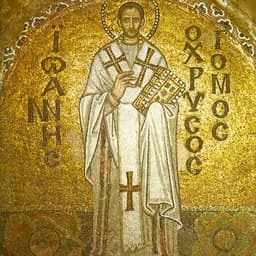
- St. John Chrysostom
- as preserved in the Catena Aurea on Luke
- Theophylact of Ohrid
- Explanation of Luke
- Origen of Alexandria
- Homilies on Luke
Quoted with care; some of his speculations were condemned in 553, but the Gentile typology cited here is not among them.
- St. Ambrose of Milan
- Exposition of Luke
- St. Bede the Venerable
- Exposition of Luke
Read the sources: Cyril of Alexandria on Luke, Sermon XII (tertullian.org) · Catena Aurea on Luke (isidore.co)
The Rejection at Nazareth (Luke 4:16–30)
The texts below are quoted verbatim from public-domain English translations; nothing is paraphrased.
St. Cyril of Alexandria (c. 376–444)
Commentary on the Gospel of Luke, Sermon XIII (on Luke 4:16–30) Source: trans. R. Payne Smith, Library of Fathers, 1859. Public domain. Full text: https://www.tertullian.org/fathers/cyril_on_luke_02_sermons_12_25.htm
On the anointing, which belongs to the manhood He took for our sakes:
On "This day is this scripture fulfilled in your ears":
On the acceptable year of the Lord:
On the offence taken at Joseph's son:
On "no prophet is acceptable in his country":
On Elias and Elisaeus, sent to figure the church of the heathen:
St. John Chrysostom (c. 347–407)
As preserved in the Catena Aurea on Luke. Public domain. Full text: https://isidore.co/aquinas/english/CALuke.htm
On Elias, who carried the keys of the heavens on his tongue:
Theophylact of Ohrid (c. 1055–1107)
Explanation of the Gospel of Luke (on Luke 4:16–30) As preserved in the Catena Aurea on Luke. Public domain. Full text: https://isidore.co/aquinas/english/CALuke.htm
On His coming first to Nazareth, where He had been brought up:
On the deliverance preached to the captives:
Origen of Alexandria (c. 185–254)
Homilies on the Gospel of Luke (on Luke 4:16–30) As preserved in the Catena Aurea on Luke. Public domain. Full text: https://isidore.co/aquinas/english/CALuke.htm
On the poor to whom the Gospel is preached:
St. Ambrose of Milan (c. 339–397)
Exposition of the Gospel of Luke (on Luke 4:16–30) As preserved in the Catena Aurea on Luke. Public domain. Full text: https://isidore.co/aquinas/english/CALuke.htm
On the Lord not despising even the office of a reader:
On the miracles withheld from the envious:
St. Bede the Venerable (c. 673–735)
Exposition of the Gospel of Luke (on Luke 4:16–30) As preserved in the Catena Aurea on Luke. Public domain. Full text: https://isidore.co/aquinas/english/CALuke.htm
On the acceptable year of the Lord reaching beyond His own preaching:
On Naaman the Syrian as a figure of the Gentile people: