The Return of the Unclean Spirit
Matt 12:43–45; Luke 11:24–26 · Later ministry in Galilee
Scripture
Matthew 12:43–45
hen the unclean spirit is gone out of a man, he walketh through dry places, seeking rest, and findeth none. 44Then he saith, I will return into my house from whence I came out; and when he is come, he findeth it empty, swept, and garnished. 45Then goeth he, and taketh with himself seven other spirits more wicked than himself, and they enter in and dwell there: and the last state of that man is worse than the first. Even so shall it be also unto this wicked generation.
King James Version · public domain
Mateu 12:43–45
dhe frym’ e-ndyrë kur del nga njeriu shkon ndëpër vënde të-paujëshim, dyke kërkuarë të-prëjturë, e nukë gjen. 44Atëhere thotë, Letë kthenem ndë shtëpit t’ime, andej nga dolla. Edhe si vjen, e gjen atë të-zbrazëtë, të-fshir’ e të-stolisurë. 45Atëhere vete e merr me vetëhe shtatë fryma të-tjera më të-liga se vetëhen’ e saj, edhe hyjn’ e rrinë atje; edhe të-pastajmet’ e ati njeriu bënenë më të-këqia se të-paratë. Kështu dotë jet’ edhe mbë këtë bres të-lik.
Kristoforidhi, Dhiata e Re Toskërisht 1879 · zotërim publik
In their own words
For just as the Holy Spirit, when He sees any one's heart free from all impurity, and clean, dwells and abides there, and rests therein; so also the impure spirit is wont to dwell in the souls of the wicked.
St. Cyril of Alexandria, Commentary on Luke, Sermon 81 (on Luke 11:24–26)
Patristic sources
- St. John Chrysostom
- Homilies on Matthew, Hom. 43
- St. Cyril of Alexandria
- Commentary on Luke, Sermon 81
- Origen of Alexandria
- On the Gospel of Luke
Preserved only in the Catena Aurea on Luke; quote with the customary caution regarding his condemned speculations, though this passage carries none.
- Blessed Augustine of Hippo
- Questions on the Gospels, Bk. 1.8
Venerated in the East as Blessed; his Gospel questions are preserved here through the Catena Aurea on Matthew.
- St. Jerome
- Commentary on Matthew
Catena-only in public-domain English.
- St. Gregory the Great
- Morals on the Book of Job
Quoted as preserved in the Catena Aurea on Matthew (Moralia, Bks. 33 and 7).
- St. Bede the Venerable
- Exposition on Luke
Catena-only in public-domain English.
Read the sources: Chrysostom, Homilies on Matthew, Homily 43 (CCEL) · Cyril of Alexandria, Commentary on Luke, Sermon 81 (tertullian.org) · Catena Aurea on Matthew, ch. 12 (CCEL) · Catena Aurea on Luke, Oxford ed. (archive.org)
The Return of the Unclean Spirit (Matthew 12:43–45; Luke 11:24–26)
The texts below are quoted verbatim from public-domain English translations; nothing is paraphrased.
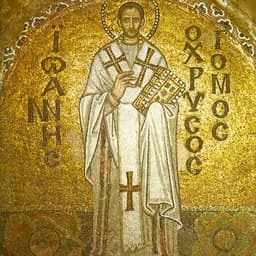
St. John Chrysostom (c. 347–407)
Homilies on the Gospel of Matthew, Homily 43 (on Matthew 12:43–45) Source: trans. in the Nicene and Post-Nicene Fathers, First Series, Vol. 10. Public domain. Full text: https://www.ccel.org/ccel/schaff/npnf110/npnf110.iii.XLIII.html
On the punishment set forth for the wicked generation, that as a healed demoniac who grows remiss draws his affliction back worse than before, so it shall be with them:
On their being left destitute of all virtue, and so the readier dwelling for the demons:
St. Cyril of Alexandria (c. 376–444)
Commentary on the Gospel of Luke, Sermon 81 (on Luke 11:24–26) Source: trans. R. Payne Smith, Library of Fathers, 1859. Public domain. Full text: https://www.tertullian.org/fathers/cyril_on_luke_08_sermons_81_88.htm
On the evil spirit that dwelt in Israel in Egypt, driven out when they received the Law, and returning because they rejected Christ and left the heart empty:
On why the swept and empty heart is retaken — the Holy Spirit rests in the clean heart, the impure spirit in the wicked:
Origen (c. 185–254)
On the Gospel of Luke (on Luke 11:24–26) As preserved in the Catena Aurea on Luke, trans. J. H. Newman, 1841. Public domain. Full text: https://archive.org/details/CatenaAureaNewEdV5
On the house found empty because Israel possessed nothing divine, desolate and vacant for the spirit's return:
Blessed Augustine of Hippo (354–430)
Questions on the Gospels, Book 1.8 (on Matthew 12:43–45) As preserved in the Catena Aurea on Matthew. Public domain. Full text: https://www.ccel.org/ccel/aquinas/catena1.ii.xii.html
On those who believe but have not strength for continence, and so return to the world:
On the cleansed abode retaken because the word of God in sound doctrine was never brought in to dwell there:
St. Jerome (c. 347–420)
Commentary on Matthew (on Matthew 12:43–45) As preserved in the Catena Aurea on Matthew. Public domain. Full text: https://www.ccel.org/ccel/aquinas/catena1.ii.xii.html
On why this parable must be referred to the Jewish people, and not to heretics or to men in general:
On the empty temple that had not Christ to dwell in it, so the devil returned to his former house:
On the last state worse than the first, the nation now possessed by more demons than in Egypt:
St. Gregory the Great (c. 540–604)
Morals on the Book of Job (on Matthew 12:43–45) As preserved in the Catena Aurea on Matthew. Public domain. Full text: https://www.ccel.org/ccel/aquinas/catena1.ii.xii.html
On the dry places without water that are the hearts of the righteous, dried of carnal lust, where the devil finds no rest:
On the soul lifted up and priding itself on its virtues, which opens an entrance to the returning adversary:
St. Bede the Venerable (c. 673–735)
Exposition on the Gospel of Luke (on Luke 11:24–26) As preserved in the Catena Aurea on Luke, trans. J. H. Newman, 1841. Public domain. Full text: https://archive.org/details/CatenaAureaNewEdV5
On the parable applied to one baptized — heretic, schismatic, or even a bad Catholic — from whom the evil spirit went out, who then tries the hearts of the faithful:
On our Lord's added words, which show the difference between His own work and Satan's: