The Return from Egypt and Settling in Nazareth
Matt 2:19–23 · Infancy and childhood
Scripture
Matthew 2:19–23
ut when Herod was dead, behold, an angel of the Lord appeareth in a dream to Joseph in Egypt, 20Saying, Arise, and take the young child and his mother, and go into the land of Israel: for they are dead which sought the young child’s life. 21And he arose, and took the young child and his mother, and came into the land of Israel. 22But when he heard that Archelaus did reign in Judaea in the room of his father Herod, he was afraid to go thither: notwithstanding, being warned of God in a dream, he turned aside into the parts of Galilee: 23And he came and dwelt in a city called Nazareth: that it might be fulfilled which was spoken by the prophets, He shall be called a Nazarene.
King James Version · public domain
Mateu 2:19–23
dhe si vdiq Irodhi ja një ëngjëll’ i Zotit tek i duketë ndë ëndërrë Josifit ndë Egjyptë 20e i thotë, Ngreu e merr me vetëhe djalën’ edhe t’ëmën’ e ati, edhe ecë ndë dhet të Israilit; sepse vdiqnë ata që kërkonin jetën’ e djalit. 21Edhe ay ungrit e mori me vetëhe djalën’ edhe t’ëmën’ e ati, edhe erdhi ndë dhet të Israilit. 22Po kur dëgjoj, se Arhellau mbretëron ndë Judhet ndë vëntt të Irodhit t’et, pat frikë të vejë atje; edhe si i udëftye ati nga Perëndia nd’ëndërrë, iku nd’anët të Galilesë, 23Edhe erdhi e ndënjti ndë një qytet që thuhetë Nazaret; që të mbushetë ç’është thënë nga profitëritë, se Nazoreas dotë quhetë.
Kristoforidhi, Dhiata e Re Toskërisht 1879 · zotërim publik
In their own words
Joseph represents the Apostles, to whom Christ is entrusted to be borne about.
St. Hilary of Poitiers, Commentary on Matthew (on Matthew 2:21–23) (Catena Aurea)
Patristic sources
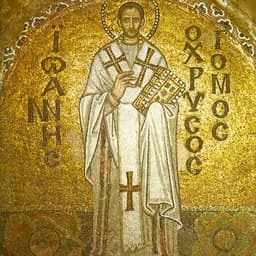
- St. John Chrysostom
- Homilies on the Gospel of Matthew, Hom. 9
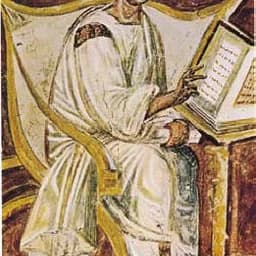
- Blessed Augustine of Hippo
- The Harmony of the Gospels, Book II
Venerated in the East as Blessed; the wording here is Newman's Catena condensation of his Harmony of the Gospels (De Consensu Evangelistarum).
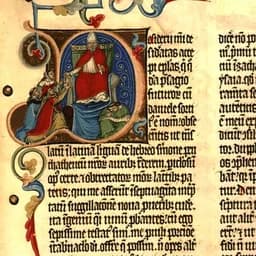
- St. Jerome
- Commentary on Matthew
His Commentary on Matthew survives in public-domain English only through the Catena Aurea.
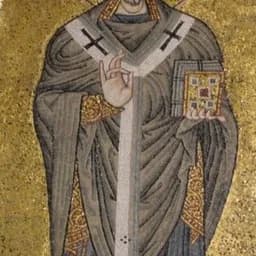
- St. Hilary of Poitiers
- Commentary on Matthew
His Commentary on Matthew survives in public-domain English only through the Catena Aurea.
- St. Bede the Venerable
- Homily for the Feast of the Holy Innocents
His Gospel homilies survive in public-domain English only through the Catena Aurea.
Read the sources: Chrysostom on Matthew, Homily 9 (CCEL) · Catena Aurea on Matthew, ch. 2 (CCEL)
The Return from Egypt and Settling in Nazareth (Matthew 2:19–23)
The texts below are quoted verbatim from public-domain English translations; nothing is paraphrased.
St. John Chrysostom (c. 347–407)
Homilies on the Gospel of Matthew, Homily 9 (on Matthew 2:19–23) Source: trans. in the Nicene and Post-Nicene Fathers, First Series, Vol. 10. Public domain. Full text: https://www.ccel.org/ccel/schaff/npnf110/npnf110.iii.IX.html
On the angel's word, no longer "fly" but "go," and the rhythm of danger and refreshment:
On why Joseph came to dwell in Nazareth:
On the prophecy fulfilled in the name:
On why one must not be over-curious that no such text is found:
Blessed Augustine of Hippo (354–430)
The Harmony of the Gospels, Book II (on Matthew 2:22) As preserved in the Catena Aurea on Matthew. Public domain. Full text: https://www.ccel.org/ccel/aquinas/catena1.ii.ii.html
On what "the land of Israel" meant to Joseph, and why he turned aside from Judaea:
On why each Evangelist writes as though his account had left nothing out:
St. Jerome (c. 347–420)
Commentary on Matthew (on Matthew 2:19–23) As preserved in the Catena Aurea on Matthew. Public domain. Full text: https://www.ccel.org/ccel/aquinas/catena1.ii.ii.html
On the two Herods, and the error of confusing them:
On why Matthew wrote "the prophets" and not "the prophet":
On the meaning of Nazarene, and the Branch out of the stem of Jesse:
St. Hilary of Poitiers (c. 310–367)
Commentary on Matthew (on Matthew 2:21–23) As preserved in the Catena Aurea on Matthew. Public domain. Full text: https://www.ccel.org/ccel/aquinas/catena1.ii.ii.html
On the figurative sense, in which Joseph stands for the Apostles who bear Christ:
St. Bede the Venerable (c. 673–735)
Homily for the Feast of the Holy Innocents (on Matthew 2:19–21) As preserved in the Catena Aurea on Matthew. Public domain. Full text: https://www.ccel.org/ccel/aquinas/catena1.ii.ii.html
On the return as a figure of the Church's peace after persecution: