The Rich Young Ruler
Matt 19:16–30; Mark 10:17–31; Luke 18:18–30 · Journey to Jerusalem
Scripture
Matthew 19:16–30
nd, behold, one came and said unto him, Good Master, what good thing shall I do, that I may have eternal life? 17And he said unto him, Why callest thou me good? there is none good but one, that is, God: but if thou wilt enter into life, keep the commandments. 18He saith unto him, Which? Jesus said, Thou shalt do no murder, Thou shalt not commit adultery, Thou shalt not steal, Thou shalt not bear false witness, 19Honour thy father and thy mother: and, Thou shalt love thy neighbour as thyself. 20The young man saith unto him, All these things have I kept from my youth up: what lack I yet? 21Jesus said unto him, If thou wilt be perfect, go and sell that thou hast, and give to the poor, and thou shalt have treasure in heaven: and come and follow me. 22But when the young man heard that saying, he went away sorrowful: for he had great possessions. 23Then said Jesus unto his disciples, Verily I say unto you, That a rich man shall hardly enter into the kingdom of heaven. 24And again I say unto you, It is easier for a camel to go through the eye of a needle, than for a rich man to enter into the kingdom of God. 25When his disciples heard it, they were exceedingly amazed, saying, Who then can be saved? 26But Jesus beheld them, and said unto them, With men this is impossible; but with God all things are possible. 27Then answered Peter and said unto him, Behold, we have forsaken all, and followed thee; what shall we have therefore? 28And Jesus said unto them, Verily I say unto you, That ye which have followed me, in the regeneration when the Son of man shall sit in the throne of his glory, ye also shall sit upon twelve thrones, judging the twelve tribes of Israel. 29And every one that hath forsaken houses, or brethren, or sisters, or father, or mother, or wife, or children, or lands, for my name’s sake, shall receive an hundredfold, and shall inherit everlasting life. 30But many that are first shall be last; and the last shall be first.
King James Version · public domain
Mateu 19:16–30
dhe ja tek i erdhi përanë një njeri, e i tha, Mësonjës i-mirë, ç’të-mirë të bënj qëtë kem jetë të pasosurë? 17Edhe ay i tha, ç’më thua i-mirë? Asndonjë s’ësht’ i-mirë veç një Perëndia. Po ndë do të hynjç ndë jetët, ruaj porositë. 18I thot’ ati, Cilatë? Edhe Jisuj i tha, “Mos vraç; mos kurvërojsh; mos vjethç; mos apç dëshmim të-rrem; 19Ndero të t’at’ e t’ët ëmë;” edhe “Të duash të-afërminë t’ënt posi vetëhenë t’ënde.” 20Djaloshi i thot ati, Të-gjitha këto i kam ruajturë që mbë të-rit t’im; po ç’më mbetetë më? 21Jisuj i tha ati; Ndë do të bënesh i-sosurë, shko e shit gjënë t’ënde, edhe ep-u’a të-vobeqvet; edhe dotë kesh thesar ndë qiell, edhe eja, e ngjit-m’u pas. 22Po djaloshi kur dëgjoj këtë fjalë, iku i-helmuarë, sepse kishte shumë gjë. 23Edhe Jisuj u tha nxënësvet të ti, Me të-vërtetë po u them juve, se njeriu i-pasurë mezi dotë hynjë ndë mbretërit të qiejvet. 24Edhe përsëri po u them juve, Më kollaj është të shkonjë kamilla ndëpër vrimët të gjëlpërësë, se të hynjë i-pasuri ndë mbretërit të Perëndisë. 25Edhe nxënësit’ e ti, kur dëgjuanë, tmeroneshinë fort, e thoshinë, Vallë cili munt të shpëtonjë? 26Po Jisuj shtyri sytë mb’ata e u tha atyre, Te njerëzitë këjo është punë që s’munt të bënetë, po te Perëndia të-gjitha janë të-mundura. 27Atëhere upërgjeq Pjetri e i tha ati, Ja ne tek lamë të-gjitha, edhe erthmë prapa teje; vallë ç’dotë jetë mbë ne? 28Edhe Jisuj u tha atyre, Me të-vërtetë po u them juve, se ju që më erthtë pas, ndë krijesët të-re, kur të rrijë i Bir’ i njeriut mbi front të lavdis së ti, dotë rrini edhe ju mbi dy-mbë-dhjetë frone dyke gjykuarë të dy-mbë-dhjetë farat’ e Israilit. 29Edhe kushdo që la shtëpi, a vëllezër, a motëra, a atë, a mëmë, a grua, a bij, a ara, për punë t’emërit t’im, dotë marrë një qint për një, edhe dotë trashëgonjë jetë të-pasosurë. 30Po shumë të-parë dotë jenë të-prapësm, edhe të-prapësm të-parë.
Kristoforidhi, Dhiata e Re Toskërisht 1879 · zotërim publik
In their own words
He does not, as some conceive off-hand, bid him throw away the substance he possessed, and abandon his property; but bids him banish from his soul his notions about wealth, his excitement and morbid feeling about it, the anxieties, which are the thorns of existence, which choke the seed of life.
St. Clement of Alexandria, Who is the Rich Man that shall be Saved?, XI (on Mark 10:17–31)
Patristic sources
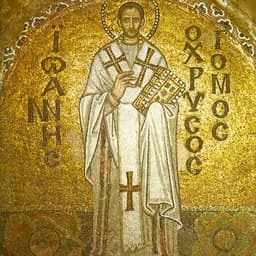
- St. John Chrysostom
- Homilies on Matthew, Hom. 63
- St. Cyril of Alexandria
- Commentary on Luke, Sermons 122–123
- St. Clement of Alexandria
- Who is the Rich Man that shall be Saved?
Pre-Nicene Alexandrian; his treatise on Mark 10:17–31 is the classic patristic reading that the peril lies in the soul's attachment to wealth, not in wealth itself.
- Origen of Alexandria
- Commentary on Matthew (Catena Aurea)
Some of his speculative opinions were condemned in 553; his Matthew commentary beyond 19:12 survives in public-domain English only through the Catena Aurea.
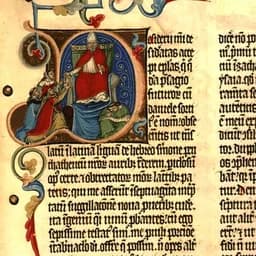
- St. Jerome
- Commentary on Matthew (Catena Aurea)
- St. Gregory the Great
- Moralia in Job, Bk. XXXV (Catena Aurea)
Read the sources: Chrysostom on Matthew, Homily 63 (CCEL) · Cyril of Alexandria on Luke, Sermons 110–123 (tertullian.org) · Clement of Alexandria, Who is the Rich Man that shall be Saved? (CCEL, ANF 2) · Catena Aurea on Matthew 19 (CCEL)
The Rich Young Ruler (Matthew 19:16–30)
The texts below are quoted verbatim from public-domain English translations; nothing is paraphrased.
St. John Chrysostom (c. 347–407)
Homilies on the Gospel of Matthew, Homily 63 (on Matthew 19:16–30) Source: trans. in the Nicene and Post-Nicene Fathers, First Series, Vol. 10. Public domain. Full text: https://www.ccel.org/ccel/schaff/npnf110.iii.LX.html
On the tyranny wealth holds over an otherwise earnest soul:
On "there is none good but one, that is, God":
On the Lord's verdict on the rich:
On how "hard" is shown to be "impossible":
On climbing free of wealth little by little:
St. Cyril of Alexandria (c. 376–444)
Commentary on the Gospel of Luke, Sermons 122–123 (on Luke 18:18–27) Source: trans. R. Payne Smith, 1859. Public domain. Full text: https://www.tertullian.org/fathers/cyril_on_luke_11_sermons_110_123.htm
On "Why do you call Me good? None is good but one, God":
On why the Lord bade this man of all men sell all:
On what the "camel" of the saying is:
St. Clement of Alexandria (c. 150 – c. 215)
Who is the Rich Man that shall be Saved?, XI, XV, XIX (on Mark 10:17–31) Source: trans. William Wilson, Ante-Nicene Fathers, Vol. 2. Public domain. Full text: https://www.ccel.org/ccel/schaff/anf02.vi.v.html
On what "Sell thy possessions" really commands:
On the inward act the outward one signifies:
On the man who is poor in purse yet rich in the passions:
On who is truly rich:
Origen of Alexandria (c. 185–254)
Commentary on Matthew (on Matthew 19:16–29) As preserved in the Catena Aurea on Matthew. Public domain. Full text: https://www.ccel.org/ccel/aquinas/catena1.ii.xix.html
(Origen's exposition of Matthew beyond 19:12 survives in public-domain English only through the Catena.)
On why our good is not "good" beside the one Good:
On what it is to enter into life:
On how little Peter had forsaken, and how much it weighed:
St. Jerome (c. 347–420)
Commentary on Matthew (on Matthew 19:16–24) As preserved in the Catena Aurea on Matthew. Public domain. Full text: https://www.ccel.org/ccel/aquinas/catena1.ii.xix.html
On the spirit in which the young man asked:
On "There is one good, that is, God":
On "hard" and not "impossible":
St. Gregory the Great (c. 540–604)
Moralia in Job, Book XXXV (on Matthew 19:24) As preserved in the Catena Aurea on Matthew. Public domain. Full text: https://www.ccel.org/ccel/aquinas/catena1.ii.xix.html
On the camel, the needle, and the humility of the Passion: