The Risen Christ Appears to the Women
Matt 28:9–10 · Post-Resurrection
Scripture
Matthew 28:9–10
nd as they went to tell his disciples, behold, Jesus met them, saying, All hail. And they came and held him by the feet, and worshipped him. 10Then said Jesus unto them, Be not afraid: go tell my brethren that they go into Galilee, and there shall they see me.
King James Version · public domain
Mateu 28:9–10
dhe dyke vaturë t’u epninë zë nxënësvet t’ati, ja Jisuj tek upoq me ato, e u tha, Gëzohi. Edhe ato i erthnë përanë, e i zunë këmbëtë, edhe i ufalnë. 10Atëhere Jisuj u tha atyre, Mos kini frikë, shkoni, ep-u-ni zë vëllezërvet të mi, që të shkonjënë ndë Galilet, edhe atje dotë më shohënë.
Kristoforidhi, Dhiata e Re Toskërisht 1879 · zotërim publik
In their own words
He calls them "brethren" whom He has made akin to His own body; "brethren" whom the generous Heir has made His co-heirs; "brethren," whom He has adopted to be sons of His own Father.
St. Peter Chrysologus, Sermons (Catena Aurea on Matthew)
Patristic sources
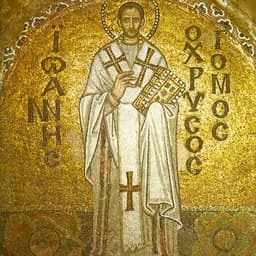
- St. John Chrysostom
- Homilies on Matthew, Hom. 89
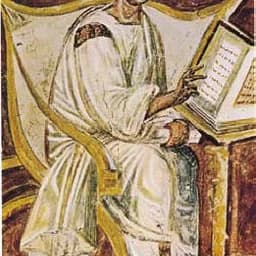
- Blessed Augustine of Hippo
- Harmony of the Gospels, Book III
Venerated in the East as Blessed; his Harmony reads the Galilee command as a mystery of transmigration and revelation.
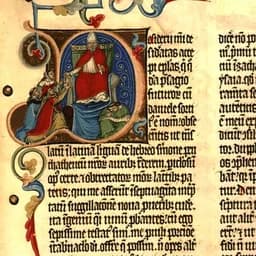
- St. Jerome
- Commentary on Matthew
Catena-only in public-domain English.
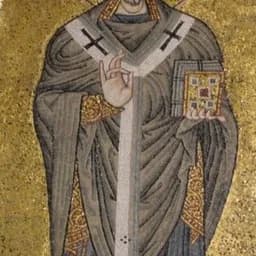
- St. Hilary of Poitiers
- Commentary on Matthew
Catena-only in public-domain English.
- St. Peter Chrysologus
- Sermons 76 and 80
Catena-only in public-domain English.
Read the sources: Chrysostom on Matthew, Homily 89 (CCEL) · Catena Aurea on Matthew 28 (CCEL)
The Risen Christ Appears to the Women (Matthew 28:9–10)
The texts below are quoted verbatim from public-domain English translations; nothing is paraphrased.
St. John Chrysostom (c. 347–407)
Homilies on the Gospel of Matthew, Homily 89 (on Matthew 28:9–10) Source: trans. in the Nicene and Post-Nicene Fathers, First Series, Vol. 10. Public domain. Full text: https://www.ccel.org/ccel/schaff/npnf110.iii.LXXXV.html
On the risen Lord meeting the women, and His message to the disciples:
That the faithful too may lay hold on Him:
Blessed Augustine of Hippo (354–430)
Harmony of the Gospels, Book III (on Matthew 28:9–10) As preserved in the Catena Aurea on Matthew. Public domain. Full text: https://www.ccel.org/ccel/aquinas/catena1.ii.xxviii.html
On the mystery of Galilee, where the risen Lord bids them see Him:
On the "revelation" that the name Galilee signifies:
St. Jerome (c. 347–420)
Commentary on Matthew (on Matthew 28:9–10) As preserved in the Catena Aurea on Matthew. Public domain. Full text: https://www.ccel.org/ccel/aquinas/catena1.ii.xxviii.html
On the fear and joy that sped the women from the tomb:
On the greeting "Hail," that undoes the curse of Eve:
On why fear is banished first:
St. Hilary of Poitiers (c. 310–367)
Commentary on Matthew (on Matthew 28:9–10) As preserved in the Catena Aurea on Matthew. Public domain. Full text: https://www.ccel.org/ccel/aquinas/catena1.ii.xxviii.html
On the women meeting the Lord Himself, that they might speak from His own mouth:
On the reversal of our woe, the female sex first seeing the Resurrection:
St. Peter Chrysologus (c. 380–450)
Sermons 76 and 80 (on Matthew 28:9–10) As preserved in the Catena Aurea on Matthew. Public domain. Full text: https://www.ccel.org/ccel/aquinas/catena1.ii.xxviii.html
On the women now permitted to hold Him, where Mary was told "Touch me not":
On why He calls the fugitive disciples "brethren":