The Seven Last Words from the Cross
Matt 27:46; Luke 23:34, 43, 46; John 19:26–30 · Passion week in Jerusalem
Scripture
Matthew 27:46
nd about the ninth hour Jesus cried with a loud voice, saying, Eli, Eli, lama sabachthani? that is to say, My God, my God, why hast thou forsaken me?
King James Version · public domain
Mateu 27:46
dhe mbë të-nënttën’ orë Jisuj bërtiti me zë të-math, dyke thënë, “Ili, Ili llama savahthani” që do me thënë, “Perëndia im, Perëndia im, përse hoqe dorë prej meje?”
Kristoforidhi, Dhiata e Re Toskërisht 1879 · zotërim publik
In their own words
You have Him complaining that He is left to death, and thus He is Man; you have Him as He is dying declaring that He reigns in Paradise; and thus He is God.
St. Hilary of Poitiers, On the Trinity, Book 10 (on Matthew 27:46) (Catena Aurea)
Patristic sources
- St. John Chrysostom
- Homilies on Matthew, Hom. 88
- St. Cyril of Alexandria
- Commentary on John, Book 12
- Origen of Alexandria
- Commentary on Matthew
Quoted only through the Catena Aurea on Matthew (his commentary on Matt 27 survives in no standalone public-domain English); some of his later speculations were condemned in 553, so he is cited with caution.
- Blessed Augustine of Hippo
- Expositions on the Psalms, Psalm 22
Venerated in the East as Blessed; his exposition of Psalm 22 reads the cry of dereliction as spoken in the person of fallen humanity.
- St. Jerome
- Commentary on Matthew
Catena-only in public-domain English on the Gospels.
- St. Hilary of Poitiers
- On the Trinity, Book 10
Quoted as preserved in the Catena Aurea on Matthew.
Read the sources: Chrysostom on Matthew, Homily 88 (CCEL) · Cyril of Alexandria on John, Book 12 (tertullian.org) · Augustine on the Psalms, Psalm 22 (CCEL) · Catena Aurea on Matthew 27 (CCEL)
The Seven Last Words from the Cross (Matthew 27:46; Luke 23:34, 43, 46; John 19:26–30)
The texts below are quoted verbatim from public-domain English translations; nothing is paraphrased.
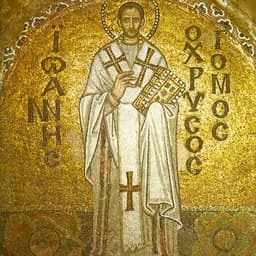
St. John Chrysostom (c. 347–407)
Homilies on the Gospel of Matthew, Homily 88 (on Matthew 27:46) Source: trans. in the Nicene and Post-Nicene Fathers, First Series, Vol. 10. Public domain. Full text: https://www.ccel.org/ccel/schaff/npnf110/npnf110.iii.LXXXIV.html
On the cry "Eli, Eli, lama sabachthani?" and why the Lord uttered it to His last breath:
St. Cyril of Alexandria (c. 376–444)
Commentary on the Gospel of John, Book 12 (on John 19:28–30) Source: trans. T. Randell, Library of Fathers, 1885. Public domain. Full text: https://www.tertullian.org/fathers/cyril_on_john_12_book12.htm
On "I thirst," and the flesh He truly and willingly bore:
On "It is finished," and the descent to the spirits in hell:
Origen of Alexandria (c. 185–254)
Commentary on Matthew (on Matthew 27:46) As preserved in the Catena Aurea on Matthew. Public domain. Full text: https://www.ccel.org/ccel/aquinas/catena1.ii.xxvii.html
(Some of Origen's later speculations were condemned in 553; the passage below bears on the plain sense of the cry and is quoted with that caution.)
On what it means that Christ is "forsaken of God":
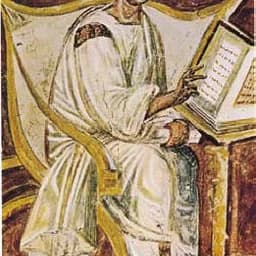
Blessed Augustine of Hippo (354–430)
Expositions on the Book of Psalms, Psalm 22 (on Psalm 22:1) Source: trans. in the Nicene and Post-Nicene Fathers, First Series, Vol. 8. Public domain. Full text: https://www.ccel.org/ccel/schaff/npnf108/npnf108.ii.XXII.html
On the cry as the words of the old man, spoken in the person Christ bore:
St. Jerome (c. 347–420)
Commentary on Matthew (on Matthew 27:46) As preserved in the Catena Aurea on Matthew. Public domain. Full text: https://www.ccel.org/ccel/aquinas/catena1.ii.xxvii.html
On the cry as the opening of the twenty-first Psalm, spoken of the Saviour and not of David:
St. Hilary of Poitiers (c. 310–367)
On the Trinity, Book 10 (on Matthew 27:46) As preserved in the Catena Aurea on Matthew. Public domain. Full text: https://www.ccel.org/ccel/aquinas/catena1.ii.xxvii.html
On the complaint of dereliction and the promise of Paradise, that show Him Man and God: