All entriesdiscourse

The sheep and the goats

Matt 25:31–46 · Passion week in Jerusalem

Matthew 25:31–46

hen the Son of man shall come in his glory, and all the holy angels with him, then shall he sit upon the throne of his glory: 32And before him shall be gathered all nations: and he shall separate them one from another, as a shepherd divideth his sheep from the goats: 33And he shall set the sheep on his right hand, but the goats on the left. 34Then shall the King say unto them on his right hand, Come, ye blessed of my Father, inherit the kingdom prepared for you from the foundation of the world: 35For I was an hungred, and ye gave me meat: I was thirsty, and ye gave me drink: I was a stranger, and ye took me in: 36Naked, and ye clothed me: I was sick, and ye visited me: I was in prison, and ye came unto me. 37Then shall the righteous answer him, saying, Lord, when saw we thee an hungred, and fed thee? or thirsty, and gave thee drink? 38When saw we thee a stranger, and took thee in? or naked, and clothed thee? 39Or when saw we thee sick, or in prison, and came unto thee? 40And the King shall answer and say unto them, Verily I say unto you, Inasmuch as ye have done it unto one of the least of these my brethren, ye have done it unto me. 41Then shall he say also unto them on the left hand, Depart from me, ye cursed, into everlasting fire, prepared for the devil and his angels: 42For I was an hungred, and ye gave me no meat: I was thirsty, and ye gave me no drink: 43I was a stranger, and ye took me not in: naked, and ye clothed me not: sick, and in prison, and ye visited me not. 44Then shall they also answer him, saying, Lord, when saw we thee an hungred, or athirst, or a stranger, or naked, or sick, or in prison, and did not minister unto thee? 45Then shall he answer them, saying, Verily I say unto you, Inasmuch as ye did it not to one of the least of these, ye did it not to me. 46And these shall go away into everlasting punishment: but the righteous into life eternal.

King James Version · public domain

Mateu 25:31–46

dhe kur të vinj’ i Bir’ i njeriut ndë lavdit të ti, edhe gjithë ëngjëjt’ e-shënjtëruarë bashkë me atë, atëhere dotë rrijë mbi front të lavdis’ së ti. 32Edhe dotë mblidhenë përpara ati gjithë kombetë; edhe dot’i ndanj’ ata njërinë nga tjatëri, sindëkur bariu ndan dhëntë nga kecëritë; 33Edhe dotë vërë dhëntë mb’anë të-djathtë, edhe kecëritë mb’anë të-mëngjërë. 34Atëhere mbreti dot’ u thot’ atyre që rrinë mbë anë të-djathtë të ti, Ejani të-bekuarët’ e t’im Eti, trashëgoni mbretërinë që është bërë gati për ju që kur se është ngrehurë bota. 35Sepse pata uri, e më dhatë të ha; pata et, e më dhatë të pi; i-huaj jeshë, edhe më muartë ndë shtëpi; 36I-sveshurë, edhe më veshtë; usëmurçë, edhe erthtë të më shihni; jeshë ndë burk, edhe erthtë tek unë. 37Atëhere të-drejtëtë dot’i përgjigjenë, dyke thënë, Zot, kur të pamë ty dyke pasurë uri e të ushqyemë? a dyke pasurë et, e të dhamë të pish? 38Edhe kur të pamë të-huaj, e të muarmë ndëpër shtëpirat? a të-sveshurë, e të veshmë? 39Edhe kur të pamë të-sëmurë, a ndë burk, edhe erthmë tek ti? 40Edhe mbreti dotë përgjigjet’ e dot’u thotë atyre, Me të-vërtetë po u them juve, sado që i bëtë njerit nga këta vëllezërit’ e mi më të-vegjëlitë, m’a keni bërë mua. 41Atëherë dot’u thot’ edhe atyre që rrinë mbë anë të-mëngjërë, Ikëni prej meje, të-mallëkuarëtë, ndë zjarrt të-pasosurë, që është bërë gati për djallin’ e për ëngjëjt’ e ati. 42Sepse paçë uri, e s’më dhatë të ha; paçë et, e s’më dhatë të pi; 43Jeshë i-huaj, e nukë më muartë përbrënda; i-sveshurë, edhe nukë më veshtë; i-sëmurë edhe ndë burk, edhe nuk’ erthtë të më shihni. 44Atëhere dot’ i përgjigjen’ edhe ata, dyke thënë, Zot, kur të pamë ty dyke pasur’ uri, a dyke pasur’ et, a të-huaj, a të-sveshurë, a të-sëmurë, a ndë burk, e nukë të shërbyemë? 45Atëhere dot’u përgjigjet’ e dot’u thot’ atyre, Me të-vërtetë po u them juve, sado që nuk’ i bëtë njërit nga këta më të-vegjëlitë, as mua nukë m’a kini bërë. 46Edhe këta dotë venë ndë mundim të-përjetëshme; edhe të-drejtëtë ndë jetët të-përjetëshme.

Kristoforidhi, Dhiata e Re Toskërisht 1879 · zotërim publik

Summary

Christ's own description of the Last Judgment: the Son of Man, who came once in lowliness, comes now in glory with all the angels and sits as King and Judge. He separates the nations as a shepherd divides sheep from goats, the sheep gentle and fruitful, the goats barren and willful, an image the Fathers take for two settled dispositions of soul made manifest at the end. The criterion is the works of mercy, for the King has so identified Himself with the hungry, the stranger, the naked, the sick, and the prisoner that what is seed to the least of these is seed to Him.

The Fathers dwell on the astonishment of both groups, since neither recalls seeing the Lord in such need. Chrysostom presses that this ignorance commends the merciful, who gave without calculating reward, and convicts the rest, who would have served the Lord had they known Him but passed their neighbor by. The demand, he notes, is gentle: not the impossible but ordinary acts of kindness, bread, a cup, a visit, so that none can plead poverty. Theophylact and the tradition take "the least of these my brethren" first of the poor and afflicted, and especially of the faithful who suffer, in whom Christ is honored or despised.

Here Christian philanthropy finds its source: Basil's care for the sick and hungry, gathered into the great hospice he built, and his teaching that what we hoard is owed to the destitute, so that mercy is a debt repaid rather than generosity overflowing. The reading is soteriological: love of neighbor is inseparable from love of God, and the sentence falls not on doctrine professed but on charity shown or withheld. The Church reads this Gospel on Meatfare Sunday as Lent approaches, setting mercy before us as the measure of the judgment, that fasting may be joined to almsgiving.

In their own words

But while the brutes have from nature their unfruitfulness, and fruitfulness, these have it from choice, wherefore some are punished, and the others crowned. And He doth not punish them, until He hath pleaded with them; wherefore also, when He hath put them in their place, He mentions the charges against them.

St. John Chrysostom, Homilies on the Gospel of St. Matthew, Homily LXXIX (on Matt. xxv. 31-46) (NPNF1 Vol. 10)

The Sheep and the Goats (Matthew 25:31–46)

Public-Domain Patristic Commentary

When the Son of Man comes in his glory, and all the holy angels with him, he sits on the throne of his glory. All nations are gathered before him, and he separates them one from another, as a shepherd divides his sheep from the goats, setting the sheep on his right hand and the goats on the left. To those on the right he says, "Come, ye blessed of my Father, inherit the kingdom prepared for you from the foundation of the world: for I was an hungred, and ye gave me meat: I was thirsty, and ye gave me drink: I was a stranger, and ye took me in: naked, and ye clothed me: I was sick, and ye visited me: I was in prison, and ye came unto me." When the righteous ask when they saw him so, the King answers, "Inasmuch as ye have done it unto one of the least of these my brethren, ye have done it unto me." To those on the left he says, "Depart from me, ye cursed, into everlasting fire, prepared for the devil and his angels," for they did none of these things; "Inasmuch as ye did it not to one of the least of these, ye did it not to me." "And these shall go away into everlasting punishment: but the righteous into life eternal."

This is found only in Matthew, the close of the Olivet discourse and the last of the parables before the Passion. The Fathers read the Son of Man in glory as the Second Coming; the gathering and separation as the final judgment of the whole human race; the sheep as the merciful and the goats as the unmerciful; the right hand and the left as the saved and the lost; and the verdict as turning on the works of mercy, by which Christ identifies himself with the hungry, the stranger, the sick, the imprisoned. They differ a little on who "the least of these my brethren" are, whether all the needy or specifically Christ's own; and they insist with one voice that the fire was prepared for the devil, not for man, and that both the punishment and the life are everlasting. Gathered below are five Fathers, two from the East and three from the West, each quoted verbatim from a public-domain translation; the Latin Fathers and Gregory the Great are drawn from the Catena Aurea on Matthew (St. Thomas Aquinas, trans. J. H. Newman, 1841).


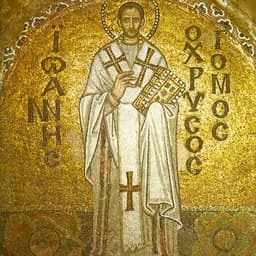
St. John Chrysostom (c. 347–407)

From his Homilies on the Gospel of Matthew (Homily 79, on Matthew 25:31–46), NPNF translation. Public domain.

On why this is no longer told as a parable:

Wherefore neither does He say, "The kingdom is likened," any more, but openly shows Himself, saying, "When the Son of Man shall come in His glory." For now is He come in dishonor ... but then shall He sit upon the throne of His glory.

On the sheep and the kids, divided by choice and not by nature:

calling the one kids, the other sheep, that He might indicate the unfruitfulness of the one ... and the great profit from the other ... But while the brutes have from nature their unfruitfulness, and fruitfulness, these have it from choice, wherefore some are punished, and the others crowned.

On how light His commands are:

And mark how easy are His injunctions. He said not, "I was in prison, and you set me free; I was sick, and you raised me up again;" but, "you visited me," and, "you came to me." ... For no costly table did He seek, but what is needful only ... and He sought in a suppliant's garb.

On the dignity of the One who receives through the poor:

the easiness of the request, for it was bread; the pitiable character of Him that requests, for He was poor; the sympathy of nature, for He was a man ... The dignity of the one receiving, for it was God, who was receiving by the poor.

On why he calls them both his brethren and the least:

Why, for this reason they are brethren, because they are lowly, because they are poor, because they are outcast. For such does He most invite to brotherhood ... but every believer; though he be a secular person, yet if he be hungry, and famishing, and naked, and a stranger, His will is he should have the benefit of all this care. For baptism renders a man a brother.

On the fire that was not prepared for man:

But to the others He says, "Depart from me, you cursed," (no longer of the Father; for not He laid the curse upon them, but their own works), "into the everlasting fire, prepared," not for you, but "for the devil and his angels." ... I, says he, prepared the kingdom for you, but the fire no more for you, but "for the devil and his angels;" but since you cast yourselves therein, impute it to yourselves.

On the justice of the one sentence and the grace of the other:

So for this cause, while the one are punished justly, the others are crowned by grace. For though they had done ten thousand things, the munificence were of grace, that in return for services so small and cheap, such a heaven, and a kingdom, and so great honor, should be given them.


Origen (c. 185–254)

From his Commentary on Matthew, as compiled in the Catena Aurea on Matthew. Public domain.

On the right hand and the left:

For the Saints who have wrought right works, shall receive in recompense of their right works the King's right hand, at which is rest and glory; but the wicked for their evil and sinister deeds have fallen to the left hand, that is, into the misery of torments.


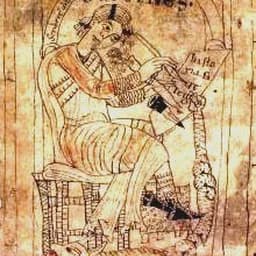
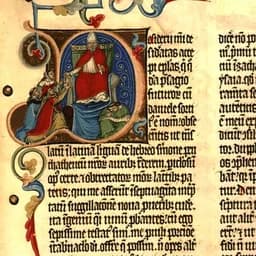
St. Jerome (c. 347–420)

From his Commentary on Matthew, as compiled in the Catena Aurea on Matthew. Public domain.

On why the wicked are likened to goats:

Also the goat is a salacious animal, and was the offering for sins in the Law; and He says not "she-goats" which can produce young.

On who "the least of these my brethren" are:

It were indeed free to us to understand that it is Christ in every poor man whom we feed when he is hungry, or give drink to when he is thirsty, and so of other things; but when He says, "In that ye have done it to one of the least of these my brethren," He seems to me not to speak of the poor generally, but of the poor in spirit, those to whom He pointed and said, "Whosoever shall do the will of my Father which is in heaven, the same is my brother."


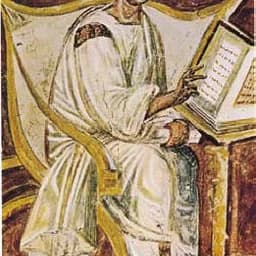
Blessed Augustine of Hippo (354–430)

From his On Faith and Works, as compiled in the Catena Aurea on Matthew. Public domain.

On the eternity of the punishment, not the fire alone:

Some deceive themselves, saying, that the fire indeed is called everlasting, but not the punishment. This the Lord foreseeing, sums up His sentence in these words.


St. Gregory the Great (c. 540–604)

From his Morals on the Book of Job, as preserved in the Catena Aurea on Matthew. Public domain.

On the elect who are judged and reign, and the perfect who are not judged yet reign:

These ... are they who are judged on the side of the elect, and who reign; who wash away the stains of their life with tears; who redeem former sins by good deeds following ... Others indeed there are who are not judged, yet reign, who have gone even beyond the precepts of the Law in the perfection of their virtue.

On why the faithless are not judged, but unworthy believers are convicted:

They to whom this is said are the wicked believers, who are judged and perish; others, being unbelievers, are not judged and perish; for there is no examination of the condition of such as appear before the face of an impartial Judge already condemned by their unbelief; but those who hold the profession of the faith, but have not the works of their profession, are convicted that they may be condemned.

On why finite sin draws everlasting punishment, the Judge weighing hearts:

But, they urge, finite sin ought not to be visited with infinite punishment; we answer, that this argument would be just, if the righteous Judge considered men's actions, and not their hearts. Therefore it belongs to the righteousness of an impartial Judge, that those whose heart would never be without sin in this life, should never be without punishment.

On how God, being good, does not delight in torment, yet being righteous does not cease from justice:

Almighty God, seeing He is good, does not delight in the torments of the wretched; but forasmuch as He is righteous, He ceases not from taking vengeance on the wicked; yet do the wicked burn not without some purpose, namely, that the righteous may acknowledge how they are debtors for eternity to Divine grace, when they see the wicked suffering for eternity misery, which themselves have escaped only by the assistance of that Divine grace.


Note on sources and other Fathers

This passage's patristic exposition is carried above all by Chrysostom, and the other Fathers add particular points to his fuller reading. Chrysostom marks that here Christ no longer says "the kingdom is likened" but shows himself openly on the throne of glory; that the sheep and goats are divided by choice and not by nature; that his commands are light, for he sought only what is needful and "in a suppliant's garb"; that the dignity of the receiver is the highest, "for it was God, who was receiving by the poor"; that the needy are his brethren "because they are lowly, because they are poor"; that the fire was prepared "not for you, but for the devil and his angels," the curse coming from their own works; and that the one party is "punished justly," the other "crowned by grace." Origen reads the right hand as rest and glory, the left as the misery of torments. Jerome notes that the goat was the sin-offering of the Law, and reads "the least of these my brethren" not of the poor generally but of "the poor in spirit," those who do the Father's will. Augustine fixes the dogmatic point against those who would soften it: the punishment, and not the fire only, is everlasting. Gregory the Great distinguishes those who are judged among the elect and reign from the perfect who are not judged yet reign, and the wicked believers who are judged and perish from the unbelievers who are not judged; and he defends the everlasting punishment, since the righteous Judge weighs not men's actions only but their hearts, and being good takes no delight in torment, yet being righteous does not cease from justice.

Hilary touches this passage more briefly, and Theophylact follows the Eastern line; their comments are noted here rather than quoted, and Augustine's fuller treatment of the eternity of judgment lies in his City of God, from which the Catena also draws at length. The five quoted are Chrysostom verbatim from his Homily 79, and Origen, Jerome, Augustine, and Gregory the Great through the Catena Aurea, as marked in each attribution.

Patristic sources