The Strong Man Bound
Matt 12:29; Mark 3:27; Luke 11:21–22 · Later ministry in Galilee
Scripture
Matthew 12:29
r else how can one enter into a strong man’s house, and spoil his goods, except he first bind the strong man? and then he will spoil his house.
King James Version · public domain
Mateu 12:29
qysh munt të hynjë ndë shtëpit të të-fortit, e të rrëmbenjë enët’ e ati, ndë mos lithtë më përpara të-fortinë, edhe atëhere dot’a bënjë rrëmullë shtëpin’ e ati?
Kristoforidhi, Dhiata e Re Toskërisht 1879 · zotërim publik
In their own words
His arms then are the craft and the wiles of spiritual wickedness, but his spoils are the men themselves, who have been deceived by him.
St. Bede the Venerable, Commentary on Luke (Catena Aurea)
Patristic sources
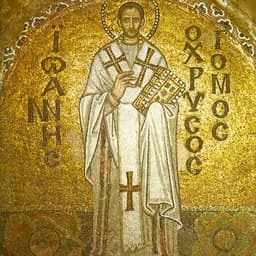
- St. John Chrysostom
- Homilies on Matthew, Hom. 41
- St. Cyril of Alexandria
- Commentary on Luke, Sermon 81
- Theophylact of Ohrid
- Commentary on Luke (Catena Aurea)
His Gospel exegesis survives in public-domain English only through the Catena Aurea.
- Blessed Augustine of Hippo
- Catena Aurea on Matthew
Venerated in the East as Blessed; here quoted as excerpted in the Catena Aurea.
- St. Jerome
- Commentary on Matthew (Catena Aurea)
- St. Bede the Venerable
- Commentary on Luke (Catena Aurea)
Read the sources: Chrysostom, Homilies on Matthew, Homily 41 (CCEL) · Cyril on Luke, Sermon 81 (tertullian.org) · Catena Aurea on Matthew (CCEL) · Catena Aurea on Luke, Oxford 1874 scan (archive.org)
The Strong Man Bound (Matthew 12:29; Mark 3:27; Luke 11:21–22)
The texts below are quoted verbatim from public-domain English translations; nothing is paraphrased.
St. John Chrysostom (c. 347–407)
Homilies on the Gospel of Matthew, Homily 41 (on Matthew 12:29). Trans. in the Nicene and Post-Nicene Fathers, First Series, Vol. 10. Public domain. Full text: https://www.ccel.org/ccel/schaff/npnf110/npnf110.iii.XLI.html
On the third refutation — that the devil cannot be cast out unless he is first overpowered:
That the very prince of the demons is held bound with all authority:
On the spoiling as a prophecy that Christ will drive all error out of the world:
St. Cyril of Alexandria (c. 376–444)
Commentary on the Gospel of Luke, Sermon 81 (on Luke 11:21–22). Trans. R. Payne Smith, Library of Fathers, 1859. Public domain. Full text: https://www.tertullian.org/fathers/cyril_on_luke_08_sermons_81_88.htm
On the plain comparison — the strong man overcome by a stronger:
On Satan as the robber who penned the flocks of God in his own fold:
On the spoil divided — the souls called back to the knowledge of the truth:
Theophylact of Ohrid (c. 1055–1107)
As preserved in the Catena Aurea on Luke. Public domain. Full text: https://archive.org/details/CatenaAureaNewEdV5
On the devil's armour, in which he trusted:
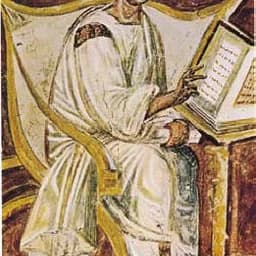
Blessed Augustine of Hippo (354–430)
As preserved in the Catena Aurea on Matthew. Public domain. Full text: https://www.ccel.org/ccel/aquinas/catena1.ii.xii.html
On the binding of the strong man — that his power to hinder the faithful is taken away:
St. Jerome (c. 347–420)
As preserved in the Catena Aurea on Matthew. Public domain. Full text: https://www.ccel.org/ccel/aquinas/catena1.ii.xii.html
On the strong man's house, and the conqueror's own word that our adversary is strong:
St. Bede the Venerable (c. 673–735)
As preserved in the Catena Aurea on Luke. Public domain. Full text: https://archive.org/details/CatenaAureaNewEdV5
On the world as the devil's palace, held until the coming of a stronger:
On the armour and the spoils — the men themselves whom the devil deceived:
On the dividing of the spoils as a sign of triumph: