The Syrophoenician woman's daughter
Matt 15:21–28; Mark 7:24–30 · Later ministry in Galilee
Scripture
Matthew 15:21–28
hen Jesus went thence, and departed into the coasts of Tyre and Sidon. 22And, behold, a woman of Canaan came out of the same coasts, and cried unto him, saying, Have mercy on me, O Lord, thou son of David; my daughter is grievously vexed with a devil. 23But he answered her not a word. And his disciples came and besought him, saying, Send her away; for she crieth after us. 24But he answered and said, I am not sent but unto the lost sheep of the house of Israel. 25Then came she and worshipped him, saying, Lord, help me. 26But he answered and said, It is not meet to take the children’s bread, and to cast it to dogs. 27And she said, Truth, Lord: yet the dogs eat of the crumbs which fall from their masters’ table. 28Then Jesus answered and said unto her, O woman, great is thy faith: be it unto thee even as thou wilt. And her daughter was made whole from that very hour.
King James Version · public domain
Mateu 15:21–28
dhe Jisuj si dolli andej, iku nd’anët të Tyrës’ e të Sidhonësë. 22Edhe ja një grua Hananeë tek dolli nga ata sinorë, e i thërriste dyke thënë, Përdëlle-më, o Zot, bir’ i Dhavidhit; ime bijë mundonetë keq prej djallit. 23Po ay nuk’ i upërgjeq asaj ndonjë fjalë. Edhe nxënësit’ e ati erthnë përanë e i luteshinë, dyke thënë, Lësho-e atë, sepse po thërret prapa nesh. 24Po ay upër-gjeq e tha, Nuk’ udërguashë ngjetiu, veç te dhënt’ e-humbura të shtëpis’ së Israilit. 25Pastaj ajo erdhi e i falej ati, dyke thënë, Zot, ndih-më. 26Po ay upërgjeq e tha, Nuk’ është mirë të-marrë njeriu bukën’ e djemvet, e t’u’a hedhë këlyshëvet të qënvet. 27Edhe ajo tha, Po, Zot; po edhe këlyshët’ e qënvet hanë nga thërrimetë që bjenë nga truvez’ e zotërinjvet. 28Atëherë Jisuj upërgjeq e i tha asaj, O grua, besa jote ësht’ e-madhe; t’ubëftë si do. Edhe e bija ushërua që mb’atë herë.
Kristoforidhi, Dhiata e Re Toskërisht 1879 · zotërim publik
Summary
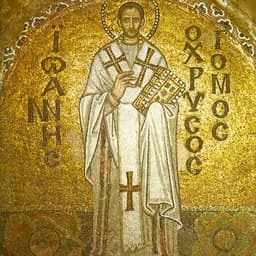
When the woman cries out, Christ is at first silent, and then answers with what sounds like a hard refusal: "It is not right to take the children's bread and throw it to the dogs." The Fathers are agreed that this seeming harshness is no rejection but a deliberate drawing-out of her faith, so that a virtue that might have stayed hidden is brought into the open for all to see. She meets the word not with offense but with wisdom, turning it gently back: "yet even the dogs eat the crumbs that fall from their masters' table." Chrysostom marvels at this: she calls herself a dog and the children masters, and in that lowliness she lays hold of what she asks; her humility is set off against the pride of those first invited, who had the bread and despised it.
The disciples appear here in a lesser light, asking only that she be sent away because she keeps crying after them, while she persists in a faith that outstrips theirs. The whole exchange unfolds on the borders of Tyre and Sidon, outside Judea, and the Fathers see this geography as meaningful: the Church, the gathering of the nations, ventures to approach Christ as he comes out from Israel. Origen reads her coming forth from those pagan borders as the soul's turning from distress and evil powers toward Christ, and her possessed daughter as the soul he comes to heal.
So the episode holds together the order and the mercy of salvation. The "lost sheep of the house of Israel" are sought first, for to them the bread was first set; yet the nations, though not the first-invited, are not refused. By faith and humility the woman receives what was not yet formally hers, and in her the Gentiles are shown that no one who comes lowly and believing is turned away.
In their own words
And when He vouchsafed her a word, then He smote her more sharply than by His silence.
St. John Chrysostom, Homilies on the Gospel of St. Matthew, Homily LII (on Matt. xv. 21-28) (NPNF1 Vol. 10)
Patristic sources
- St. John Chrysostom
- Homilies on Matthew, Hom. 52
- Theophylact of Ohrid
- Commentary on Matthew, on Matt 15
- Commentary on Mark, on Mark 7
- Origen of Alexandria
- Commentary on Matthew, Book XI
Read the sources: Chrysostom on Matthew (CCEL) · Origen on Matthew, Book XI (New Advent)
The Syrophoenician (Canaanite) Woman's Daughter (Matthew 15:21–28; Mark 7:24–30)
Public-Domain Patristic Commentary
Christ withdraws to the coasts of Tyre and Sidon, Gentile territory. A Canaanite woman (Mark calls her a Greek, a Syrophoenician) comes crying, "Have mercy on me, O Lord, thou Son of David; my daughter is grievously vexed with a devil." He answers her not a word. The disciples ask Him to send her away; He says, "I am not sent but unto the lost sheep of the house of Israel." She comes and worships Him: "Lord, help me." He answers, "It is not meet to take the children's bread, and to cast it to dogs." She replies, "Truth, Lord: yet the dogs eat of the crumbs which fall from their masters' table." Then He says, "O woman, great is thy faith: be it unto thee even as thou wilt." And her daughter was made whole from that very hour. Luke does not record this episode. The texts below are quoted verbatim from public-domain translations, including the Catena Aurea on Mark (St. Thomas Aquinas, trans. J. H. Newman, 1841); nothing is paraphrased.
St. John Chrysostom (c. 347–407)
Homilies on the Gospel of Matthew, Homily 52 (on Matthew 15:21–28) Source: trans. in the Nicene and Post-Nicene Fathers, First Series, Vol. 10. Public domain. Full text: https://www.newadvent.org/fathers/200152.htm
On why He came into Gentile territory at all:
On His silence, His hard word, and her growing earnestness:
On how she turned His own words into her plea, and why He had delayed:
On her humility set against the pride of those who counted themselves children:
On the word that crowned her, and on perseverance in prayer:
Theophylact of Ohrid (c. 1050–1107)
From his Explanation of the Gospel of Mark, as preserved in the Catena Aurea on Mark. Public domain.
On why Christ now turns toward the country of the Gentiles:
On why He came in secret:
On the children, the bread, and why He delays His grace:
On the soul that, falling into sin, is healed by humble confession:
Blessed Augustine of Hippo (354–430)
Sermons on the New Testament, Sermon 27 (on Matthew 15:21) Source: trans. in the Nicene and Post-Nicene Fathers, First Series, Vol. 6. Public domain. Full text: https://www.newadvent.org/fathers/160327.htm
On the woman as a lesson in humility:
On why He seemed not to hear her:
On her confession of herself as a dog, and His answer:
On the woman as a figure of the Church, and on the grafting of the Gentiles:
St. Bede the Venerable (c. 672–735)
From his Commentary on Mark, as preserved in the Catena Aurea on Mark. Public domain.
On the order of salvation, the Jews first and then the Gentiles:
On shrinking from the praise of men in the working of miracles:
On the faith of the mother and the baptism of infants:
Note on sources and other Fathers
The Fathers agree that Christ's hardness was mercy in disguise, the deliberate drawing out of a faith He meant to crown. Chrysostom watches the exchange as a contest of love: the woman turns each rebuff into a fresh plea, frames her whole argument "out of His own very words," and out-humbles the very people who despised her, calling them "masters" where they called themselves children. His refrain is that Christ "put her off" precisely to reveal "the treasure laid up in her," and that her success where the apostles had failed shows "so great a thing is assiduity in prayer." Theophylact, reading Mark, sees the same delay as a teaching that "the faith of the woman was firm," and that we should "not at once to grow weary in prayer, but to continue earnest till we obtain"; he also reads the scene morally, the sinful soul healed when it humbly confesses itself a dog. Augustine reads the same woman as "a figure of the Church" gathered from the Gentiles: she who says "I am" a dog rather than "I am not" is the wild olive grafted in by humility, while the natural branches are broken off by pride. Bede draws out the order of salvation, the Jews refreshed first with heavenly bread and then the Gentiles, and finds in the daughter's deliverance through her mother's faith "a precedent for catechising and baptizing infants." All arrive at the single word that ends the scene, "great is thy faith."
The Catena Aurea on Mark also preserves comments under the names of Jerome and a "Pseudo-Jerome" allegory of the Church of Rome, which are not quoted here; on Matthew it preserves the well-known summary attributed to Aquinas, that five things in the woman won her daughter's deliverance: humility, patience, prayer, perseverance, and faith. Mark's parallel (7:24–30) names her a Greek, a Syrophoenician by nation, and gives the saying in the form "Let the children first be filled." Cyril of Alexandria's homilies on Luke do not treat this miracle, since Luke alone omits it. For verbatim public-domain English, Chrysostom's homily and Augustine's sermon are the principal sources for Matthew, while Theophylact and Bede supply the Markan reading through the Catena Aurea on Mark (St. Thomas Aquinas, trans. J. H. Newman, 1841).