All entriesparable

The talents (minas)

Matt 25:14–30; Luke 19:11–27 · Passion week in Jerusalem

Matthew 25:14–30

or the kingdom of heaven is as a man travelling into a far country, who called his own servants, and delivered unto them his goods. 15And unto one he gave five talents, to another two, and to another one; to every man according to his several ability; and straightway took his journey. 16Then he that had received the five talents went and traded with the same, and made them other five talents. 17And likewise he that had received two, he also gained other two. 18But he that had received one went and digged in the earth, and hid his lord’s money. 19After a long time the lord of those servants cometh, and reckoneth with them. 20And so he that had received five talents came and brought other five talents, saying, Lord, thou deliveredst unto me five talents: behold, I have gained beside them five talents more. 21His lord said unto him, Well done, thou good and faithful servant: thou hast been faithful over a few things, I will make thee ruler over many things: enter thou into the joy of thy lord. 22He also that had received two talents came and said, Lord, thou deliveredst unto me two talents: behold, I have gained two other talents beside them. 23His lord said unto him, Well done, good and faithful servant; thou hast been faithful over a few things, I will make thee ruler over many things: enter thou into the joy of thy lord. 24Then he which had received the one talent came and said, Lord, I knew thee that thou art an hard man, reaping where thou hast not sown, and gathering where thou hast not strawed: 25And I was afraid, and went and hid thy talent in the earth: lo, there thou hast that is thine. 26His lord answered and said unto him, Thou wicked and slothful servant, thou knewest that I reap where I sowed not, and gather where I have not strawed: 27Thou oughtest therefore to have put my money to the exchangers, and then at my coming I should have received mine own with usury. 28Take therefore the talent from him, and give it unto him which hath ten talents. 29For unto every one that hath shall be given, and he shall have abundance: but from him that hath not shall be taken away even that which he hath. 30And cast ye the unprofitable servant into outer darkness: there shall be weeping and gnashing of teeth.

King James Version · public domain

Mateu 25:14–30

epse dotë vinjë posi një njeri, i cili, kur dotë ikënte ndë dhe të-huaj, thirri shërbëtorët’ e ti e u dha atyre gjën’ e ti; 15Edhe njërit i dha pesë tallanda, e tjatërit dy, e tjatërit një; gjithë-si-cilit si pas fuqis’ së ti; edhe për-një-here iku ndë dhe të-huaj. 16Atëhere ay që mori të pesë tallandatë, vate e punoj me ato, edhe bëri pesë tallanda të-tjera. 17Kështu edhe ay që mori dy, fitoj edhe ay dy të-tjera. 18Po ay që mori njërënë, vate e rëmoj ndë dhet, edhe fshehu ergjëndin’ e të zott. 19Edhe pas shumë kohë vjen i zoti i atyre shërbëtorëve, edhe sheh llogari me ata. 20Edhe si i erdhi përanë ay që pat marrë të pesë tallandatë, pruri pesë tallanda të-tjera, dyke thënë, Zot, pesë tallanda më dhe ndë dorë; ja tek fitova prej atyre pesë tallanda të-tjera. 21Edhe i zoti i tha, Të lumtë, shërbëtuar i-mirë edhe besëtar; mbë të-paka qe besëtar, mbi të-shuma dotë të vë; hyrë ndë gëzimt të t’yt zott. 22Erdhi përanë edhe ay që pat marrë të dy tallandatë, edhe tha, 23Zot dy tallnda më dhe ndë dorë; ja tek fitova prej atyre dy tallanda të-tjera. I zoti i tha, Të lumtë, shërbëtuar i-mirë edhe besëtar; mbë të-paka qe besëtar, mbi të-shuma dotë të vë; hyrë ndë gëzimt të t’yt zott. 24Erdhi përanë edhe ay që pat marrë një tallandë, e tha, Zot, të dinja, se je njeri i-ashpërë, që korr tek nukë mbolle, edhe mbleth tek nukë përndave; 25Edhe pasi paç frikë, vajta e fsheha tallandënë t’ënde ndë dhet; ja tek e ke tëndenë. 26Edhe i zoti upërgjeq e i tha, Shërbëtuar i-lik e i-përtuarshim, ti e dinje, se unë korr tek nukë mbolla, edhe mbleth tek nukë përndava; 27Duhej pra të vinje ërgjëndinë t’im te truvezarëtë; edhe kur të vinjam unë, dotë mernja t’imenë bashkë me kamatënë. 28Merrni pra prej ati tallandënë, edhe ep-j’a-ni ati që ka të dhjetë tallandatë. 29Sepse kujtdo që ka dot’i epetë, edhe dot’i tepëronjë; edhe prej kujdo që s’ka, edhe atë që të ketë, dotë merretë prej ati. 30Edhe shërbëtorin’ e pavëjejturë hidh-e-ni ndë errësirët të-përjashtësme; atje dotë jetë të-qarët’ e të-kërcëlliturit’ e dhëmbëvet.

Kristoforidhi, Dhiata e Re Toskërisht 1879 · zotërim publik

Summary

The talents (in Luke, the minas) are the gifts and graces God entrusts to each of us, not only money but every endowment of soul and body: speech, learning, wealth, authority, strength, the capacity to help a neighbor. The Fathers note that the master gives "to each according to his ability," so no one is overburdened, and that the gifts are given not for our own enjoyment but for the profit of others. The servant who buried his talent is condemned not for losing it but for leaving it idle. Chrysostom presses the point: it is not enough to keep grace untouched, for the gift demands increase, and mere safekeeping is already a fault before the one who gave.

The "trading" the Fathers read as the whole work of a faithful life: teaching, almsgiving, encouraging the weak, putting one's word and means to work so that they bear fruit in others. When the lazy servant pleads that he hid the talent out of fear, the master answers him from his own excuse, for had he truly feared, he would at least have given the money to the bankers, whom the tradition takes as those to whom one entrusts the word so that it may multiply through them.

Luke's fuller setting draws out the Christological reading. The nobleman who goes abroad to receive a kingdom is Christ, who ascends and will come again in glory to reckon with his servants; the citizens who said "we will not have this man to reign over us" are those who refuse his kingship and are judged at his coming. So the parable spans the whole age between the Ascension and the Judgment. "To everyone who has, more will be given" the Fathers understand spiritually: grace used faithfully grows, while grace neglected withers and is taken away.

The Talents and the Minas (Matthew 25:14–30; Luke 19:11–27)

Public-Domain Patristic Commentary

A man going on a journey calls his servants and entrusts them with his goods, to one five talents, to another two, to another one, each according to his ability, and departs. The first two trade and double what they were given; the third digs in the earth and hides his lord's money. After a long time the lord returns and reckons with them. The first two present their doubled talents and each hears, "Well done, thou good and faithful servant: thou hast been faithful over a few things, I will make thee ruler over many things: enter thou into the joy of thy lord." The third pleads that he was afraid, knowing his lord a hard man, and returns the one talent buried. His lord answers, "Thou wicked and slothful servant ... thou oughtest therefore to have put my money to the exchangers." The talent is taken from him and given to him who has ten, "for unto every one that hath shall be given ... but from him that hath not shall be taken away even that which he hath," and the unprofitable servant is cast into outer darkness, where there is weeping and gnashing of teeth.

Luke tells a closely related parable, the minas: a nobleman goes into a far country to receive a kingdom and return, giving ten servants one mina each with the charge, "Occupy till I come." His citizens hate him and send word that they will not have him reign over them. On his return he rewards the servants who traded, one with authority over ten cities, another over five, while the citizens who rejected him are brought and slain. The Fathers read both together: the man and the nobleman are Christ, who ascends in the flesh to receive the kingdom and will return to reckon; the far country is heaven, and the long time is the interval before the second coming; the talents and minas are the gifts entrusted to each servant, ability and word and teaching and every means of helping the neighbor; the trading is their faithful use; and the buried talent is the sloth that does no good and so is cast out. Chrysostom notes that the two parables differ: in Matthew the reward is equal because each doubled, while in Luke the rewards differ because from one capital different increases were made. Gathered below are five Fathers, three from the East and two from the West, each quoted verbatim from a public-domain translation.


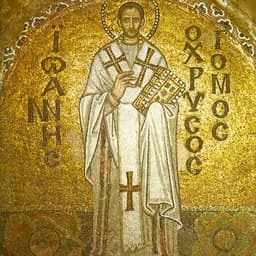
St. John Chrysostom (c. 347–407)

From his Homilies on the Gospel of Matthew (Homily 78, on Matthew 25:1–30), NPNF translation. Public domain.

On what the talents are:

For the talents here are each person's ability, whether in the way of protection, or in money, or in teaching, or in whatever thing of the kind.

On the reward of the faithful:

What then says the Master? "Well done, thou good" (for this is goodness to look to one's neighbor) "and faithful servant; you were faithful over few things, I will set you over many things: enter thou into the joy of your Lord," meaning by this expression all blessedness.

On the gift that grows by use and is lost by sloth:

He that has a gift of word and teaching to profit thereby, and uses it not, will lose the gift also; but he that gives diligence, will gain to himself the gift in more abundance; even as the other loses what he had received.

On who is punished:

Do you see how not only the spoiler, and the covetous, nor only the doer of evil things, but also he that does not good things, is punished with extreme punishment.

On why no man may plead a single talent:

Let no man say, I have but one talent, and can do nothing; for you can even by one approve yourself. For you are not poorer than that widow; you are not more uninstructed than Peter and John, who were both "unlearned and ignorant men;" but nevertheless, since they showed forth a zeal, and did all things for the common good, they attained to Heaven.

On the end for which all our powers were given:

For nothing is so pleasing to God, as to live for the common advantage. For this end God gave us speech, and hands, and feet, and strength of body, and mind, and understanding, that we might use all these things, both for our own salvation, and for our neighbor's advantage.

On how Matthew's parable differs from Luke's:

And if in Luke the parable of the talents is otherwise put, this is to be said, that the one is really different from the other. For in that, from the one capital different degrees of increase were made ... but here, it is the contrary, and the crown is accordingly equal. For he that received two gave two, and he that had received the five again in like manner.


St. Cyril of Alexandria (c. 376–444)

From his Commentary on the Gospel of Luke (Sermon 129, on Luke 19:11–27), Payne Smith translation. Public domain.

On the diversity of gifts given to the stewards of the Church:

Upon these the Saviour bestows a diversity of divine gifts, that they may be "lights in the world, holding the word of life:" and they, by admonishing the people under their charge, and giving them such counsel as is useful for life, and rendering them steadfast, and of an upright and blameless faith, gain by traffic to their talent, and seek spiritual increase.

On the reward that awaits them at the King's return:

Greatly blessed are they, and win the portion that becomes the saints. For when the nobleman, even Christ, shall have returned after he has received the kingdom, they will be accounted worthy of praises, and rejoice in surpassing honours.


Origen (c. 185–254)

From his Commentary on Matthew, as compiled in the Catena Aurea on Matthew. Public domain.

On the sense in which the Lord travels into a far country:

He travels, not according to His divine nature, but according to the dispensation of the flesh which He took upon Him ... We may also explain thus, that the Lord travels in a far country with all those who walk by faith and not by sight.

On the worth even of the single talent:

They to whom five talents were given, and they to whom two, and they to whom one, have divers degrees of capacity, and one could not hold the measure of another; he who received but one having received no mean endowment, for one talent of such a master is a great thing.


St. Gregory the Great (c. 540–604)

From his Homilies on the Gospels, as compiled in the Catena Aurea on Matthew. Public domain.

On the far country into which the Redeemer travels:

The man in travelling into a far country is our Redeemer, who ascended into heaven in that flesh which He had taken upon Him. For the proper home of the flesh is the earth, and it, as it were, travels into a foreign country, when it is placed by the Redeemer in heaven.

On the talent doubled by preaching:

There are some who by their understanding and their actions preach to others, and thence gain as it were a twofold profit in such merchandize.


St. Jerome (c. 347–420)

From his Commentary on Matthew, as compiled in the Catena Aurea on Matthew. Public domain.

On the gifts given according to capacity:

Calling together the Apostles, He gave them the Gospel doctrine, to one more, to another less, not as of His own bounty or scanting, but as meeting the capacity of the receivers ... In the five, two, and one talent, we recognise the diversity of gifts wherewith we have been entrusted.

On how the servant's excuse becomes his condemnation:

But what he thought would be his excuse is turned into his condemnation. He calls him "wicked servant," because he cavilled against his Lord; and "slothful," because he would not double his talent; condemning his pride in the one, and his idleness in the other.


Note on sources and other Fathers

The Fathers read the two parables as one lesson on the gifts entrusted to us. Chrysostom is the fullest: the talents are "each person's ability," in money or word or teaching or protection; the gift grows by use and is lost by sloth; and the warning falls not only on the doer of evil but on the one who does no good, so that no one may plead a single talent, "for you are not more uninstructed than Peter and John." He alone marks the difference between Matthew's parable, where the reward is equal because each doubled, and Luke's, where it differs because the increases differed. Cyril, expounding Luke's minas, reads the stewards as the teachers set over the churches, on whom the Saviour "bestows a diversity of divine gifts" and who gain by trafficking their talent. Origen and Gregory both read the journey into the far country as the Ascension, the flesh carried by the Redeemer into heaven, its true foreign country; and Gregory adds that the talent is doubled by preaching. Jerome reads the unequal talents as the diversity of gifts given according to capacity, and shows how the slothful servant's own excuse becomes his condemnation, convicting "his pride in the one, and his idleness in the other."

Hilary of Poitiers read the five talents as the believers under the Law and the two talents as the Gentiles, an allegory noted here rather than quoted; Theophylact follows the Eastern reading on the Matthean text. The five quoted are Chrysostom and Cyril verbatim from their homilies, and Origen, Gregory, and Jerome through the Catena Aurea, as marked in each attribution.

Patristic sources