The Temptation in the Wilderness
Matt 4:1–11; Mark 1:12–13; Luke 4:1–13 · Beginning of the ministry
Scripture
Matthew 4:1–11
hen was Jesus led up of the Spirit into the wilderness to be tempted of the devil. 2And when he had fasted forty days and forty nights, he was afterward an hungred. 3And when the tempter came to him, he said, If thou be the Son of God, command that these stones be made bread. 4But he answered and said, It is written, Man shall not live by bread alone, but by every word that proceedeth out of the mouth of God. 5Then the devil taketh him up into the holy city, and setteth him on a pinnacle of the temple, 6And saith unto him, If thou be the Son of God, cast thyself down: for it is written, He shall give his angels charge concerning thee: and in their hands they shall bear thee up, lest at any time thou dash thy foot against a stone. 7Jesus said unto him, It is written again, Thou shalt not tempt the Lord thy God. 8Again, the devil taketh him up into an exceeding high mountain, and sheweth him all the kingdoms of the world, and the glory of them; 9And saith unto him, All these things will I give thee, if thou wilt fall down and worship me. 10Then saith Jesus unto him, Get thee hence, Satan: for it is written, Thou shalt worship the Lord thy God, and him only shalt thou serve. 11Then the devil leaveth him, and, behold, angels came and ministered unto him.
King James Version · public domain
Mateu 4:1–11
tëhere Jisuj upru ndë shkretëtirët prej Frymësë, që të ngitej prej djallit. 2Edhe si agjëroj dy-zet dit e dy-zet net, pastaj i erdhi uri. 3Edhe ay që nget erdhi tek ay e tha, Ndë je i bir’ i Perëndisë, thuaj të bënenë bukë këta gurë. 4Po ay upërgjeq e tha, Eshtë shkruarë, “Njeriu nukë dotë ronjë me bukë vetëmë, po me çdo farë fjale që del nga goj’ e Perëndisë.” 5Atëherë djalli e merr me vetëhe ndë qytett të-shënjtëruarë, edhe e vuri përmbi fletëzët të hieroresë, 6edhe i thot’ ati, Ndë je i bir’ i Perëndisë, hidhu poshtë; sepse është shkruarë, “Se dot’ urdhëronjë ëngjëjt’ e ti për ty edhe dotë të ngrenë ty mbi duart, që të mos përpjekç këmbënë t’ënde mbë gur.” 7Jisuj i tha ati, përsëri është shkruarë, “Të mos ngaç Zotinë Perëndinë t’ënt.” 8Përsëri djalli e merr me vetëhe mbë një mal shumë të-lartë, edhe i dëften gjithë mbretërit’ e botësë edhe lavdin’ e atyre, 9e i thotë, Të gjitha këto dotë t’i ap tyj, ndë rënç të më falesh. 10Atëhere Jisuj i thot’ ati, Ikë prej meje, Satana; sepse është shkruarë, “Zotit Perëndisë t’ënt dot’ i falesh, edhe vetëm ati do t’i lutesh.” 11Atëherë djalli e le atë; edhe ja ëngjëjtë tek erdhë përanë e i shërbeninë.
Kristoforidhi, Dhiata e Re Toskërisht 1879 · zotërim publik
In their own words
And observe, I pray, how the nature of man in Christ casts off the faults of Adam's gluttony: by eating we were conquered in Adam, by abstinence we conquered in Christ.
St. Cyril of Alexandria, Commentary on Luke, Sermon 12 (on Luke 4:1–13)
Patristic sources
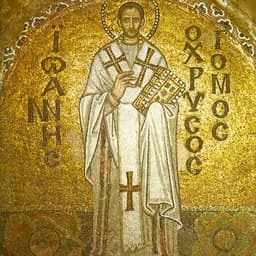
- St. John Chrysostom
- Homilies on Matthew, Hom. 13
- St. Cyril of Alexandria
- Commentary on Luke, Sermon 12
Quoted from his Commentary on Luke for the fuller Lukan account of the temptation (Luke 4:1–13).
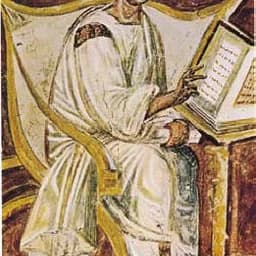
- Blessed Augustine of Hippo
- On the Trinity, Book 4
- Sermon 210
Venerated in the East as Blessed; here preserved through the Catena Aurea on Matthew.
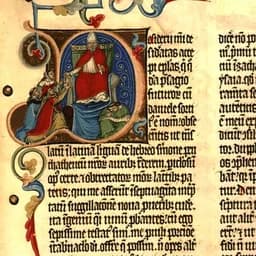
- St. Jerome
- Commentary on Matthew
Catena-only in public-domain English; via the Catena Aurea on Matthew.
- St. Hilary of Poitiers
- Commentary on Matthew
Catena-only in public-domain English; via the Catena Aurea on Matthew.
- St. Gregory the Great
- Forty Gospel Homilies, Hom. 16
His Gospel homilies survive in public-domain English only through the Catena Aurea on Matthew.
Read the sources: Chrysostom, Homilies on Matthew, Homily 13 (CCEL) · Cyril of Alexandria on Luke, Sermon 12 (tertullian.org) · Catena Aurea on Matthew 4 (CCEL)
The Temptation in the Wilderness (Matthew 4:1–11)
The texts below are quoted verbatim from public-domain English translations; nothing is paraphrased.
St. John Chrysostom (c. 347–407)
Homilies on the Gospel of Matthew, Homily 13 (on Matthew 4:1–11) Source: trans. in the Nicene and Post-Nicene Fathers, First Series, Vol. 10. Public domain. Full text: https://www.ccel.org/ccel/schaff/npnf110.iii.XIII.html
On why the Spirit led Him up to wrestle with the devil, that the baptized might not be dismayed at temptation:
On the hunger, and fasting as a shield against the devil:
On overcoming not by miracles but by Scripture and long-suffering:
On the three temptations as the root of all evils:
On the angels who came only after the victory was won:
St. Cyril of Alexandria (c. 376–444)
Commentary on the Gospel of Luke, Sermon 12 (on Luke 4:1–13) Source: trans. R. Payne Smith, Library of Fathers, 1859. Public domain. Full text: https://www.tertullian.org/fathers/cyril_on_luke_02_sermons_12_25.htm
On the Lord armed with fasting before the conflict, set before us as our pattern:
On the new Adam conquering where the first Adam fell:
On "Thou shalt worship the Lord thy God", and Satan cast out of his usurped dominion:
Blessed Augustine of Hippo (354–430)
On the Trinity, Book 4; Sermon 210 (on Matthew 4:1–11) As preserved in the Catena Aurea on Matthew. Public domain. Full text: https://www.ccel.org/ccel/aquinas/catena1.ii.iv.html
On why He offered Himself to temptation:
On the season for fasting, when the conflict with the tempter is sore:
St. Jerome (c. 347–420)
Commentary on Matthew (on Matthew 4:1–11) As preserved in the Catena Aurea on Matthew. Public domain. Full text: https://www.ccel.org/ccel/aquinas/catena1.ii.iv.html
On "led up of the Spirit", not as a prisoner but by desire for the conflict:
On the dilemma in which the tempter is caught by his own words:
On the answers all drawn from Deuteronomy:
St. Hilary of Poitiers (c. 310–367)
Commentary on Matthew (on Matthew 4:1–11) As preserved in the Catena Aurea on Matthew. Public domain. Full text: https://www.ccel.org/ccel/aquinas/catena1.ii.iv.html
On why the tempter sets his snares chiefly for the sanctified:
On the hunger that comes after the forty days, that the flesh might overcome the enemy:
St. Gregory the Great (c. 540–604)
Forty Gospel Homilies, Homily 16 (on Matthew 4:1–11) As preserved in the Catena Aurea on Matthew. Public domain. Full text: https://www.ccel.org/ccel/aquinas/catena1.ii.iv.html
On the three modes of temptation, and how the temptation of Christ was without and not within:
On the second Adam overcome by the same three doors through which the first Adam fell:
On answering the tempter only with the words of Scripture: