All entriesmiracle

The Transfiguration

Matt 17:1–9; Mark 9:2–9; Luke 9:28–36 · Later ministry in Galilee

Matthew 17:1–9

nd after six days Jesus taketh Peter, James, and John his brother, and bringeth them up into an high mountain apart, 2And was transfigured before them: and his face did shine as the sun, and his raiment was white as the light. 3And, behold, there appeared unto them Moses and Elias talking with him. 4Then answered Peter, and said unto Jesus, Lord, it is good for us to be here: if thou wilt, let us make here three tabernacles; one for thee, and one for Moses, and one for Elias. 5While he yet spake, behold, a bright cloud overshadowed them: and behold a voice out of the cloud, which said, This is my beloved Son, in whom I am well pleased; hear ye him. 6And when the disciples heard it, they fell on their face, and were sore afraid. 7And Jesus came and touched them, and said, Arise, and be not afraid. 8And when they had lifted up their eyes, they saw no man, save Jesus only. 9And as they came down from the mountain, Jesus charged them, saying, Tell the vision to no man, until the Son of man be risen again from the dead.

King James Version · public domain

Mateu 17:1–9

dhe pas gjashtë ditsh Jisuj merr me vetëhe Pjetrin’ edhe Jakovin’ edhe Joaninë të vëllan’ e ati, edhe i ngjit mbi një mal të-lartë veçanë. 2Edhe ndërroj fytyrënë përpara atyre; edhe faqeja e ati ndriti posi djelli, edhe rrobat’ e ati ubënë të-bardha posi drita. 3Edhe ja tek uduknë atyreve Moisiu edhe Iliu dyke folurë bashkë me atë. 4Edhe Pjetri upërgjeq e i tha Jisujt, Zot, mirë është të jemi ne këtu; ndë daç; letë bëjmë këtu tri tenda, një për ty, e një për Moisinë, e një për Ilinë. 5Edhe ay tek po ishte dyke folurë, ja tek i mbuloj ata një re e-ndriçime; edhe ja një zë nga reja tek thoshte, Ky është biri im i-dashuri, që e pëlqeva; atë dëgjoni. 6Edhe nxënësitë kur dëgjuanë, ranë përmbys, edhe ufrikësuanë fort. 7Po Jisuj erdhi përanë, e i zuri, edhe tha, Ngreuni, e mos ufrikësoni. 8Edhe ata kur ngritnë syt’ e tyre përpjetë, nukë panë asndonjë, përveç Jisunë vetëmë. 9Edhe tek sbritninë nga mali, Jisuj i porositi, dyke thënë, Mos i thoni asnjeriu se ç’patë, gjersa të ngjallet’ i Bir’ i njeriut nga të vdekuritë.

Kristoforidhi, Dhiata e Re Toskërisht 1879 · zotërim publik

Summary

This is the great theophany of the Gospels and a cornerstone of Orthodox theology. On the mountain Christ reveals to Peter, James, and John the uncreated light of His divinity, shining through His flesh: not a created glory lent from outside, but the radiance of God Himself, given as a foretaste of the Kingdom and of the Resurrection. The Fathers are careful to say that Christ did not change or gain what He lacked; rather He opened the eyes of the three to see what was always His.

In this one scene the whole economy of salvation is gathered. Moses and Elijah stand as the Law and the Prophets, the one who had died and the one taken up alive, so that Christ is shown Lord of both the living and the dead; the tradition notes that they speak of His coming Passion, that glory and Cross may be seen together. The cloud and the voice are the Father, and the Spirit is present in the overshadowing light, so that here, as at the Jordan, the whole Trinity is made known. St. Cyril of Alexandria stresses that the vision steadied the disciples before the scandal of the Cross, and St. John Chrysostom draws from Peter's "it is good for us to be here" the soul's longing to remain, not yet understanding that the way to glory passes through suffering.

St. John of Damascus and St. Anastasius of Sinai gather these threads into the Church's celebration of the feast, reading Tabor as the pledge of our own transfiguration. Upon this St. Gregory Palamas built the hesychast theology of the divine energies: the light of Tabor is the true and uncreated glory of God, not a symbol and not a creature, seen by those whose eyes are purified and promised to the saints in prayer and in the age to come.

In their own words

To show the glory of the cross, and to console Peter and the others in their dread of the passion, and to raise up their minds.

St. John Chrysostom, Homilies on the Gospel of St. Matthew, Homily LVI, section 3 (on Matt. xvi. 28 ff., the Transfiguration), NPNF1 Vol. 10

The Transfiguration (Matthew 17:1–9; Mark 9:2–10; Luke 9:28–36)

Public-Domain Patristic Commentary

Six days after Peter's confession, Christ takes Peter, James, and John up a high mountain apart. He is transfigured before them: His face shines as the sun, His garments become white as the light. Moses and Elijah appear in glory, speaking of His departure, which He was about to accomplish at Jerusalem. Peter says, "Lord, it is good for us to be here; let us make three tabernacles." A bright cloud overshadows them, and a voice from the cloud declares, "This is my beloved Son, in whom I am well pleased; hear ye him." The disciples fall on their faces in fear; Jesus touches them and says, "Arise, and be not afraid"; and they see no one but Jesus only. The event is recorded in all three Synoptic Gospels.

The commentary below gathers Fathers of East and West. The first two witnesses are quoted verbatim from public-domain translations of their own works: Chrysostom from his own homily on Matthew, Cyril from his own homily on Luke. The remaining Fathers are quoted as preserved in the Catena Aurea on Luke (St. Thomas Aquinas, trans. J. H. Newman, 1841).


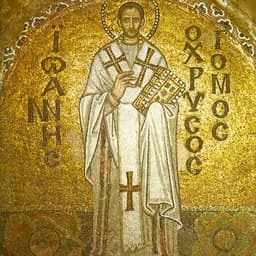
St. John Chrysostom (c. 347–407)

Homilies on the Gospel of Matthew, Homily 56 (on Matthew 16:28–17:9) Source: trans. in the Nicene and Post-Nicene Fathers, First Series, Vol. 10. Public domain. Full text: https://www.newadvent.org/fathers/200156.htm

On why He took only these three disciples:

Wherefore does He take with Him these only? Because these were superior to the rest. And Peter indeed showed his superiority by exceedingly loving Him; but John by being exceedingly loved of Him; and James again by his answer which he answered with his brother, saying, "We are able to drink the cup."

On why Moses and Elijah appear, to show He is Lord of life and death:

To inform them that He has power both of death and life, is ruler both above and beneath. For this cause He brings forward both him that had died, and him that never yet suffered this.

On the further reason, to show the glory of the cross:

To show the glory of the cross, and to console Peter and the others in their dread of the passion, and to raise up their minds. Since having come, they by no means held their peace, but "spoke," it is said, "of the glory which He was to accomplish at Jerusalem;" that is, of the passion, and the cross; for so they call it always.

On Peter's ardent love:

Do you see the ardent lover of Christ? For look not now at this, that the manner of his exhortation was not well weighed, but see how ardent he was, how burning his affection to Christ.

On the bright cloud and the tabernacle not made with hands:

So here, because it was His desire not to alarm, but to teach, it is a bright cloud. And whereas Peter had said "Let us make three tabernacles," He showed a tabernacle not made with hands. Wherefore in that case it was smoke, and vapor of a furnace; but in this, light unspeakable and a voice.


St. Cyril of Alexandria (c. 376–444)

Commentary on the Gospel of St. Luke, Sermon 51 (on Luke 9:27–36) Source: trans. R. Payne Smith, 1859. Public domain. Full text: https://www.tertullian.org/fathers/cyril_on_luke_05_sermons_47_56.htm

On what "the kingdom of God" means here:

But by the kingdom of God He means the sight of the glory in which He will appear at His manifestation to the inhabitants of earth: for He will come in the glory of God the Father, and not in low estate like unto us.

On the brightness of the transfigured Lord:

He goes up into the mountain taking with Him three chosen disciples: and is transformed to so surpassing and godlike a brightness, that His garments even glittered with rays of fire, and seemed to flash like lightning.

On what Moses and Elijah spoke of:

And besides, Moses and Elijah stood at Jesus' side, and spake with one another of His departure, which He was about, it says, to accomplish at Jerusalem: by which is meant the mystery of the dispensation in the flesh; and of His precious suffering upon the cross.

On Moses and Elijah as the Law and the Prophets bearing witness:

The standing, therefore, of Moses and Elijah before Him, and their talking with one another, was a sort of representation, excellently displaying our Lord Jesus Christ, as having the law and the prophets for His body guard, as being the Lord of the law and the prophets, and as foreshown in them by those things which in mutual agreement they before proclaimed.

On Peter's proposal of tabernacles:

And the divine Peter, thinking perchance, that the time of the kingdom of God was even now come, proposes dwellings on the mountain, and says that it is fitting there should be three tabernacles, one for Christ, and the others for the other two, Moses and Elijah: "but he knew not," it says, "what he was saying." For it was not the time of the consummation of the world, nor for the saints to take possession of the hope promised to them.


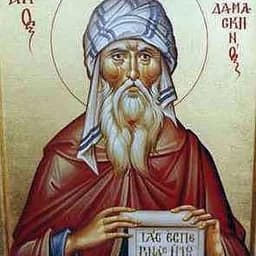
St. John of Damascus (c. 676–749)

As preserved in the Catena Aurea on Luke. Public domain.

On why three disciples, and not all, were taken up:

But He took with Him three, that in the mouths of two or three witnesses every word should be established. He took Peter, indeed, because He wished to show him that the witness he had borne to Him was confirmed by the witness of the Father, and that he was as it were to preside over the whole Church. He took with Him James, who was to be the first of all the disciples to die for Christ; but He took John as the clearest singer of the sacred doctrine, that having seen the glory of the Son, which submits not to time, he might sound forth, In the beginning was the Word.

On how the prayer of the Lord differs from the prayer of servants:

Servants however pray in one way; our Lord prayed in another. For the prayer of the servant is offered up by the lifting up of the mind to God, but the holy mind of Christ ... prayed, that He might lead us by the hand to the ascent, whereby we mount up in prayer to God, and teach us that He is not opposed to God, but reverences the Father as His beginning ... that he who had deceived man with the hope of divinity might fitly himself be caught with the clothing of humanity. Prayer is the revelation of Divine glory.

On the light that shone from within, not from without:

He is transfigured not as receiving what He was not, but manifesting to His disciples what He was.

On why it was not good to remain on the mountain:

It were not good for you, Peter, that Christ should abide there, for if He had remained, the promise made to you would never receive its accomplishment. For neither would you have obtained the keys of the kingdom, nor the tyranny of death been abolished. Seek not bliss before its time, as Adam did to be made a God. The time shall come when you shall enjoy the sight without ceasing, and dwell together with Him who is light and life.


Theophylact of Ohrid (c. 1050–1108)

As preserved in the Catena Aurea on Luke. Public domain.

On why these three were chosen, and on going up to pray:

He takes these with Him as men who were able to conceal this thing, and reveal it to no one else. But going up into a mountain to pray, He teaches us to pray solitary, and going up, into stooping to earthly things.

On Peter's sleep and the awakening to glory:

While Christ is engaged in prayer, Peter is heavy with sleep, for he was weak, and did what was natural to man ... But when they awake, they behold His glory, and the two men with Him.

On the cloud as the tabernacle not made with hands:

But while Peter spoke, our Lord builds a tabernacle not made with hands, and enters into it with the Prophets ... to show that He was not inferior to the Father. For as in the Old Testament it was said, the Lord dwelt in the cloud, so now also a cloud received our Lord, not a dark cloud, but bright and shining.

On the passing of the Law and the abiding of the Gospel:

Now those things which began from the Word, end in the Word. For by this he implies that up to a certain time the Law and the Prophets appear, as here Moses and Elias; but afterwards, at their departure, Jesus is alone. For now abides the Gospel, legal things having passed away.


Titus of Bostra (d. c. 378)

As preserved in the Catena Aurea on Luke. Public domain.

On why three tabernacles could not be made:

Peter also was ignorant what he said, seeing that it was not proper to make three tabernacles for the three. For the servants are not received with their Lord, the creature is not placed beside the Creator.


St. Basil the Great (c. 330–379)

As preserved in the Catena Aurea on Luke. Public domain.

On the bright cloud as the passing of the Law's obscurity:

For the obscurity of the Law had passed away; for as smoke is caused by the fire, so the cloud by light; but because a cloud is the sign of calmness, the rest of the future state is signified by the covering of a cloud.


Origen (c. 185–254)

As preserved in the Catena Aurea on Luke. Public domain.

On the fear of the disciples entering the cloud:

Now His disciples being unable to bear this, fell down, humbled under the mighty hand of God, greatly afraid since they knew what was said to Moses, No man shall see my face, and live.

On why the vision was to be kept silent until after the Passion:

Now Jesus wishes not those things which relate to His glory to be spoken of before His passion ... For men would have been offended, especially the multitude, if they saw Him crucified Who had been so glorified.


St. Ambrose of Milan (c. 339–397)

As preserved in the Catena Aurea on Luke. Public domain.

On why three were chosen to ascend the mountain:

I should think that in the three who are taken up into the mountain, was contained in a mystery the human race, because from the three sons of Noah sprung the whole race of man ... none can see the glory of the resurrection, but they who have preserved the mystery of the Trinity with inviolable purity of faith.

On why the disciples were heavy with sleep:

For the incomprehensible brightness of the Divine nature oppresses our bodily senses. For if the sight of the body is unable to contain the sun's ray when opposite to the eyes which behold it, how can the corruption of our fleshly members endure the glory of God? And perhaps they were oppressed with sleep, that after their rest they might behold the sight of the resurrection.

On the garments of the Word as the words of Scripture:

Now the garments of the Word, are the discourses of the Scriptures, and certain clothings of the Divine mind; and as His raiment shone white, so in the eyes of your understanding, the sense of the divine words becomes clear. Hence after Moses, Elias; that is, the Law and the Prophets in the Word.

On the overshadowing cloud of the Spirit:

For it is the overshadowing of the divine Spirit which does not darken, but reveals secret things to the hearts of men.


Blessed Augustine (of Hippo) (354–430)

As preserved in the Catena Aurea on Luke. Public domain.

On why Luke does not contradict Matthew and Mark:

Now in what Luke here says of Moses and Elias ... he must not be thought contrary to Matthew and Mark, who have so connected Peter's suggestion of this, as if Moses and Elias were still speaking with our Lord. For they did not expressly state that Peter said it then, but rather were silent about what Luke added, that as they departed, Peter suggested this to our Lord.


St. Bede the Venerable (c. 673–735)

As preserved in the Catena Aurea on Luke. Public domain.

On ascending the mountain to seek the fruit of the resurrection:

Hence He ascends the mountain to pray and be transfigured, to show that those who expect the fruit of the resurrection, and desire to see the King in His glory, ought to have the dwelling place of their hearts on high, and be ever on their knees in prayer.

On the transfigured Savior as the image of our own resurrection:

Now the transfigured Savior shows the glory of His own coming, or our resurrection; who as He then appeared to His Apostles shall in like manner appear to all the elect.

On the whole Trinity declared, as at the Baptism:

And mark, that as when our Lord was baptized in Jordan, so also when He was glorified on the Mount, the mystery of the whole Trinity is declared, for His glory which we confess at baptism, we shall see at the resurrection. Nor in vain does the Holy Spirit appear here in the cloud, there in the form of a dove.


Note on sources and other Fathers

The Fathers gathered here read the Transfiguration with a single accord. Both Chrysostom and Cyril take it as a deliberate foretaste of the glory of the Second Coming, granted to steady the disciples before the scandal of the cross: Chrysostom says Christ wished "to show what kind of glory that is wherewith He is to come," and Cyril, that "by the kingdom of God He means the sight of the glory in which He will appear at His manifestation." St. John of Damascus deepens this with the great dogmatic note that Christ "is transfigured not as receiving what He was not, but manifesting to His disciples what He was," and gently corrects Peter's wish to remain, "Seek not bliss before its time, as Adam did to be made a God." Theophylact and Basil read the bright cloud as the obscurity of the Law giving way to the rest of the age to come, while Theophylact closes the scene with the words "now abides the Gospel, legal things having passed away." Titus of Bostra guards the gulf between Creator and creature against Peter's three tabernacles; Origen explains the command of silence until after the Passion; and Ambrose, Augustine, and Bede draw out the mystery of the Trinity, the harmony of the Gospels, and the garments of the Word as the words of Scripture made clear to the understanding.

Beyond these, the Transfiguration drew some of the most celebrated patristic preaching. In the West, Leo the Great's Sermon 51 is the classic treatment and is itself in the public domain, a natural further reading. The Catena Aurea also preserves Eusebius and Damascene on the eight days and the calling of the three, together with the Western glosses of Remigius and Rabanus, not quoted here. For the present compilation, Chrysostom and Cyril give a full and continuous Eastern reading from two of the greatest Greek commentators, and the Catena adds the Damascene, Theophylact, Titus of Bostra, Basil, Origen, Ambrose, Augustine, and Bede.

Patristic sources