The Triumphal Entry
Matt 21:1–11; Mark 11:1–11; Luke 19:28–44; John 12:12–19 · Passion week in Jerusalem
Scripture
Matthew 21:1–11
nd when they drew nigh unto Jerusalem, and were come to Bethphage, unto the mount of Olives, then sent Jesus two disciples, 2Saying unto them, Go into the village over against you, and straightway ye shall find an ass tied, and a colt with her: loose them, and bring them unto me. 3And if any man say ought unto you, ye shall say, The Lord hath need of them; and straightway he will send them. 4All this was done, that it might be fulfilled which was spoken by the prophet, saying, 5Tell ye the daughter of Sion, Behold, thy King cometh unto thee, meek, and sitting upon an ass, and a colt the foal of an ass. 6And the disciples went, and did as Jesus commanded them, 7And brought the ass, and the colt, and put on them their clothes, and they set him thereon. 8And a very great multitude spread their garments in the way; others cut down branches from the trees, and strawed them in the way. 9And the multitudes that went before, and that followed, cried, saying, Hosanna to the son of David: Blessed is he that cometh in the name of the Lord; Hosanna in the highest. 10And when he was come into Jerusalem, all the city was moved, saying, Who is this? 11And the multitude said, This is Jesus the prophet of Nazareth of Galilee.
King James Version · public domain
Mateu 21:1–11
dhe kur uafëruanë ndë Jerusalim, edhe erthnë ndë Vithfagji ndaj malit të Ullinjvet, atëhere Jisuj dërgoj dy nxënës, 2dyke thënë atyre, Shkoni mb’atë fshat që është përkundruell jush; edhe për-një-here dotë gjeni një gomare lidhurë, edhe një pulisht bashkë me atë; sgjidh-i-ni e m’i bini. 3Edhe ndë u thëntë gjë juve ndonjë njeri, t’i thoni, se Zoti ka nevojë për atë; edhe për-një-here dot’i dërgonj’ ata. 4Edhe gjithë këjo ubë, që të mbushetë ç’është thënë nga profiti, 5që thotë, “Thoni bijësë Sionë; Ja mbreti yt tek po të vjen i-butë, edhe hipurë mbi gomare, edhe mbi pulisht bir shtëze”. 6Edhe nxënësitë si vanë, edhe bënë sindëkur i urdhëroj ata Jisuj, prunë gomaren’ edhe pulishtinë; 7Edhe vunë mbi ata rrobat’ e tyre edhe e hipnë atë sipër’ atyre. 8Edhe më e-shum’ e gjindjesë shtruanë rrobat’ e tyre mb’udhë; edhe të-tjerë këputninë dega drush, e i shtroninë mb’udhë. 9Edhe gjindja që i vininë përpara edhe ata që i vininë prapa bërtitninë, dyke thënë, Hosanna mbë të birin’ e Dhavidhit; i-bekuar’ ësht’ ay që vjen mb’emërit të Zotit; Hosanna mbë të-lartatë. 10Edhe ay kur hyri ndë Jerusalim, utunt tërë qyteti dyke thënë, 11Cili është ky? Edhe gjindja thoshinë, Ky është Jisuj, profiti, që është nga Nazareti i Galilesë.
Kristoforidhi, Dhiata e Re Toskërisht 1879 · zotërim publik
In their own words
But enquire of the Jews, what King has entered Jerusalem mounted upon an ass? They can name none other, but this one only.
St. John Chrysostom, Homilies on Matthew (on Matthew 21:1–11) (Catena Aurea)
Patristic sources
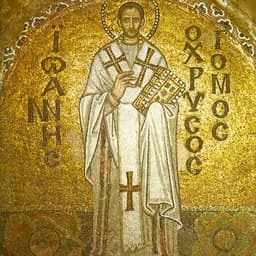
- St. John Chrysostom
- Homilies on Matthew (Catena Aurea on Matthew)
Chrysostom's Homilies on Matthew pass from Matthew 20:29 to 21:12, so his words on the entry survive only through Newman's Catena.
- St. Cyril of Alexandria
- Commentary on Luke, Sermon 130
- Origen of Alexandria
- Commentary on Matthew (Catena Aurea on Matthew)
Quoted with care; some of his speculations were condemned in 553, but the typological readings cited here are not among them.
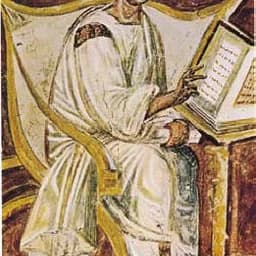
- Blessed Augustine of Hippo
- The Harmony of the Gospels (Catena Aurea on Matthew)
Venerated in the East as Blessed.
- St. Jerome
- Commentary on Matthew (Catena Aurea on Matthew)
- St. Hilary of Poitiers
- Commentary on Matthew (Catena Aurea on Matthew)
Read the sources: Catena Aurea on Matthew, ch. 21 (CCEL) · St. Cyril of Alexandria, Commentary on Luke, Sermon 130 (tertullian.org)
The Triumphal Entry into Jerusalem (Matthew 21:1–11)
The texts below are quoted verbatim from public-domain English translations; nothing is paraphrased.
St. John Chrysostom (c. 347–407)
Homilies on the Gospel of Matthew (on Matthew 21:1–11) As preserved in the Catena Aurea on Matthew. Public domain. Full text: https://www.ccel.org/ccel/aquinas/catena1.ii.xxi.html
On the colt yielded up by its owners, and the lesson to the disciples:
On why the King is mounted upon an ass, and not upon a horse:
St. Cyril of Alexandria (c. 376–444)
Commentary on the Gospel of Luke, Sermon 130 (on Luke 19:28–40) Source: trans. R. Payne Smith, Library of Fathers, 1859. Public domain. Full text: https://www.tertullian.org/fathers/cyril_on_luke_12_sermons_124_134.htm
On the King who goes up to Jerusalem for the Passion that is the salvation of the world:
On the ass rejected and the untried colt accepted:
On the children with palm branches (John 12:13):
On the stones that would cry out (Luke 19:40):
Origen of Alexandria (c. 185–254)
Commentary on Matthew (on Matthew 21:1–11) As preserved in the Catena Aurea on Matthew. Public domain. Full text: https://www.ccel.org/ccel/aquinas/catena1.ii.xxi.html
(Origen is quoted with care; the typological readings below are not among the speculations later condemned in 553.)
On Bethphage, the place of the priests:
On the loosing of the bound, and the sending back to preach:
On the twofold cry of Hosanna:
Blessed Augustine of Hippo (354–430)
The Harmony of the Gospels (on Matthew 21:4–7) As preserved in the Catena Aurea on Matthew. Public domain. Full text: https://www.ccel.org/ccel/aquinas/catena1.ii.xxi.html
On the she-ass named only by Matthew:
On why the two accounts of the animals are no discrepancy:
St. Jerome (c. 347–420)
Commentary on Matthew (on Matthew 21:5–9) As preserved in the Catena Aurea on Matthew. Public domain. Full text: https://www.ccel.org/ccel/aquinas/catena1.ii.xxi.html
On the ass as the synagogue and the colt as the Gentile people:
On Blessed is he that cometh in the name of the Lord:
On the multitudes before and behind:
St. Hilary of Poitiers (c. 310–367)
Commentary on Matthew (on Matthew 21:7–9) As preserved in the Catena Aurea on Matthew. Public domain. Full text: https://www.ccel.org/ccel/aquinas/catena1.ii.xxi.html
On the ass and the colt as the twofold calling:
On the song of praise as a confession of His power to redeem: