The Vine and the Branches
John 15:1–17 · Passion week in Jerusalem
Scripture
John 15:1–17
am the true vine, and my Father is the husbandman. 2Every branch in me that beareth not fruit he taketh away: and every branch that beareth fruit, he purgeth it, that it may bring forth more fruit. 3Now ye are clean through the word which I have spoken unto you. 4Abide in me, and I in you. As the branch cannot bear fruit of itself, except it abide in the vine; no more can ye, except ye abide in me. 5I am the vine, ye are the branches: He that abideth in me, and I in him, the same bringeth forth much fruit: for without me ye can do nothing. 6If a man abide not in me, he is cast forth as a branch, and is withered; and men gather them, and cast them into the fire, and they are burned. 7If ye abide in me, and my words abide in you, ye shall ask what ye will, and it shall be done unto you. 8Herein is my Father glorified, that ye bear much fruit; so shall ye be my disciples. 9As the Father hath loved me, so have I loved you: continue ye in my love. 10If ye keep my commandments, ye shall abide in my love; even as I have kept my Father’s commandments, and abide in his love. 11These things have I spoken unto you, that my joy might remain in you, and that your joy might be full. 12This is my commandment, That ye love one another, as I have loved you. 13Greater love hath no man than this, that a man lay down his life for his friends. 14Ye are my friends, if ye do whatsoever I command you. 15Henceforth I call you not servants; for the servant knoweth not what his lord doeth: but I have called you friends; for all things that I have heard of my Father I have made known unto you. 16Ye have not chosen me, but I have chosen you, and ordained you, that ye should go and bring forth fruit, and that your fruit should remain: that whatsoever ye shall ask of the Father in my name, he may give it you. 17These things I command you, that ye love one another.
King James Version · public domain
Joani 15:1–17
në jam veshti i-vërtetë, edhe im Atë është bujku. 2Çdo hardhi që nukë bie pemë, e këput; edhe çdo që bie pemë, e qëron, që të bierë më tepërë pemë. 3Ndashti ju jeni të-qëruarë, për fjalënë që u kam folurë juve. 4Mbetuni tek unë, edhe unë te ju. Sikundrë hardhia s’munt të bënjë pemë prej vetiu, ndë mos mbettë ndë veshtët, kështu as ju, ndë mos mbeçi tek unë. 5Unë jam veshti, ju jeni hardhitë; ay që mbetetë tek unë, edhe unë tek ay, ky bën pemë shumë; sepse pa mua s’munt të bëni asgjë. 6Ndë mos mbettë ndonjë tek unë, hidhetë jashtë posi hardhia, edhe thahetë; pastaj i mbledhën’ e i hedhënë ndë zjarr, edhe digjenë. 7Ndë mbeçi tek unë, edhe fjalët’ e mia ndë mbeçinë te ju, dotë lypni ç’të doni, edhe dot’u bënetë juve. 8Im Atë ndë këtë lavduronetë, të bini shumë pemë; edhe kështu dotë jini nxënës të mi. 9Sikundrë më deshi Ati, edhe un’ u desha juve; mbetuni ndë dashurit t’ime. 10Ndë ruajçi porosit’ e mia, dotë mbeteni ndë dashurit t’ime; sikundrë unë ruajta porosit’ e t’im Eti, edhe mbetem ndë dashurit t’ati. 11U fola juve këto, që të mbetetë gëzimi im mbë ju, edhe gëzimi juaj të jet’ i-plottë. 12Këjo është porosia ime, të doni njëri tjatërinë, sikundrë un’ u desha juve. 13Asndonjë s’ka dashuri më të-madhe se këtë, të vërë ndonjë jetën’ e ti për miqt’ e ti. 14Ju jini miqt’ e mi, ndë qoftë se bëni sa u porosit juve. 15Nuk’ u them juve më shërbëtorë, sepse shërbëtori nukë di se ç’bën i zoti; po u thashë juve miq, sepse u dëfteva juve gjithë sa dëgjova prej t’im Eti. 16Ju nukë më sgjothtë mua, po un’ u sgjodha juve, edhe u urdhërova juve të shkoni e të bëni pemë, edhe pema juaj të mbesë; që çdo që t’i lypni Atit mb’emërit t’im t’ua apë juve. 17Këto u porosit juve, të doni njëri tjatrinë.
Kristoforidhi, Dhiata e Re Toskërisht 1879 · zotërim publik
In their own words
Who then could conceive any thing greater, and what will he say is more glorious, than to be and be called the friend of Christ?
St. Cyril of Alexandria, Commentary on the Gospel of John, Book X (on John 15:14–15)
Patristic sources
- St. John Chrysostom
- Homilies on the Gospel of John, Hom. 76
- Homilies on the Gospel of John, Hom. 77
- St. Cyril of Alexandria
- Commentary on the Gospel of John, Book 10
- Theophylact of Ohrid
- Explanation of the Gospel of John
His Gospel exposition survives in public-domain English only through the Catena Aurea.
- Blessed Augustine of Hippo
- Tractates on the Gospel of John, Tractates 80, 81, 86
Venerated in the East as Blessed; his Johannine tractates are cited in later Byzantine catenae.
- St. Hilary of Poitiers
- On the Trinity, Book 9
His words on the vine are preserved through the Catena Aurea on John.
- St. Gregory the Great
- Forty Gospel Homilies, Hom. 27
His Gospel homilies survive in public-domain English only through the Catena Aurea.
Read the sources: Chrysostom, Homilies on John (CCEL) · Augustine, Tractates on John (CCEL) · Cyril of Alexandria on John, Book 10 (tertullian.org) · Catena Aurea on John (isidore.co)
The Vine and the Branches (John 15:1–17)
The texts below are quoted verbatim from public-domain English translations; nothing is paraphrased.
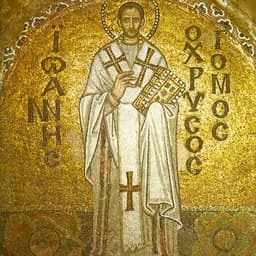
St. John Chrysostom (c. 347–407)
Homilies on the Gospel of John, Homilies 76 and 77 (on John 15:1–17) Source: trans. in the Nicene and Post-Nicene Fathers, First Series, Vol. 14. Public domain. Full text: https://www.ccel.org/ccel/schaff/npnf114.iv.lxxviii.html
On "every branch that beareth fruit, He purgeth it" as a pruning that strengthens under persecution:
On the penalty contained in "without me ye can do nothing":
On "Ye have not chosen me, but I have chosen you":
St. Cyril of Alexandria (c. 376–444)
Commentary on the Gospel of John, Book X (on John 15:1–17) Source: trans. T. Randell, Library of Fathers, 1885. Public domain. Full text: https://www.tertullian.org/fathers/cyril_on_john_10_book10.htm
On "I am the true vine," the root ministering its own nature to the branches:
On "Ye are my friends":
Theophylact of Ohrid (c. 1055–1107)
Explanation of the Gospel of John (on John 15:12–15) As preserved in the Catena Aurea on John. Public domain. Full text: https://isidore.co/aquinas/english/CAJohn.htm
On "This is my commandment, that ye love one another":
On "I have called you friends":
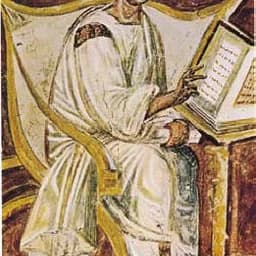
Blessed Augustine of Hippo (354–430)
Tractates on the Gospel of John, Tractates 80, 81, and 86 (on John 15:1–17) Source: trans. in the Nicene and Post-Nicene Fathers, First Series, Vol. 7. Public domain. Full text: https://www.ccel.org/ccel/schaff/npnf107.iii.lxxxi.html
On the vine and the branches as Christ the Head and His members:
On "the same bringeth forth much fruit; for without me ye can do nothing":
On "Ye have not chosen me, but I have chosen you":
St. Hilary of Poitiers (c. 310–367)
On the Trinity, Book IX (on John 15:1) As preserved in the Catena Aurea on John. Public domain. Full text: https://isidore.co/aquinas/english/CAJohn.htm
On why He unfolds the mystery of the vine, "I am the true vine":
St. Gregory the Great (c. 540–604)
Forty Gospel Homilies, Homily 27 (on John 15:12) As preserved in the Catena Aurea on John. Public domain. Full text: https://isidore.co/aquinas/english/CAJohn.htm
On why, of all commandments, He gives this special one of love: