The Visitation of Mary to Elizabeth
Luke 1:39–45 · Infancy and childhood
Scripture
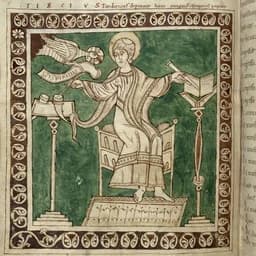
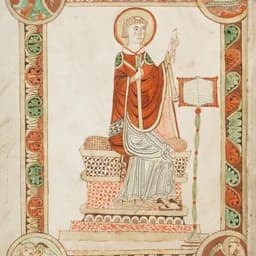
Luke 1:39–45
nd Mary arose in those days, and went into the hill country with haste, into a city of Juda; 40And entered into the house of Zacharias, and saluted Elisabeth. 41And it came to pass, that, when Elisabeth heard the salutation of Mary, the babe leaped in her womb; and Elisabeth was filled with the Holy Ghost: 42And she spake out with a loud voice, and said, Blessed art thou among women, and blessed is the fruit of thy womb. 43And whence is this to me, that the mother of my Lord should come to me? 44For, lo, as soon as the voice of thy salutation sounded in mine ears, the babe leaped in my womb for joy. 45And blessed is she that believed: for there shall be a performance of those things which were told her from the Lord.
King James Version · public domain
Lluka 1:39–45
dhe nd’ato dit Mariama ungrit, e vate me nxitim ndë malësit, ndë një qytet të Judhësë. 40Edhe hyri ndë shtëpit të Zaharisë, edhe përshëndoshi Elisavetënë. 41Edhe posa dëgjoj Elisaveta të-përshëndoshurit’ e Marisë, këceu foshnjeja ndë barkt t’asaj; edhe Elisaveta umbush me Frymë të-Shënjtëruarë, 42Edhe thërriti me zë të-math, e tha, E bekuarë je ti ndë mest të gravet, edhe e-bekuarë është pem’ e barkut t’ënt. 43Edhe nga më ngjau kjo, të vinj’ e ëm’ e Zotit t’im tek unë? 44Sepse na posa erdhi zëri i të-përshëndoshurit t’ënt ndë veshët t’im, këceu foshnjeja me gëzim ndë barkt t’im. 45Edhe lum ajo që besoj, se dotë mbushenë tek ajo ç’janë folurë prej Zotit.
Kristoforidhi, Dhiata e Re Toskërisht 1879 · zotërim publik
In their own words
Elisabeth first heard the word, but John first experienced the grace. She heard by the order of nature, he leaped by reason of the mystery. She perceived the coming of Mary, he the coming of the Lord.
St. Ambrose of Milan, Exposition of the Gospel of Luke (Catena Aurea)
Patristic sources
- Origen of Alexandria
- Homilies on Luke (on Luke 1:39–45)
Quoted only as preserved in the Catena Aurea on Luke; certain of his speculations were condemned in 553, but the passages here are unexceptionable.
- Theophylact of Ohrid
- Explanation of the Gospel of Luke
- Titus of Bostra
- Commentary on Luke
Catena-only in public-domain English.
- Blessed Augustine of Hippo
- Letter 187, to Dardanus
Venerated in the East as Blessed; his exegesis is preserved here through the Catena Aurea.
- St. Ambrose of Milan
- Exposition of the Gospel of Luke
The fullest voice on this pericope; Catena-only in public-domain English.
- St. Gregory the Great
- Homilies on Ezekiel
- St. Bede the Venerable
- Commentary on Luke
Read the sources: Catena Aurea on Luke, Oxford New Edition scan (archive.org) · Catena Aurea on Luke, reading copy (isidore.co)
The Visitation of Mary to Elisabeth (Luke 1:39–45)
The texts below are quoted verbatim from public-domain English translations; nothing is paraphrased.
Origen of Alexandria (c. 185–254)
Homilies on Luke (on Luke 1:39–45) As preserved in the Catena Aurea on Luke. Public domain. Full text: https://archive.org/details/CatenaAureaNewEdV4
On why Mary went with haste, the unborn Christ hastening to the unborn forerunner:
On the forerunner filled with the Spirit before his birth, and imparting the grace to his mother:
On "the mother of my Lord", the child and his mother alike confessing their unworthiness:
Theophylact of Ohrid (c. 1055–1107)
Explanation of the Gospel of Luke (on Luke 1:39–45) As preserved in the Catena Aurea on Luke. Public domain. Full text: https://archive.org/details/CatenaAureaNewEdV4
On the lowliness of Mary, the greater going to the lesser:
On "blessed is she that believed":
Titus of Bostra (d. c. 378)
Commentary on Luke (on Luke 1:39–45) As preserved in the Catena Aurea on Luke. Public domain. Full text: https://archive.org/details/CatenaAureaNewEdV4
On "the fruit of thy womb", the fruit of the Virgin alone:
Blessed Augustine of Hippo (354–430)
Letter 187, to Dardanus (on Luke 1:39–45) As preserved in the Catena Aurea on Luke. Public domain. Full text: https://archive.org/details/CatenaAureaNewEdV4
On how Elisabeth, filled with the Spirit, knew the meaning of the leaping:
On the babe that leaped for joy, not by nature but by a work of divine power:
St. Ambrose of Milan (c. 339–397)
Exposition of the Gospel of Luke (on Luke 1:39–45) As preserved in the Catena Aurea on Luke. Public domain. Full text: https://archive.org/details/CatenaAureaNewEdV4
On Mary going into the hill country with haste:
On "the babe leaped in her womb", and the distinction of each word:
On "Blessed art thou among women":
On the fruit of faith that follows believing:
St. Gregory the Great (c. 540–604)
Homilies on Ezekiel (on Luke 1:39–45) As preserved in the Catena Aurea on Luke. Public domain. Full text: https://archive.org/details/CatenaAureaNewEdV4
On Elisabeth touched with the spirit of prophecy for past, present, and future:
St. Bede the Venerable (c. 673–735)
Commentary on Luke (on Luke 1:39–45) As preserved in the Catena Aurea on Luke. Public domain. Full text: https://archive.org/details/CatenaAureaNewEdV4
On Mary blessed by Elisabeth in the very words of Gabriel:
On the mother who was first to reap the fruit of salvation: