The Washing of the Disciples' Feet
John 13:1–20 · Passion week in Jerusalem
Scripture
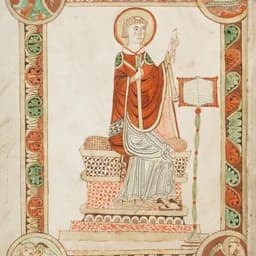
John 13:1–20
ow before the feast of the passover, when Jesus knew that his hour was come that he should depart out of this world unto the Father, having loved his own which were in the world, he loved them unto the end. 2And supper being ended, the devil having now put into the heart of Judas Iscariot, Simon’s son, to betray him; 3Jesus knowing that the Father had given all things into his hands, and that he was come from God, and went to God; 4He riseth from supper, and laid aside his garments; and took a towel, and girded himself. 5After that he poureth water into a bason, and began to wash the disciples’ feet, and to wipe them with the towel wherewith he was girded. 6Then cometh he to Simon Peter: and Peter saith unto him, Lord, dost thou wash my feet? 7Jesus answered and said unto him, What I do thou knowest not now; but thou shalt know hereafter. 8Peter saith unto him, Thou shalt never wash my feet. Jesus answered him, If I wash thee not, thou hast no part with me. 9Simon Peter saith unto him, Lord, not my feet only, but also my hands and my head. 10Jesus saith to him, He that is washed needeth not save to wash his feet, but is clean every whit: and ye are clean, but not all. 11For he knew who should betray him; therefore said he, Ye are not all clean. 12So after he had washed their feet, and had taken his garments, and was set down again, he said unto them, Know ye what I have done to you? 13Ye call me Master and Lord: and ye say well; for so I am. 14If I then, your Lord and Master, have washed your feet; ye also ought to wash one another’s feet. 15For I have given you an example, that ye should do as I have done to you. 16Verily, verily, I say unto you, The servant is not greater than his lord; neither he that is sent greater than he that sent him. 17If ye know these things, happy are ye if ye do them. 18I speak not of you all: I know whom I have chosen: but that the scripture may be fulfilled, He that eateth bread with me hath lifted up his heel against me. 19Now I tell you before it come, that, when it is come to pass, ye may believe that I am he. 20Verily, verily, I say unto you, He that receiveth whomsoever I send receiveth me; and he that receiveth me receiveth him that sent me.
King James Version · public domain
Joani 13:1–20
dhe përpara së-kremtes’ së pashkësë Jisuj dyke diturë se i erdhi ora, që të shkonjë prej kësaj bote te Ati, passi deshi të-tijtë që ishinë ndë botët, gjer në funtt deshi ata. 2Edhe si shkoj darka, (edhe djalli ndashti kishte vënë ndë zëmërët të Judhë Iskariotit, të birit të Simonit, që t’a trathëtonjë;) 3Jisuj, dyke diturë se Ati j’a ka dhënë në duart të-gjitha, edhe se nga Perëndia dolli edhe te Perëndia vete, 4Ngrihetë nga darka, edhe svesh rrobat’ e tia, edhe mori një pëlhurë të-lirtë e ngjeshi vetëhen’ e ti. 5Pastaj vë ujë ndë legen, edhe zuri t’u lanjë këmbëtë nxënëset, edhe t’u’a fshinjë me pëlhurën’ e-lirtë, me të-cilënë ishte ngjeshurë. 6Vjen pra te Simon Pjetri; edhe ay i thotë, Zot, ti më lan këmbëtë? 7Jisuj u përgjeq e i tha, Atë që bënj unë ti nuk’ e di ndashti, po dot’a njohç paskëtajthi. 8Pjetri i thotë, Nukë dotë më lanjç këmbëtë për gjithë jetënë. Jisuj i upërgjeq, Ndë mos t’i lafsha, nukë ke pjesë me mua. 9Simon Pjetri i thotë, Zot, jo këmbët’ e mia vetëmë, po edhe duartë, edhe kryetë. 10Jisuj i thotë, Ay që ësht’ i-larë s’ka nevojë veç të lanjë këmbëtë, po është gjith’ i-qëruarë; edhe ju jini të-qëruarë, po jo të-gjithë. - 11Sepse e dinte atë që dot’a trathëtonte; përandaj tha, Nukë jeni të-gjithë të-qëruarë. 12Passi u lau pra atyre këmbëtë, edhe mori rrobat’ e tia, ndënji përsëri, e u tha atyre, E dini se ç’u bëra juve? 13Ju më thërrisni, Mësonjës edhe Zot; edhe mirë thoni, sepse Jam. 14Nd’u lava pra juve këmbëtë unë Zoti edhe Mësonjësi, edhe ju duhetë t’i lani këmbëtë njëri tjatërit. 15Sepse u lashë shëmbëllë juve, që të bëni edhe ju, sikundrë u bëra unë juve. 16Me të-vërtetë, me të-vërtetë po u them juve, se shërbëtori nuk’ është më i-math se i zoti, as i-dërguari më i-math se ay që e ka dërguarë. 17Ndë i dini këto, jeni të-lumurë, ndë i bëni. 18Nukë them këto për ju të-gjithë; unë di cilëtë kam sgjedhurë; po që të mbushetë shkronja “Ay që hante bukënë bashkë me mua, ngriti thëmbrën’ e ti kundrë meje”. 19Që tashti po u’a them juve këtë, përpara se të bënetë, që të besoni, kur të bënetë, se unë jam. 20Me të-vërtetë, me të-vërtetë po u them juve, ay që pret atë që të dërgonj unë, ka priturë mua; edhe ay që të presë mua, ka pritur’ atë që më dërgoj.
Kristoforidhi, Dhiata e Re Toskërisht 1879 · zotërim publik
In their own words
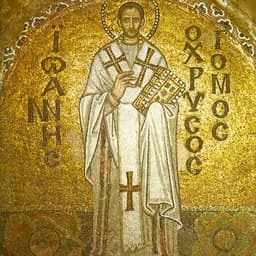
Christ washed the feet of the traitor, the sacrilegious, the thief, and that close to the time of the betrayal, and incurable as he was, made him a partaker of His table; and art thou highminded, and dost thou draw up thine eyebrows?
St. John Chrysostom, Homilies on the Gospel of St. John, Homily 71 (on John 13:12–20)
Patristic sources
- St. John Chrysostom
- Homilies on the Gospel of John, Homilies 70–71
- St. Cyril of Alexandria
- Commentary on the Gospel of John, Book 9
- Theophylact of Ohrid
- Explanation of the Gospel of John (Catena Aurea)
His Gospel exegesis survives in public-domain English only through the Catena Aurea.
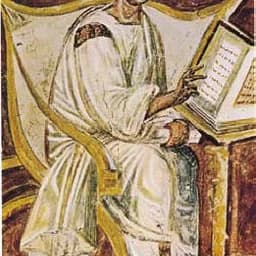
- Blessed Augustine of Hippo
- Tractates on the Gospel of John, 55, 56, 58
Venerated in the East as Blessed; his Johannine tractates are cited in later Byzantine catenae.
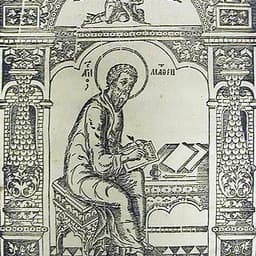
- St. Bede the Venerable
- Homilies on the Gospels (Catena Aurea)
His Gospel material is public-domain English only through the Catena Aurea.
Read the sources: Chrysostom on John, Homily 70 (CCEL) · Chrysostom on John, Homily 71 (CCEL) · Augustine, Tractates on John 55–58 (CCEL) · Cyril of Alexandria on John, Book 9 (tertullian.org) · Catena Aurea on John (isidore.co)
The Washing of the Disciples' Feet (John 13:1–20)
The texts below are quoted verbatim from public-domain English translations; nothing is paraphrased.
St. John Chrysostom (c. 347–407)
Homilies on the Gospel of St. John, Homilies 70–71 (on John 13:1–20), trans. in the Nicene and Post-Nicene Fathers, First Series, Vol. 14. Public domain. Full text: https://www.ccel.org/ccel/schaff/npnf114.iv.lxxii.html
On "having loved his own ... he loved them unto the end", and the washing of the feet of the very man who was betraying Him:
On "ye also ought to wash one another's feet":
On the humility that puts down all pride:
St. Cyril of Alexandria (c. 376–444)
Commentary on the Gospel of John, Book 9 (on John 13:1–20), trans. T. Randell, Library of Fathers, Vol. 48, 1885. Public domain. Full text: https://www.tertullian.org/fathers/cyril_on_john_09_book9.htm
On the purpose of the washing, to root out the vice of pride:
On "If I wash thee not, thou hast no part with me":
Theophylact of Ohrid (c. 1055–1107)
Explanation of the Gospel of John (on John 13:1–5), as preserved in the Catena Aurea on John. Public domain. Full text: https://isidore.co/aquinas/english/CAJohn.htm
On the humility of the Master who is Lord of all:
Blessed Augustine of Hippo (354–430)
Tractates on the Gospel of John, 55, 56, and 58 (on John 13:1–15), trans. in the Nicene and Post-Nicene Fathers, First Series, Vol. 7. Public domain. Full text: https://www.ccel.org/ccel/schaff/npnf107.iii.lvi.html
On "He riseth from supper ... and began to wash the disciples' feet", the majesty that stooped to a servant's office:
On "He that is washed needeth not save to wash his feet", the cleansing of daily faults:
On "ye also ought to wash one another's feet":
St. Bede the Venerable (c. 673–735)
Homilies on the Gospels (on John 13:15), as preserved in the Catena Aurea on John. Public domain. Full text: https://isidore.co/aquinas/english/CAJohn.htm
On "I have given you an example, that ye should do as I have done to you":