The Words of Eternal Life
John 6:60–71 · Later ministry in Galilee
Scripture
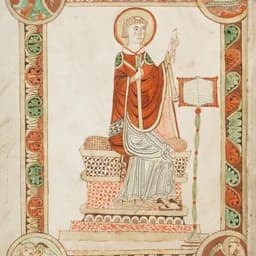
John 6:60–71
any therefore of his disciples, when they had heard this, said, This is an hard saying; who can hear it? 61When Jesus knew in himself that his disciples murmured at it, he said unto them, Doth this offend you? 62What and if ye shall see the Son of man ascend up where he was before? 63It is the spirit that quickeneth; the flesh profiteth nothing: the words that I speak unto you, they are spirit, and they are life. 64But there are some of you that believe not. For Jesus knew from the beginning who they were that believed not, and who should betray him. 65And he said, Therefore said I unto you, that no man can come unto me, except it were given unto him of my Father. 66From that time many of his disciples went back, and walked no more with him. 67Then said Jesus unto the twelve, Will ye also go away? 68Then Simon Peter answered him, Lord, to whom shall we go? thou hast the words of eternal life. 69And we believe and are sure that thou art that Christ, the Son of the living God. 70Jesus answered them, Have not I chosen you twelve, and one of you is a devil? 71He spake of Judas Iscariot the son of Simon: for he it was that should betray him, being one of the twelve.
King James Version · public domain
Joani 6:60–71
humë veta nga nxënësit’ e ati kur dëgjuanë, thanë, Këjo fjalë ësht’ e-ashpërë; cili munt t’a dëgjonjë? 61Edhe Jisuj si e kupëtoj ndë vetëhet, se nxënësit’ e ti po murmurisninë për këtë fjalë, u tha atyre, Këjo uskandhalis juve? 62Ç’dotë thoni pra, ndë qoftë se shihni të Birin e njeriut dyke hipurë atje ku ishte më përpara? 63Fryma ësht’ ajo që ep jetë; mishi nukë vëjen asgjë; fjalëtë që u flas unë juve, janë frymë, edhe janë jetë. 64Po janë ca prej jush që nukë besonjënë. Sepse Jisuj e dinte që ndë kryet, cilëtë jan’ ata që s’besonjënë, edhe cili ësht’ ay që dot’a trathëtonte. 65Edhe thoshte, Përandaj u thashë juve, se asndonjë s’munt të vinjë tek unë, ndë mos i është dhënë prej t’im Eti. 66Që mb’atë herë pra shumë nga nxënësit’ e ti ukthyenë prapa, edhe nuk’ ecninë më bashkë me atë. 67Jisuj pra u tha të dy-mbë-dhjetëvet, Mos doni të ikëni edhe ju? 68Simon Pjetri i upërgjeq pra ati, Zot, Te cili të vemi? ti ke fjalë jete së-përjetëshme. 69Edhe neve kemi besuarë, edhe e kemi njohurë, se ti je Krishti i Bir’ i Perëndisë (së-gjallë). 70Jisuj pra u upërgjeq atyre, A nuk’ u sgjodha unë juve të dy-mbë-dhjetëtë? Po një prej jush është djall. 71Edhe thoshte për Judhë Iskariotinë, të birin’ e Simonit; sepse ky, ndonëse ishte një prej të dy-mbë-dhjetëvet, e kishte për të trathëtuar’ atë.
Kristoforidhi, Dhiata e Re Toskërisht 1879 · zotërim publik
In their own words
For if the flesh profited nothing, the Word would not be made flesh to dwell among us.
Blessed Augustine of Hippo, Tractates on the Gospel of John, Tractate 27 (on John 6:60–71)
Patristic sources
- St. John Chrysostom
- Homilies on the Gospel of John, Hom. 47
- St. Cyril of Alexandria
- Commentary on the Gospel of John, Book 4
- Theophylact of Ohrid
- Explanation of the Gospel of John (Catena Aurea)
Quoted through the Catena Aurea on John; his Gospel Explanation has no standalone public-domain English edition.
- Blessed Augustine of Hippo
- Tractates on the Gospel of John, Tractate 27
Venerated in the East as Blessed; his Johannine tractates are cited in later Byzantine catenae.
- St. Bede the Venerable
- Commentary on John (Catena Aurea)
His Gospel exegesis survives in public-domain English only through the Catena Aurea.
Read the sources: Chrysostom on John, Homily 47 (CCEL) · Cyril of Alexandria on John, Book 4 (tertullian.org) · Augustine, Tractates on John, Tractate 27 (CCEL) · Catena Aurea on John (isidore.co)
The Words of Eternal Life (John 6:60–71)
The texts below are quoted verbatim from public-domain English translations; nothing is paraphrased.
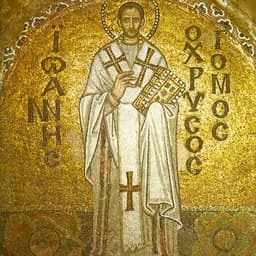
St. John Chrysostom (c. 347–407)
Homilies on the Gospel of St. John, Homily 47 (on John 6:60–71) Source: trans. in the Nicene and Post-Nicene Fathers, First Series, Vol. 14. Public domain. Full text: https://www.ccel.org/ccel/schaff/npnf114.iv.xlix.html
On what "This is a hard saying" means:
On "the flesh profiteth nothing," spoken of the carnal hearer and not of His own flesh:
On "Will ye also go away?" and the question that used no compulsion:
On Peter's confession here, and how it differs from the confession at Caesarea Philippi:
St. Cyril of Alexandria (c. 376–444)
Commentary on the Gospel of St. John, Book 4 (on John 6:60–71) Source: trans. P. E. Pusey, Library of the Fathers, 1874. Public domain. Full text: https://www.tertullian.org/fathers/cyril_on_john_04_book4.htm
On why "the flesh profiteth nothing" holds of all flesh but not of Christ's:
On "Would ye also go away?" and the few who hold the right faith:
On "to whom shall we go? Thou hast the words of eternal life":
Theophylact of Ohrid (c. 1055–1107)
As preserved in the Catena Aurea on John. Public domain. Full text: https://isidore.co/aquinas/english/CAJohn.htm
On who the murmuring "disciples" were:
On "the Son of man ascend up where He was before," against the heretics:
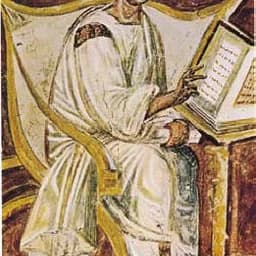
Blessed Augustine of Hippo (354–430)
Tractates on the Gospel of John, Tractate 27 (on John 6:60–71) Source: trans. in the Nicene and Post-Nicene Fathers, First Series, Vol. 7. Public domain. Full text: https://www.ccel.org/ccel/schaff/npnf107.iii.xxviii.html
On the carnal manner in which they understood the flesh:
On the flesh that profiteth much when the Spirit is joined to it:
On Peter's "we have believed and have known," and believing in order to know:
St. Bede the Venerable (c. 673–735)
As preserved in the Catena Aurea on John. Public domain. Full text: https://isidore.co/aquinas/english/CAJohn.htm
On why the Lord questioned the Twelve, to prove their faith:
On the election of the eleven, and of the twelfth who should betray Him: