The World's Hatred and the Promise of the Paraclete
John 15:18–16:33 · Passion week in Jerusalem
Scripture
John 15:18–27
f the world hate you, ye know that it hated me before it hated you. 19If ye were of the world, the world would love his own: but because ye are not of the world, but I have chosen you out of the world, therefore the world hateth you. 20Remember the word that I said unto you, The servant is not greater than his lord. If they have persecuted me, they will also persecute you; if they have kept my saying, they will keep yours also. 21But all these things will they do unto you for my name’s sake, because they know not him that sent me. 22If I had not come and spoken unto them, they had not had sin: but now they have no cloak for their sin. 23He that hateth me hateth my Father also. 24If I had not done among them the works which none other man did, they had not had sin: but now have they both seen and hated both me and my Father. 25But this cometh to pass, that the word might be fulfilled that is written in their law, They hated me without a cause. 26But when the Comforter is come, whom I will send unto you from the Father, even the Spirit of truth, which proceedeth from the Father, he shall testify of me: 27And ye also shall bear witness, because ye have been with me from the beginning.
King James Version · public domain
Joani 15:18–27
dë u ka mëri juve bota, di-e-ni se mua më ka pasurë mëri më përpara se juve. 19Të ishitë prej botësë, bota dotë donte të-sajnë; po me-qënë-që nukë jini nga bota, po un’ u sgjodha juve nga bota, përandaj u ka mëri juve bota. 20Mbani mënt fjalënë që u thashë unë juve, Nukë ka shërbëtuar më të-math se i zoti. Ndë ndoqnë mua, dot’u ndjekënë edhe juve; ndë ruajtnë fjalënë t’ime, dotë ruanjënë edhe t’uajnë. 21Po të-gjitha këto dot’u’a bënjënë juve për emërinë t’im, sepse nuk’ e dinë atë që më dërgoj. 22Të mos kishnjam ardhurë e të mos u kishnjam folur’ atyre, nukë dotë kishinë faj; po ndashti nukë kanë ç’të thonë për fajin’ e tyre. 23Ay që më ka mëri mua, e ka mëri edhe t’im Atë. 24Të mos kishnjam bërë ndër ata ato punë që s’i ka bërë asndonjë tjatërë, nukë dotë kishinë faj; po ndashti edhe panë, edhe na patnë mëri edhe mua edhe t’im Atë. 25Po këjo ubë, që të mbushetë fjala që është shkruarë ndë nomt t’atyreve, “Më patnë mëri pa ndonjë farë punë.” 26Po kur të vinjë Ngushullimtari, të-cilinë dot’u’a dërgonj unë juve prej Atit, Fryma e së-vërtetësë, që del nga Ati, ay dotë dëshmonjë për mua. 27Po edhe ju dëshmoni, sepse që ndë kryet jeni bashkë me mua.
Kristoforidhi, Dhiata e Re Toskërisht 1879 · zotërim publik
In their own words
For He, in bearing witness Himself, and inspiring such witnesses with invincible courage, divested Christ's friends of their fear, and transformed into love the hatred of His enemies.
Blessed Augustine of Hippo, Tractates on the Gospel of John, Tractate 92 (on John 15:26–27)
Patristic sources
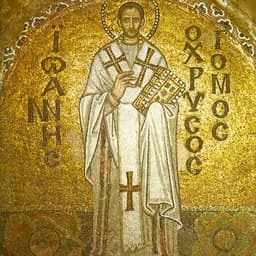
- St. John Chrysostom
- Homilies on the Gospel of St. John, Hom. 77–79
- St. Cyril of Alexandria
- Commentary on the Gospel of John, Books 10–11
- Theophylact of Ohrid
- Explanation of the Gospel of John
No standalone public-domain English edition of his Gospel work exists; quoted through the Catena Aurea.
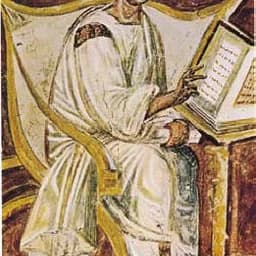
- Blessed Augustine of Hippo
- Tractates on the Gospel of John, Tractates 92 and 103
Venerated in the East as Blessed; his Johannine tractates are cited in later Byzantine catenae.
- St. Gregory the Great
- Homilies on Ezekiel
Applied by the Catena to John 15:18–19; the Newman Catena is his only public-domain English for this passage.
Read the sources: Chrysostom on John (CCEL) · Augustine, Tractates on John (CCEL) · Cyril of Alexandria on John, Book 10 (tertullian.org) · Catena Aurea on John, Oxford ed. (archive.org)
The World's Hatred and the Promise of the Paraclete (John 15:18–16:33)
The texts below are quoted verbatim from public-domain English translations; nothing is paraphrased.
St. John Chrysostom (c. 347–407)
Homilies on the Gospel of St. John, Homilies 77–79 (on John 15:18–16:33) Source: trans. G. T. Stupart in the Nicene and Post-Nicene Fathers, First Series, Vol. 14. Public domain. Full text: https://www.ccel.org/ccel/schaff/npnf114.iv.lxxix.html
On why the world's hatred makes the disciples imitators of their Lord:
On the honour of the Spirit, that it is expedient the Master depart and the Comforter come:
On why the disciples must not despond, since their Master has conquered:
St. Cyril of Alexandria (c. 376–444)
Commentary on the Gospel of John, Books 10–11 (on John 16:7–22) Source: trans. T. Randell, Library of Fathers, 1885. Public domain. Full text: https://www.tertullian.org/fathers/cyril_on_john_10_book10.htm
On why Christ's departure is expedient, that we might partake of the Holy Spirit:
On the woman in travail, whose sorrows must inevitably end in rejoicing:
Theophylact of Ohrid (c. 1055–1107)
Explanation of the Gospel of John (on John 15:26–27) As preserved in the Catena Aurea on John, trans. J. H. Newman, 1845. Public domain. Full text: https://archive.org/details/CatenaAureaNewEdV6
On the difference between being sent and proceeding, and the Spirit's peculiar procession:
Blessed Augustine of Hippo (354–430)
Tractates on the Gospel of John, Tractates 92 and 103 (on John 15:26–16:33) Source: trans. John Gibb and James Innes in the Nicene and Post-Nicene Fathers, First Series, Vol. 7. Public domain. Full text: https://www.ccel.org/ccel/schaff/npnf107.iii.xciii.html
On how the Spirit's witness turned the enemies' hatred into love (Tractate 92):
On how the disciples overcame the world only in Him (Tractate 103):
St. Gregory the Great (c. 540–604)
Homilies on Ezekiel (on John 15:18–19) As preserved in the Catena Aurea on John, trans. J. H. Newman, 1845. Public domain. Full text: https://archive.org/details/CatenaAureaNewEdV6
On why the dispraise of the perverse is the Christian's praise: