Treasure in Heaven
Matt 6:19–23; Luke 11:34–36 · Early ministry in Galilee
Scripture
Matthew 6:19–23
ay not up for yourselves treasures upon earth, where moth and rust doth corrupt, and where thieves break through and steal: 20But lay up for yourselves treasures in heaven, where neither moth nor rust doth corrupt, and where thieves do not break through nor steal: 21For where your treasure is, there will your heart be also. 22The light of the body is the eye: if therefore thine eye be single, thy whole body shall be full of light. 23But if thine eye be evil, thy whole body shall be full of darkness. If therefore the light that is in thee be darkness, how great is that darkness!
King James Version · public domain
Mateu 6:19–23
os mblithni thesarë për vetëhenë t’uaj mbë dhet, ku krimbi edhe ndryshku i prish, edhe ku vjedhësit rëmojn’ edhe vjedhënë; 20Po mblithni thesarë për vetëhenë t’uaj ndë qiell, ku nuk’ i prish as krimp as ndryshk, edhe ku vjedhësitë nukë rëmojn’ as vjedhënë. 21Sepse tek është thesari juaj, atje dotë jetë edhe zëmëra juaj. 22Kandil’ i trupit është syri; ndë qoftë pra se syri yt ësht’ i-kthjellëtë, gjithë trupi yt dotë jetë i-ndriçim; 23Po ndë qoftë se syri yt ësht’ i-lik, gjithë trupi yt dotë jet’ i-errëtë. Ndë qoftë pra se drita që gjëndetë te ti ësht’ errësirë, errësira sa e-madhe dotë jetë?
Kristoforidhi, Dhiata e Re Toskërisht 1879 · zotërim publik
In their own words
It is not, therefore, what one does, but the intent with which he does it, that is to be considered.
Blessed Augustine of Hippo, Our Lord's Sermon on the Mount, Book II, Ch. 13 (on Matthew 6:19–23)
Patristic sources
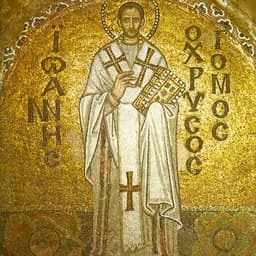
- St. John Chrysostom
- Homilies on Matthew, Hom. 20
- St. Cyril of Alexandria
- Commentary on Luke, Sermon 82
Payne Smith's public-domain text stops at the lamp on the lampstand (Luke 11:33); it does not reach the single-eye saying of Luke 11:34–36, so Cyril here speaks to the Lukan setting of the light within.
- Blessed Augustine of Hippo
- Our Lord's Sermon on the Mount, Book II, Ch. 13
Venerated in the East as Blessed rather than as Saint.
- St. Jerome
- Commentary on Matthew
His Gospel commentary survives in public-domain English only through the Catena Aurea.
- St. Hilary of Poitiers
- Commentary on Matthew
Catena-only in public-domain English.
- St. Gregory the Great
- Moralia in Job, Book XXVIII
Quoted here through the Catena Aurea on Matthew.
Read the sources: Chrysostom on Matthew, Homily 20 (CCEL) · Cyril on Luke, Sermons 81–88 (tertullian.org) · Augustine, Our Lord's Sermon on the Mount (CCEL) · Catena Aurea on Matthew 6 (CCEL)
Treasure in Heaven (Matthew 6:19–23; Luke 11:34–36)
The texts below are quoted verbatim from public-domain English translations; nothing is paraphrased.
St. John Chrysostom (c. 347–407)
Homilies on the Gospel of Matthew, Homily 20 (on Matthew 6:19–23), trans. in the Nicene and Post-Nicene Fathers, First Series, Vol. 10. Public domain. Full text: https://www.ccel.org/ccel/schaff/npnf110/npnf110.iii.XX.html
On the harm of hoarding on earth, even where no thief or moth reaches it:
On why He turns from the mind to the eye, the light of the whole soul:
St. Cyril of Alexandria (c. 376–444)
Commentary on the Gospel of Luke, Sermon 82 (on Luke 11:29–36), trans. R. Payne Smith, Library of Fathers, 1859. Public domain. Full text: https://www.tertullian.org/fathers/cyril_on_luke_08_sermons_81_88.htm
On the lamp that is set on high, and the Son given as a lamp to the world (the Lukan setting of the eye and the light within):
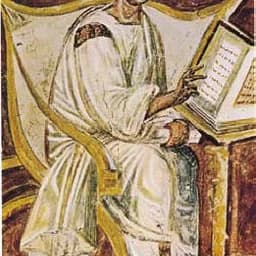
Blessed Augustine of Hippo (354–430)
Our Lord's Sermon on the Mount, Book II, Chapter 13 (on Matthew 6:19–23), trans. in the Nicene and Post-Nicene Fathers, First Series, Vol. 6. Public domain. Full text: https://www.ccel.org/ccel/schaff/npnf106/npnf106.v.iii.xiii.html
On the heart that is clean only when its treasure is in heaven:
On the heaven that is not the visible sky but the spiritual firmament:
On the single eye understood as the intention with which a work is done:
On weighing the mind of the doer above the deed:
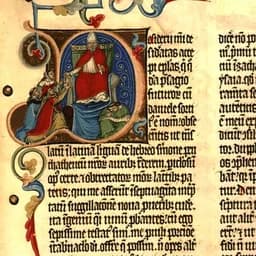
St. Jerome (c. 347–420)
Commentary on Matthew (on Matthew 6:19–23), as preserved in the Catena Aurea on Matthew. Public domain. Full text: https://www.ccel.org/ccel/aquinas/catena1.ii.vi.html
On the treasure that every man serves, wherever his heart is bound:
On the eye that is not single and the soul that has lost her brightness:
St. Hilary of Poitiers (c. 310–367)
Commentary on Matthew (on Matthew 6:19–23), as preserved in the Catena Aurea on Matthew. Public domain. Full text: https://www.ccel.org/ccel/aquinas/catena1.ii.vi.html
On the praise of heaven that no thief or rust can carry off:
On the light of the heart, single and brilliant, or darkened by sin:
St. Gregory the Great (c. 540–604)
Moralia in Job, Book XXVIII (on Matthew 6:23), as preserved in the Catena Aurea on Matthew. Public domain. Full text: https://www.ccel.org/ccel/aquinas/catena1.ii.vi.html
On the deeper darkness when a good beginning is overclouded with an evil purpose: