All entriesmiracle

Walking on water

Matt 14:22–33; Mark 6:45–52; John 6:16–21 · Later ministry in Galilee

Matthew 14:22–33

nd straightway Jesus constrained his disciples to get into a ship, and to go before him unto the other side, while he sent the multitudes away. 23And when he had sent the multitudes away, he went up into a mountain apart to pray: and when the evening was come, he was there alone. 24But the ship was now in the midst of the sea, tossed with waves: for the wind was contrary. 25And in the fourth watch of the night Jesus went unto them, walking on the sea. 26And when the disciples saw him walking on the sea, they were troubled, saying, It is a spirit; and they cried out for fear. 27But straightway Jesus spake unto them, saying, Be of good cheer; it is I; be not afraid. 28And Peter answered him and said, Lord, if it be thou, bid me come unto thee on the water. 29And he said, Come. And when Peter was come down out of the ship, he walked on the water, to go to Jesus. 30But when he saw the wind boisterous, he was afraid; and beginning to sink, he cried, saying, Lord, save me. 31And immediately Jesus stretched forth his hand, and caught him, and said unto him, O thou of little faith, wherefore didst thou doubt? 32And when they were come into the ship, the wind ceased. 33Then they that were in the ship came and worshipped him, saying, Of a truth thou art the Son of God.

King James Version · public domain

Mateu 14:22–33

dhe për-një-herë (Jisuj) shtrëngoj nxënësit’ e ti të hyjnë ndë lundrët, edhe të shkojnë përtej më përpara se ay, gjersa të lëshonjë gjin-djenë. 23Edhe si lëshoj gjindjenë, hipi ndë malt veçanë që të faletë; edhe si ungrys, ishte vetëm’ atje. 24Edhe lundra ishte ndashti ndë mest të detit dyke përpjekurë nga valëtë; sepse era ishte kundrë. 25Edhe mbë të-katërtënë ruajtje të natësë Jisuj vate tek ata, dyke ecurë përmbi dett. 26Edhe nxënësitë kur e panë që po ecënte përmbi dett, utrëmpnë e thanë. Se është hije; edhe nga frika bërtitnë. 27Po Jisuj për-një-herë u foli atyre, dyke thënë, Kini zëmërë, unë jam, mos ufrikësoni. 28Edhe Pjetri i upërgjeq e tha, Zot, ndë je ti, urdhëro-më të vinj te ti mbi ujërat. 29Edhe ay tha, Eja. Edhe Pjetri sbriti nga lundra, e eci mbi ujërat, që të vinte te Jisuj. 30Po kur pa erënë të-fortë, ufrikësua; edhe si zuri të kridhetë, bërtiti, dyke thënë, Zot, shpëto-më. 31Edhe Jisuj për-një-herë ngjati dorënë, e zuri, e i thotë, O besë-pak, përse qe me dy mëndje? 32Edhe ata si hynë ndë lundrët, pushoj era. 33Edhe ata që ishinë ndë lundrët erthnë e i ufalnë ati, dyke thënë, Me të-vërtetë je bir Perëndie.

Kristoforidhi, Dhiata e Re Toskërisht 1879 · zotërim publik

Summary

Christ sends the disciples ahead and withdraws to pray, and they labor all night against a contrary wind; only in the fourth watch does He come to them walking upon the sea. The Fathers read His delay not as neglect but as training: He lets them spend their whole strength and taste their helplessness, so that His help, coming in its own hour, is received as deliverance and not taken for granted. Chrysostom dwells on this, that the storm and the long night are permitted to teach them endurance, prayer, and the difference between their power and His.

His tread upon the waters declares His lordship over creation. Cyril sees in this the proper sign of the Creator, who walks upon the sea as upon dry land because all things are His own work and obey Him. The words "It is I" carry the weight of the divine "I AM," so that the One who calms their fear is recognized as God. Their terror, mistaking Him for a phantom, gives way to worship, and in Matthew they confess Him truly the Son of God.

Peter's request, his brief walking, and his sudden sinking enact the whole dynamic of faith and its weakness. The Fathers note both his fervor, that he alone asks to come, and his frailty, that the sight of the wind overcomes the word that had upheld him: faith carries him while he looks to Christ, and the waters receive him when he looks to the wave. Christ's hand catches him at once, with the gentle reproach, "O you of little faith, why did you doubt?" The lesson is that the Lord who lets us be tried does not let us drown, but meets the cry of even a faltering faith. In John the ship reaches the land at once when He is taken aboard.

The Walking on Water (Matthew 14:22–33; Mark 6:45–52; John 6:16–21)

Public-Domain Patristic Commentary

After the feeding, Christ sends the disciples ahead by ship and goes up the mountain alone to pray. The ship is far out, tossed by waves, the wind against it. In the fourth watch of the night He comes to them, walking on the sea. They are terrified, crying out that it is a ghost, until He speaks: "Be of good cheer; it is I; be not afraid." Peter answers, "Lord, if it be thou, bid me come unto thee on the water." Christ says "Come," and Peter walks on the water, but seeing the wind he is afraid and begins to sink, crying "Lord, save me." Christ at once stretches out His hand and catches him: "O thou of little faith, wherefore didst thou doubt?" When they climb into the ship the wind ceases, and those aboard worship Him, saying, "Of a truth thou art the Son of God." Luke alone of the four does not record this scene. The texts below are quoted verbatim from public-domain translations, including the Catena Aurea on Mark (St. Thomas Aquinas, trans. J. H. Newman, 1841); nothing is paraphrased.


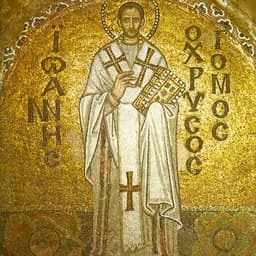
St. John Chrysostom (c. 347–407)

Homilies on the Gospel of Matthew, Homily 50 (on Matthew 14:23–33) Source: trans. in the Nicene and Post-Nicene Fathers, First Series, Vol. 10. Public domain. Full text: https://www.newadvent.org/fathers/200150.htm

On why He withdrew up the mountain to pray:

For what purpose does He go up into the mountain? To teach us, that loneliness and retirement is good, when we are to pray to God. With this view, you see, He is continually withdrawing into the wilderness, and there often spends the whole night in prayer, teaching us earnestly to seek such quietness in our prayers, as the time and place may confer. For the wilderness is the mother of quiet; it is a calm and a harbor, delivering us from all turmoils.

On why He let them be storm-tossed and alone, and came only in the fourth watch:

But whereas before they had Him in the ship when this befell them, now they were alone by themselves... but now leading them to a greater degree of endurance, He does not even this, but departs, and in mid sea permits the storm to arise... Accordingly, neither did He present Himself to them at once. For, "in the fourth watch," so it is said, "of the night, He went unto them, walking upon the sea;" instructing them not hastily to seek for deliverance from their pressing dangers, but to bear all occurrences manfully.

On Peter's ardor and faith:

What then says Peter, everywhere ardent, and ever starting forward before the rest? "Lord, if it be Thou," says he, "bid me come unto You on the water." He said not, "Pray and entreat," but, "bid." Do you see how great his ardor, how great his faith?... For neither did he say, "Bid me walk on the water," but what? "Bid me come unto You." For none so loved Jesus... For he not only believed that He was able Himself to walk on the sea, but that He could lead upon it others also.

On why Christ stretched out His hand rather than stilling the wind, and on what made Peter sink:

So absolutely nothing does it avail to be near Christ, not being near Him by faith... And wherefore did He not command the winds to cease, but Himself stretched forth His hand and took hold of him? Because in him faith was required. For when our part is wanting, then God's part also is at a stand. Signifying therefore that not the assault of the wind, but his want of faith had wrought his overthrow, He says, "Wherefore did you doubt, O thou of little faith?"

On the confession that crowned the miracle:

Whereas before this they had said, "What manner of man is this, that even the winds and the sea obey Him!" now it is not so. For "they that were in the ship," it is said, "came and worshipped Him, saying, Of a truth You are Son of God." Do you see, how by degrees He was leading them all higher and higher?... For then indeed He rebuked the sea, but now He rebukes it not, in another way signifying His power more abundantly.


St. Cyril of Alexandria (c. 376–444)

Commentary on the Gospel of St. John, Book 3 (on John 6:16–21) Source: trans. P. E. Pusey & T. Randell, 1874–1885. Public domain. Full text: https://www.tertullian.org/fathers/cyril_on_john_03_book3.htm

On why Christ treads the sea — to free the Apostles from the petty notion that anything could restrain Him:

... needs, in order that He might free Himself from so petty a conception, and might bring the still feeble mind of the Apostles to learn, that He doth all things wondrously which He willeth, unrestrained by the nature of things, the necessary order of things not hampering Him in the least, does He place under His Feet the humid nature of the waters, albeit unpractised to lie under the bodies of men, for all things were possible, as to God.

On the soul that is severed from Christ as the disciples were storm-tossed without Him:

They therefore must needs be tempest-tost, who are not with Jesus, but are cut off, or seem to be absent from Him through their departure from His holy laws, and severed because of sin from Him Who is able to save.

On the timing of grace — that Christ appears not at the outset of trouble but at the height of the danger:

For not when the condition which harasses us first begins, does the grace of Him who saves visit us, but when the fear is at its height, and the danger now shews itself mighty, and we are found, so to say, in the midst of the waves of afflictions: then unlooked for does Christ appear, and puts away our fear, and will free us from all danger, by His Ineffable Power changing the dread things into joy, as it were a calm.

On the ship borne at once to land — Christ as deliverance and the accomplishment of what lies beyond hope:

When then Christ appears and beams upon us, we shall without any labour succeed even against our hope, and we who are in danger through not having Him, shall have no more need of toil to be able to accomplish what is profitable for us, when He is present. Christ then is our deliverance from all danger, and the accomplishment of achievements beyond hope to them that receive Him.


Theophylact of Ohrid (c. 1050–1107)

From his Explanation of the Gospel of Mark, as preserved in the Catena Aurea on Mark. Public domain.

On why He went up to pray after dismissing the crowd:

But when He had dismissed the crowd, He goes up to pray, for prayer requires rest and silence.

On why the Lord left the disciples in danger:

Now the Lord permitted His disciples to be in danger, that they might learn patience; wherefore He did not immediately come to their aid, but allowed them to remain in danger all night, that He might teach them to wait patiently, and not to hope at once for help in tribulations.

On how Christ deepened their fear before reassuring them:

See again how Christ, though He was about to put and end to their dangers, puts them in greater fear. But He immediately reassured them by His voice.

On why the storm made the miracle greater:

Great indeed is the miracle of our Lord's walking on the sea, but the tempest and the contrary wind were there as well, to make the miracle greater. For the Apostles, not understanding from the miracle of the five loaves the power of Christ, now more fully knew it from the miracle of the sea.


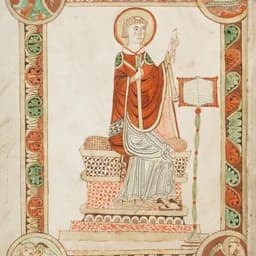
St. Bede the Venerable (c. 673–735)

From his Commentary on Mark, as preserved in the Catena Aurea on Mark. Public domain.

On who truly prays well:

Not every man, however, who prays goes up into a mountain, but he alone prays well, who seeks God in prayer. But he who prays for riches or worldly labour, or for the death of his enemy, sends up from the lowest depths his vile prayers to God.

On the disciples amazed yet not yet seeing His Divine Majesty:

The disciples indeed, who were still carnal, were amazed at the greatness of His virtue, they could not yet however recognise in Him the truth of the Divine Majesty.

On the mystical meaning: the laboring ship as the Church amid the world:

The toil of the disciples in rowing, and the contrary wind, mark out the labours of the Holy Church, who amidst the beating waves of the world, and the blasts of unclean spirits, strives to reach the repose of her celestial country. ... sometimes the Church is afflicted by a pressure from the Gentiles so overwhelming, that her Redeemer seems to have entirely deserted her. But the Lord sees His own, toiling on the sea, for, lest they faint in tribulations, He strengthens them by the look of His love, and sometimes frees them by a visible assistance.

On Christ present in the heart by grace:

In whatsoever heart, also, He is present by the grace of His love, there soon all the strivings of vices, and of the adverse world, or of evil spirits, are kept under and put to rest.


Blessed Augustine of Hippo (354–430)

Sermons on the New Testament, Sermon 26 (on Matthew 14:25) Source: trans. in the Nicene and Post-Nicene Fathers, First Series, Vol. 6. Public domain. Full text: https://www.newadvent.org/fathers/160326.htm

On the sea as the world and Peter as the figure of the Church:

The Gospel which has just been read touching the Lord Christ, who walked on the waters of the sea; and the Apostle Peter, who as he was walking, tottered through fear, and sinking in distrust, rose again by confession, gives us to understand that the sea is the present world, and the Apostle Peter the type of the One Church. For Peter in the order of Apostles first, and in the love of Christ most forward, answers oftentimes alone for all the rest.

On the Church having both strong and weak, both figured in Peter:

Yet see this Peter, who was then our figure; now he trusts, and now he totters... Because the Church of Christ has both strong and weak ones; and cannot be without either strong or weak... In that Peter said, "You are the Christ, the Son of the living God," he represents the strong: but in that he totters, and would not that Christ should suffer... he represents the weak ones of the Church.

On "bid me come," and on doing in Christ what cannot be done in oneself:

And hence also is that which was just now read, "Lord, if it be Thou, bid me come unto You on the water." For I cannot do this in myself, but in You. He acknowledged what he had of himself, and what of Him, by whose will he believed that he could do that, which no human weakness could do... And the Lord said "Come."... Peter leaped down into the water, and began to walk. He was able to do what the Lord was doing, not in himself, but in the Lord.

On strength found only by those who know their own weakness:

By faith he had strength to do what human weakness could not do. These are the strong ones of the Church... But the presuming on their own strength keeps many back from strength. No one will have strength from God, but he who feels himself weak of himself.


Note on sources and other Fathers

These Fathers read the same scene at several depths. Chrysostom stays with the disciples in the boat and with the discipline Christ is working in them: He prays alone on the mountain because "the wilderness is the mother of quiet," He lets them labor in the storm and comes only "in the fourth watch" to teach them "to bear all occurrences manfully," and when Peter sinks He catches him by the hand rather than stilling the wind, because "when our part is wanting, then God's part also is at a stand." The whole moves upward, from "what manner of man is this" at the earlier storm to "of a truth thou art the Son of God" now. Theophylact of Ohrid gathers the same Greek reading more briefly: the Lord lets His own remain in danger "that they might learn patience," and the tempest and contrary wind are permitted precisely "to make the miracle greater," so that the Apostles who had not learned His power from the loaves now learn it from the sea. Bede draws out the mystical sense: the laboring ship is "the labours of the Holy Church," tossed by "the beating waves of the world, and the blasts of unclean spirits," whom her Redeemer seems at times to have "deserted," yet whom He strengthens "by the look of His love"; and in whatever heart He is present by grace, "all the strivings of vices" are "put to rest."

Augustine takes Peter as "the type of the One Church," the sea as "the present world," and reads the tottering apostle as the Church herself, who "has both strong and weak ones." His lesson is the heart of grace: Peter walks not in himself but in the Lord, and "no one will have strength from God, but he who feels himself weak of himself." In the Catena Aurea on Mark he is also cited from his De Consensu Evangelistarum, observing that the Lord seemed to "pass them as strangers" precisely so that their cry "called for His help." Augustine returns to the scene in the preceding sermon (Sermon 25 on the New Testament), where he reads "the fourth watch of the night" as "the end of the world" in which "the Lord has come to help." The Catena Aurea on Mark also preserves Pseudo-Jerome and several anonymous glosses on this passage, who likewise read the ship as the Catholic Church and the contrary wind as the world's opposition; these are not quoted here, being either spurious or compilers' notes. Cyril of Alexandria's homilies on Luke do not treat this miracle, since Luke alone omits it.

Patristic sources