Woman, Behold Your Son
John 19:25–27 · Passion week in Jerusalem
Scripture
John 19:25–27
ow there stood by the cross of Jesus his mother, and his mother’s sister, Mary the wife of Cleophas, and Mary Magdalene. 26When Jesus therefore saw his mother, and the disciple standing by, whom he loved, he saith unto his mother, Woman, behold thy son! 27Then saith he to the disciple, Behold thy mother! And from that hour that disciple took her unto his own home.
King James Version · public domain
Joani 19:25–27
dhe përanë kryqit të Jisujt ishinë dyke ndënjurë e ëma edhe e motër’ e s’ëmës s’ati, Maria gruaja e Kllopajt, edhe Maria Magdhalinë. 26Jisuj pra kur pa t’ëmënë edhe atë nxënësinë që donte dyke ndënjurë përanë, i thotë s’ëmësë, Grua, na yt bir. 27Pastaj i thotë nxënësit, Na jot’ ëmë. Edhe nxënësi që atëhere e mori ndë shtëpit të ti.
Kristoforidhi, Dhiata e Re Toskërisht 1879 · zotërim publik
In their own words
He thought it a greater thing to shew Him victorious over punishment, fulfilling the offices of piety to His mother, than giving the kingdom of heaven and eternal life to the thief. For if it was religious to give life to the thief, a much richer work of piety it is for a son to honour his mother with such affection.
St. Ambrose of Milan, on John 19:25–27 (Catena Aurea)
Patristic sources
- St. John Chrysostom
- Homilies on the Gospel of John, Hom. 85
- St. Cyril of Alexandria
- Commentary on the Gospel of John, Book XII
- Theophylact of Ohrid
- Explanation of the Gospel of John (Catena Aurea)
- Blessed Augustine of Hippo
- Tractates on the Gospel of John, Tractate 119
Venerated in the East as Blessed; his Johannine tractates are cited in later Byzantine catenae.
- St. Ambrose of Milan
- Exposition of Luke / on the Passion (Catena Aurea on John)
- St. Bede the Venerable
- Homilies on the Gospels (Catena Aurea on John)
Read the sources: Chrysostom on John, Homily 85 (CCEL) · Cyril of Alexandria on John, Book XII (tertullian.org) · Augustine, Tractate 119 on John (CCEL) · Catena Aurea on John (isidore.co)
Woman, Behold Your Son (John 19:25–27)
The texts below are quoted verbatim from public-domain English translations; nothing is paraphrased.
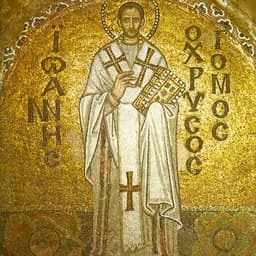
St. John Chrysostom (c. 347–407)
Homilies on the Gospel of John, Homily 85 (on John 19:25–27) Source: trans. G. T. Stupart, Nicene and Post-Nicene Fathers, First Series, Vol. 14. Public domain. Full text: https://www.ccel.org/ccel/schaff/npnf114.iv.lxxxvii.html
On "And from that hour that disciple took her to his own home," teaching care for parents to the last breath:
On the disciple who conceals his own name from modesty:
On the honour laid upon the disciple, and the reward of his steadfastness:
On the calm of the Crucified, who provides for His Mother even in His agony:
St. Cyril of Alexandria (c. 376–444)
Commentary on the Gospel of John, Book XII (on John 19:25–27) Source: trans. T. Randell, Library of Fathers, 1885. Public domain. Full text: https://www.tertullian.org/fathers/cyril_on_john_12_book12.htm
On "He saith unto His mother, Woman, behold thy Son," the care He took amid His own suffering:
On the honour of parents which the Lord confirmed from the cross:
On the Virgin's perplexity, and why He gave her to the best of guides:
Theophylact of Ohrid (c. 1055–1107)
As preserved in the Catena Aurea on John. Public domain.
On the Lord thinking of His mother while the soldiers did their work:
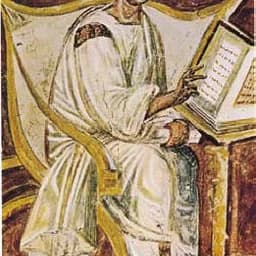
Blessed Augustine of Hippo (354–430)
Tractates on the Gospel of John, Tractate 119 (on John 19:25–27) Source: trans. in the Nicene and Post-Nicene Fathers, First Series, Vol. 7. Public domain. Full text: https://www.ccel.org/ccel/schaff/npnf107.iii.cxx.html
On this hour as the one foretold at Cana:
On the cross as the chair from which the Master taught care for parents:
St. Ambrose of Milan (c. 339–397)
As preserved in the Catena Aurea on John. Public domain.
On John alone recording that the Mother stood by the cross:
On filial piety as a richer work than the gift to the thief:
On the Testament made from the cross:
On the Virgin looking not on His death but on the salvation of the world:
St. Bede the Venerable (c. 673–735)
As preserved in the Catena Aurea on John. Public domain.
On the beloved disciple, loved for his purity: