The Divine Liturgy of St John Chrysostom · Step 66
Consuming the Gifts that remain; the prayers of thanksgiving
«Mbarimi i Dhuratave të mbetura dhe uratat e falënderimit»
What happens
After the antidoron, the Holy Doors and their curtain are closed, and the priest goes back to the table of oblation. When he serves alone, he first consumes what remains in the chalice and cleanses it; otherwise the deacon has already done this. He says the prayers of thanksgiving after Communion, which the Church's service book names but does not print. Then the clergy wash their hands and take off their vestments.
Who does what
- PriestGoes back into the sanctuary to the table of oblation, says the prayers of thanksgiving after Communion, then washes his hands and takes off his vestments.
- DeaconWashes his hands with the basin and ewer, a bowl and a water jug, and takes off his vestments with the priest.
- PeopleThose who received Communion stay to say the prayers of thanksgiving after Communion; the rest go home with the antidoron.
When the priest serves without a deacon: Serving alone, the priest himself drinks what remains in the chalice, rinses it with wine and water, wipes it and covers the vessels with their veils.
The words
Then he goes to the table of oblation and, if there is no deacon, drinks what remains of the Communion in the chalice; and having rinsed the chalice with wine and water, he wipes it, covers the vessels with the veils and says the thanksgiving after Communion. Then the priest and the deacon wash their hands, take off their liturgical vestments and say the troparion of Saint Simeon: (translated by this site)
Pastaj shkon në Proskomidhi, në qoftë se nuk ka dhiak, pi tepricën e kungatës që është në Potir, dhe si shplan Potirin me verë dhe me ujë, e fshin dhe i mbulon me mbulesat dhe thotë falenderimin e kungatës. Pastaj prifti dhe dhiaku lajnë duart, zhveshin rrobat e meshës dhe thonë troparin e Shën Simeonit:
The Albanian text is the Orthodox Autocephalous Church of Albania’s, used with permission. orthodoxalbania.org. The English is from Isabel F. Hapgood’s Service Book (1922).
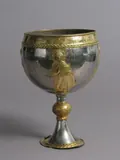 Chalice