The Divine Liturgy of St John Chrysostom · Step 3
The first antiphon
«Antifoni i parë»
What happens
The first of three antiphons follows the litany. An antiphon is a refrain sung with verses of a psalm, the two choirs answering each other where there are two. Here the refrain is «Through the prayers of the Birth-giver of God, O Saviour, save us», sung three times; the Church's book also allows Psalm 102 (in the Greek numbering) in its place.
Who does what
- DeaconLeaves his place before the Holy Doors, the central doors of the icon screen, and stands before the icon of Christ while the antiphon is sung.
- ChantersSing the refrain three times, or Psalm 102 in its place, the two choirs answering each other where there are two.
- PeopleListen while the antiphon is sung, standing or seated as they wish.
The words
And immediately they sing the first antiphon: (translated by this site)
Dhe menjëherë psalin andifonin e parë:
Through the prayers of the Birth-giver of God, O Saviour, save us.
Me ndërmjetimet e Hyjlindëses, Shpëtimtar shpëtona (tri herë).
Or, in place of this, Psalm 102 is said. While the first antiphon is sung, the deacon stands before the icon of Christ. (translated by this site)
Ose në vend të kësaj thuhet Psalmi 102. Kur këndohet andifoni i parë dhiaku qëndron përpara ikonës së Krishtit.
The Albanian text is the Orthodox Autocephalous Church of Albania’s, used with permission. orthodoxalbania.org. The English is from Isabel F. Hapgood’s Service Book (1922).
What it means
«Historically, the antiphons were sung by the people in the solemn procession to the church where the Divine Liturgy of the day was to be celebrated. Today, although the antiphons are part of the service, they still form the joyful preparation for entering into the worship of Christ, through the Word of the Gospel, and into the offering and receiving of Divine Communion.»«Antifonet», the Church of Albania · translated by this site
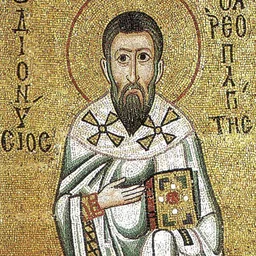 St Dionysius the Areopagite
«When, then, the universal melody of the holy Psalms has harmonized the spiritual condition of our souls to the things which are presently to be celebrated, and by the unison of the Divine odes, as one and concordant chorus of things Divine, has established concord towards things Divine, and ourselves and one another, the things more compounded and obscure in the spiritual language of the mystic Psalms are expanded by the most holy lections of the inspired compositions, through more full and distinct images and narratives.»Dionysius, The Ecclesiastical Hierarchy, tr. J. Parker (1894)
 Icon