The prayers after Holy Communion · Step 1
Verses urging thanksgiving, and «Glory to thee, O God»
«Vargjet nxitëse për falënderim dhe «Lavdi më ty, o Perëndi»»
What happens
In the Church's book, the prayers of thanksgiving after Communion are for whoever has received Holy Communion. The book's opening lines bid the one who prays give thanks to God at once, with heart and soul, beginning with «Glory to thee, O God» three times. By the Church's custom these prayers are said or heard in church when the Divine Liturgy ends; they may also be said at home after church, and the site shows them there.
Who does what
- The one who praysBack home from church, stands before the icons, makes the sign of the cross, by custom, and says «Glory to thee, O God» three times.
The words
PRAYERS OF THANKSGIVING AFTER COMMUNION (translated by this site)
URATA FALËNDERIMI PAS KUNGIMIT
Verses exhorting to thanksgiving: (translated by this site)
Vargje nxitëse për falënderim:
Having partaken of the life-giving and mystical Gifts, at once sing praise and give great thanks unto God, saying these things with heart and soul: (translated by this site)
Si të kungohesh me Dhuratat jetëdhënëse dhe mistike, himno menjëherë dhe falëndero me të madhe Perëndinë, duke thënë me zemër dhe shpirt këto:
Glory to thee, O God.
Lavdi më ty, o Perëndi (3 herë).
The Albanian text is the Orthodox Autocephalous Church of Albania’s, used with permission. orthodoxalbania.org. The English is from Isabel F. Hapgood’s Service Book (1922).
What it means
«Most of us, precisely through not knowing “the Service of Communion”, after receiving the Divine Pearl, the highest gift, go away without thanking God, the Giver of gifts. They are like the nine lepers who, when they had been cleansed by Christ, did not return to thank him.»«Kisha Orthodhokse dhe Kungata Hyjnore – Përgatitja për Kungim (Pj.3)», the Church of Albania · translated by this site
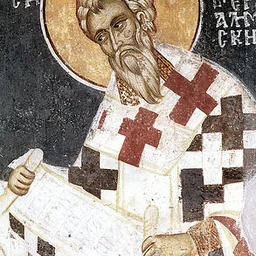 St Cyril of Jerusalem
«Then wait for the prayer, and give thanks unto God, who hath accounted thee worthy of so great mysteries.»«The communicant retires and makes a reverent obeisance, but not a prostration; for, having become mystically united to Christ, he is now a child of God, and the prostration is a sign of servitude.»Sokolof, A Manual of the Orthodox Church's Divine Services (1899), p. 76
 Icon