Words of the services · Vestments
Epigonation
Epigonat · Greek: ἐπιγονάτιον (epigonation)
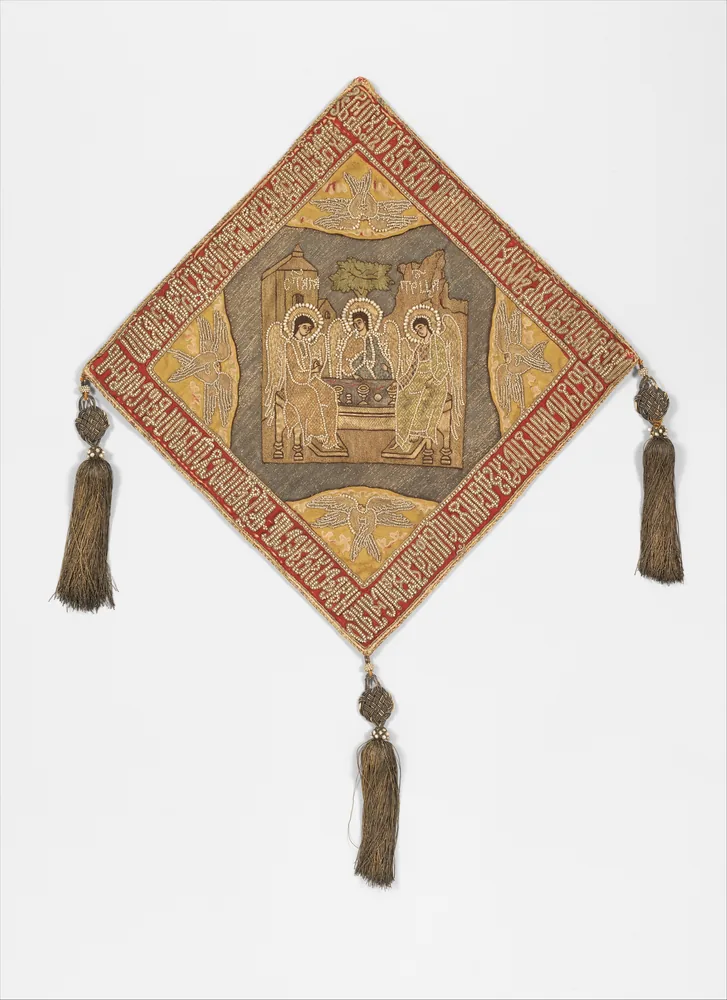
A diamond-shaped piece hung at the side from the belt by a single cord, so that it falls over the right thigh toward the knee. Bishops wear it, and some priests wear it as a mark of honour given to them, among them protopresbyters, oikonomoi and stavrophors. In Russian usage a priest may first be given an oblong thigh-shield, worn on the right; when he also receives the diamond-shaped piece, that is worn on the right and the thigh-shield moves to the left.
What it means
«Perhaps it was originally a “liturgical towel.” Its symbolic meaning is that of spiritual power: the sword of faith and the Word of God.»«Veshjet», the Church of Albania · translated by this site
«It is also explained as being symbolical of the towel wherewith the Saviour girded himself to wash the disciples' feet.»«Both the Epigonátion and the Pálitza are typical of profound zeal for the faith, and for the salvation of Christ's flock, and are conferred as rewards of honour.»